

BSc (Hons) Wildlife Conservation with Zoo Biology
- Course type
- Undergraduate
- Course qualification
- BSc (Hons)
Course summary
What is the fee?
For all course options, see fees and funding
Where will I study?
Peel Park campus
What is the UCAS code?
D4C3
How long will I study?
Full-time: Three years
Part-time: Six years
With placement: Four years
International students accepted?
Yes, available to international students
Overview
Human impact on the natural world has left devastating effects on wildlife habitats and biodiversity. Our BSc (Hons) Wildlife Conservation with Zoo Biology degree explores conservation theory and practice both in zoos and in the wild.
Accredited by the Royal Society of Biology, our course focuses on conservation, both in zoos and in the wild - ideal if you wish to pursue a career involving wildlife, working in either of those environments. The course team also has close links with local zoos and aquariums that can provide you with a wide range of experiences throughout your studies.
During this programme, you will study Zoo Biology. Zoo biology is the study of animal welfare and animal care in captivity. You will also study how animals' function, evolve, behave, and interact with their environments. You will experience hands-on learning in our advanced laboratories, develop practical field skills, and acquire transferable skills in zoo conservation and interpreting biological data. As your studies progress, you will gain theoretical and practical understanding of wildlife ecology and environmental problems that threaten species, and the role of zoos in and aquariums in animal conservation. You will have options to explore subjects such as primate behaviour, marine ecology, bird biology and conservation, and environmental geographical information systems (GIS).
Through our close industry connections, and our use of immersive field trips, we will help you bring textbook theory to real-world practice as you experience UK and international field trips to zoos, animal parks and a range of habitats such as wetlands. You will also build your scientific research skills and carry out an independent research project. There is also an optional placement year, giving you the opportunity to apply your learning in a professional setting.
Want to hear more about what the course is really like? Hear it straight from the source. Read our student stories about their time here studying Wildlife Conservation with Zoo Biology, student support, placement years and Student of the Year awards:
- Read Georgia's story - studying Wildlife Conservation with Zoo Biology with a placement year.
-
Read Charlotte's story - studying Wildlife Conservation with Zoo Biology and won NEON's Student of the Year Award 2024.
This programme includes an optional placement year approved by an academic placement coordinator, which offers you the chance to put your studies to use in a real working environment.
You will:
- Gain a broad understanding of wildlife, wildlife ecology and environmental problems
- Acquire the practical skills used in wildlife conservation and zoos, including zoo exhibit design
- Experience a variety of field trips and residentials, both in the UK and overseas
- Choose options that reflect your interests in animal and environmental sciences
- Carry out an independent research project
- Have the opportunity to undertake a placement year
Course accreditations

All about the cousre
Conservation can take many forms including, but not limited to, habitat conservation, sustainable land-use practices, research and monitoring, and public education and awareness.
On our wildlife conservation programme, you will study various conservation practices and even put your knowledge and skills to practical use on field trips. We have shaped our BSc Wildlife Conservation with Zoo Biology course to provide you with a solid understanding of wildlife, biodiversity and conservation issues, and the care of animals in captivity, alongside the skills to monitor environments and carry out research on wild and captive animals.
Through three years of study - or four, if you choose to include an industry placement, you will advance your wildlife conservation knowledge and skills through a variety of specialist modules including conservation in zoos and aquariums, wildlife behavioural ecology, marine and terrestrial conservation, practical ecology and conservation, and zoo exhibit design. Options allow you to pursue interests such as animal evolution, primate conservation, marine ecology, animal cognition, bird conservationenvironmental GIS and tropical ecology.
In your final year, you will also complete an independent research project based on a subject topic of your choice.. You may also choose an optional placement year, allowing you to gain experience in a working environment.
School of Science, Engineering and Environment

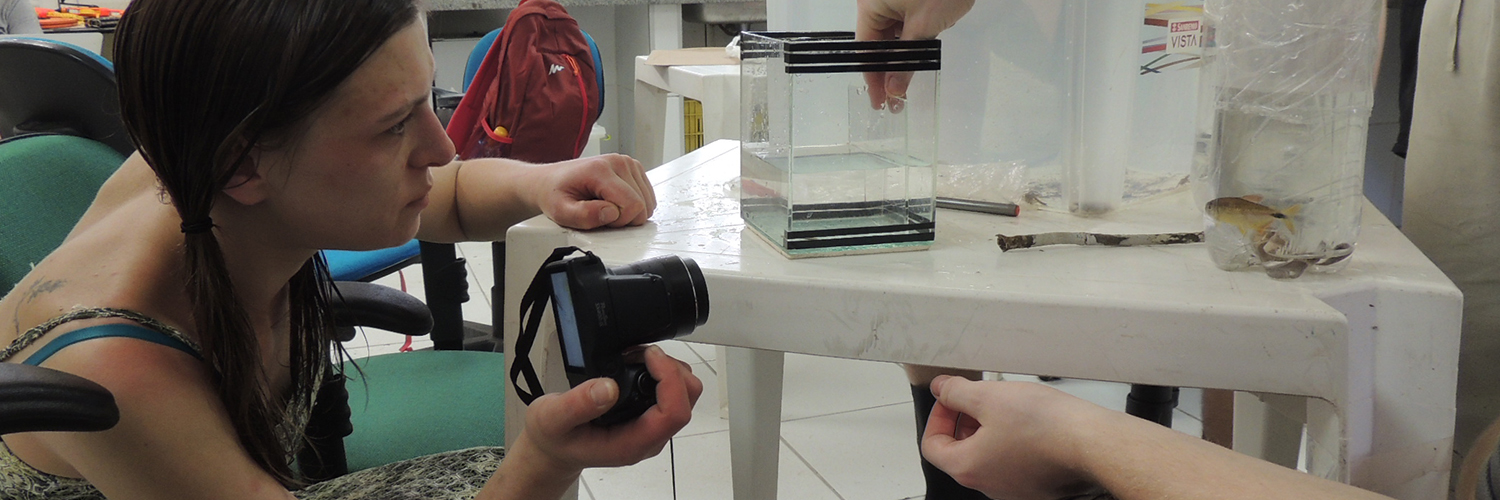
You will develop practical skills in the University’s Laboratories, using laboratory equipment to investigate biological questions and analyse samples. Field-based learning will also give you opportunities to learn about the care of animals in captivity and the role of zoos and aquariums in conservation, and data collection techniques in relevant environments.
Facilities

As a wildlife conservation student, you will be based in our advanced, integrated teaching laboratory known as the Bodmer Lab. This specialist, purpose built facility ensures that you benefit from the latest technologies to keep teaching and learning apace with cutting-edge innovation and discovery.
Industry collaboration and research

Specialist modules such as Practical Ecology and Conservation encompass guest presentations by alumni and other representatives from industry.
You will visit established zoos and aquariums to gain real-world experience of the care of animals in captivity and the role of zoos and aquariums in conservation.The optional placement year gives students the opportunity to apply their learning in a professional setting, subject to approval by the academic placement coordinator.
The programme curriculum has also generally been developed in consultation with an Industrial Advisory Board, Pcovering practical field and laboratory activities alsowhich help students develop skills relevant to ecological and biological careers.
How you'll learn
Future careers
Employment
The course is designed to help you to develop a range of personal and professional skills which will make you highly-employable. These include building specialised wildlife conservation knowledge, as well as report writing, data interpretation, teamwork and project management skills.
Zoos hold an important role in the conservation of biodiversity, with many species now bred in captivity as part of national, regional and international breeding programmes. As a result, it is likely that zoos will increase their breeding, scientific and education activities in the future. Equipped with this degree, you will be well placed to pursue these career opportunities.
You have many opportunities to work in voluntary and government conservation organisations operating at local, national and international levels. Opportunities also exist for you to work in environmental consultancies, environmental education and in zoos. Previous students have gained employment in zoos, country parks, animal sanctuaries and environmental consultancies.
Read about Sevim's graduate role at BBC NHU.
Further study
You might find you want to learn more about biosciences. Building on our scientific expertise, we offer a range of postgraduate courses that can take your interests and career opportunities further. Salford graduates and alumni also receive a generous fees discount.
- Biomedical Science (MSc)
- Biotechnology (MSc)
- Drug Design and Discovery (MSc)
- Wildlife Conservation (MSc)
Wildlife Conservation graduates can also choose to follow a research programme with our Biomedical Research Centre or our Ecosystems and Environment Research Centre to further their knowledge in topics such as microbiology, parasitology and conservation. Some of our graduates have completed PhD research studying orangutans in Borneo, large animals in Tanzania.
Learn more about postgraduate research opportunities available through our Doctoral School.
Modules
Course delivery
Loss of biodiversity is an increasing concern at national, European and global levels. Our BSc Wildlife Conservation with Zoo Biology course is designed to provide you with a broad understanding of wildlife, biodiversity and conservation, while also offering more specialist training in zoo conservation and biology.
Throughout the course you will build your knowledge through core modules covering topics such as conservation biology and conservation in zoos, while building practical skills through modules such as field biology and research skills.
Learn more about the modules you will study in the section below.
Learning experience
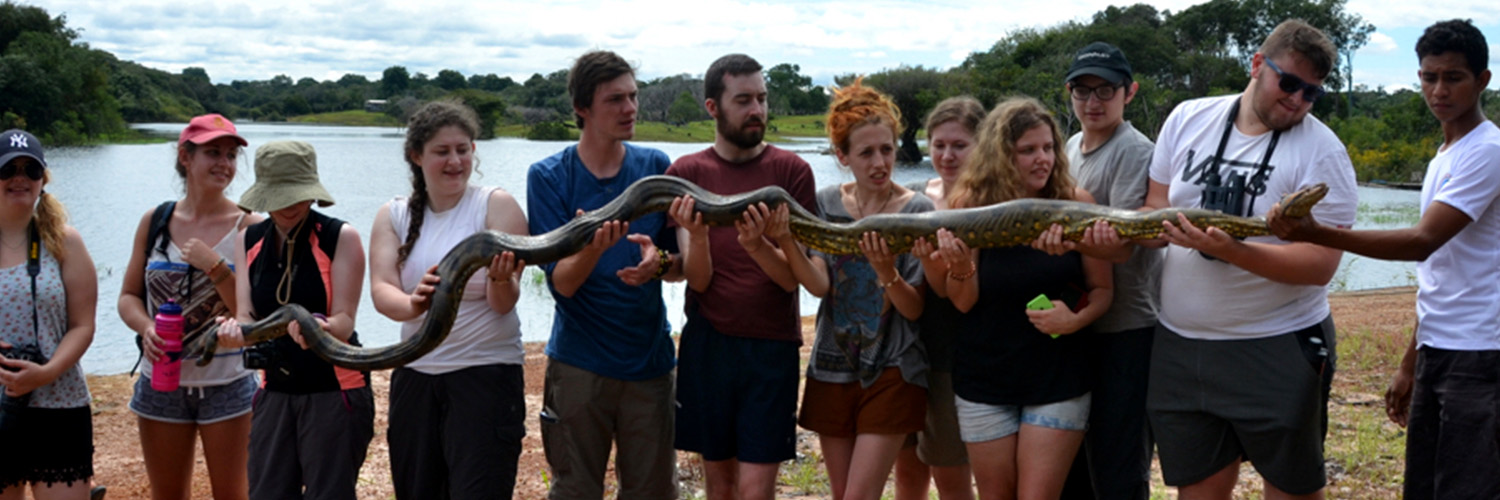
We put fieldwork at the heart of your learning experience. You'll have plenty of opportunities to get involved in UK-based residential courses going to places such as Blencathra in Cumbria and the Isle of Cumbrae in Scotland. You will also have the chance to take specialist modules, where you will travel to tropical locations for fieldwork. In recent years students have been to locations such as Gambia and Brazil.
Small group, research-led teaching is another key course benefit. During your studies you will spend time in our advanced Bodmer laboratories, and you might also have opportunities to engage with live research projects.
- Read about Anna's experience of studying Wildlife Conservation with Zoo Biology
- Read about student Tilly-Rose's experience at Uganda.
Industry placement
On this course, you will have the option to take an industry placement year between years two and three. Although you will be responsible for securing your placement, our tutors will support you in finding a role, and monitor your progress throughout.
Industry placements are an excellent way to enhance your CV, gain hands-on work experience and build industry connections. We often find that placement students achieve higher final year grades.
Year one
Global Distribution Wildlife
The module provides you an overview of the world’s major biomes. You learn about the importance of biogeography and the principal factors that drive the distribution of species and communities and how wildlife adapts to these factors.
Introduction to Zoo Biology
This module provides an integrative approach to understand basic concepts of zoo biology. It is largely lecture-based, and also includes day trips to local zoos.
Field Biology
This module will introduce students to field techniques required for ecological surveys of land and aquatic habitats. Learning will be delivered by lectures, non-residential fieldwork, computer and practical classes. The module will develop students to identification and taxonomy skills, and introduce GIS and its uses within fieldwork.
Genes to Ecosystems
In the first trimester, this module provides a systems-led approach to understand basic concepts of genetics. In the second trimester, this approach is extended to understand basic concepts of ecosystems.
Marine and Terrestrial Biodiversity
Life arose on Earth at least 3.5 billion years ago. Today, Earth hosts an extraordinary diversity of organisms, with recent study estimating that there are between 2 and 20 million eukaryote species alive today (the vast majority of which have still not been identified and described by scientists). However, this is a small fraction of all the species that have ever lived, over 99.9% of which are extinct. This module will give you an overview of this remarkable biodiversity, focusing on the major groups of marine and terrestrial organisms, their characteristics, their diversity, and their evolutionary relationships.
Study Skills for Life Sciences
In this module, you will learn by observation, investigation, comparison and engagement and will develop practical learning and presentation methods which can be applied generically during year one and beyond. You will also gain an appreciation of Personal Development Planning and effective writing, data handling, calculation and numerical skills.
Year two
Conservation in Zoos and Aquariums
On this module you will gain a critical awareness of conservation programmes in zoos and aquariums, and the role of zoo and aquarium professionals. Additionally, you will learn about reproductive biology, genetics, and disease in zoo and aquarium animals and how to manage these.
Wildlife Behavioural Ecology
This module focuses on the principles of wildlife ecology and animal behaviour with particular reference to mammal and bird species. It also introduces scientific methods in the study of ecology and behaviour.
Research Skills
The aim of this module is to show you how to learn by observation, investigation, comparison and engagement and to develop your practical learning and presentation methods which can be applied generically during the rest of the course and beyond.
Marine and Terrestrial Conservation
This module will introduce you to the modern concepts of conservation biology at the level of species, habitats and populations, the existing tensions between theory and practice in species conservation planning, and an overview of the interdisciplinary toolbox used by conservation biologists (for example IT packages and DNA-based techniques). You will also be given the chance to present a given conservation research project in the form of a scientific poster.
Choose two options from the following:
Primate Behaviour and Conservation
This module aims to provide you with knowledge of the structure and evolution of primate societies. You will look at the Primate Order, its distribution and the conservation priorities for primate species. You will gain an understanding of the ecological and demographic processes that underlie different types of social systems and an insight into the way in which evolutionary ecological, genetic and physiological analyses can facilitate this understanding.
Animal Evolution (Marine and Wildlife)
This module provides an overview of how diversity in the animal kingdom has evolved. It also illustrates the basic principles of evolution as a force to create biodiversity.
Ecology in Action
You will study the fundamental principles of population and community ecology, including the impact that factors such as competition, predation and parasitism may have on population size and community structure. This module also has a residential field course where students put theory into practice and conduct their own ecological studies.
Biology and Wildlife Documentation
Biology and Wildlife Documentation will introduce students to methods of documenting Biology and Wildlife phenomena,
including citizen science, museum specimen scanning, wildlife photography and videography, microscopy and disease
diagnostics. It is a practice-oriented module, and draws on a range of expertise among staff in the subject area.
Marine Ecology
In this module you will learn about the structure, functioning and ecology of marine ecosystems, and the natural and anthropogenic factors influencing marine biodiversity and ecosystem processes. The module provides you with the opportunity to engage in actual data collection and data analysis during a residential course (compulsory to the module). You will also explore key concepts in marine ecology, including species interactions, ecosystem functioning, environmental change and ecological monitoring techniques. The module encourages you to adopt an investigative approach to ecological studies through field-based surveys, data interpretation and critical evaluation of marine ecological issues.
Year three
Zoo and Exhibit Design
On this module you will integrate knowledge from previous zoo biology modules into a practical application. You will gain an understanding of how zoos achieve their stated aims from an economic, practical and scientific view-point and the strategies they use to advance their stated goals.
Practical Ecology and Conservation
This module aims to equip you with the basic knowledge and skills needed for ecological consultancy. It is designed to promote employability and apply academic qualifications to a growing sector that seeks to provide expertise on ecological and environmental issues to industry, governmental agencies and other organisations. You will be given an overview of consultancy and the ecology of survey methods used for protected species and habitats. The main assessment will involve you proposing surveys for a client wanting to build on a specified site, in addition to carrying out surveys in practical sessions.
Final Year Project and Professional Skills
This dissertation module allows you to develop independent research skills, including both data collection/generation (for example, via lab-based research or fieldwork) and analysis, while conducting research on a topic in an area relevant to your programme of study. You will also develop your professional skills, with a focus on employability.
Choose two options from the following:
Animal Cognition and Social Complexity (Wildlife)
The aim of this module is to develop an understanding of the cognitive abilities and limitations of nonhuman animals, with a particular focus on nonhuman primates. The course also develops your understanding of the cognitive challenges associated with living in complex social groups.
Environmental Geographical Information Systems
This module is to develop your geographical information systems (GIS) knowledge and ability to use the ArcGIS software and understand the factors controlling the design and implementation of GIS solutions to map, monitor and model terrestrial environments. You will learn the theory behind GIS as well as how GIS can be applied to Wildlife Conservation. You will gain hands on experience of using GIS on a species of your choice and determine how GIS can inform conservation decision making.
Tropical Ecology and Conservation
This module is based round a 2-week field trip to a tropical biology field station. Students will learn concepts in, and approaches to, tropical ecology and conservation and biodiversity in tropical ecosystems. The module involves an independent research project in the field that will be written up as a scientific report.
Bird Biology and Conservation
In this module, you will gain a critical understanding of avian diversity, form, function and behaviour. You will carry out an investigation into avian ecology and adaptation, collect behavioural data from wild birds and analyse acoustic data using specialist software. You will also learn about the ecological importance of birds and develop an awareness of bird conservation.
Veterinary and Zoonotic Infectious Diseases
This module looks at the maintenance and transmission of infectious diseases of veterinary or zoonotic interest. Particular interest is focused on the role of wildlife species in the ecology and epidemiology of infectious diseases. The role of arthropod-vectors in transmitting infections, and how this influences the ecology of such infections, is also studied.
We take a flexible approach to our course delivery that promotes diversity and inclusivity and provides a blended learning experience, which will vary to meet specific programme requirements. This learning time includes formal lectures and interactive activities such as seminars, tutorials, practical sessions, laboratory and studio learning. Smaller classes may be used to support collaborative activities such as project and group work and presentations. A range of different assessments and feedback is offered to meet the needs of both our diverse student body and specific subject needs.
Our undergraduate courses are normally made up of 20 credit modules which are equal to 200 hours of learning time. A three-year degree qualification typically comprises a total of 360 credits (120 credits per year).
Please note that exact modules and content offered may vary in order to keep content current and, for courses that offer optional modules, may depend on the number of students selecting particular options. When accepting your offer of a place to study on a programme with optional modules, you should be aware that optional modules may not all run each year. Your tutor will be able to advise you as to the available options on or before the start of the programme. Whilst the University tries to ensure that you can undertake your preferred options, it cannot guarantee this.
Entry requirements
Applicant profile
You will have a genuine broad interest in wildlife and conservation, enjoy working outdoors in all weathers, as well as collecting and analysing data. We expect you to be interested in biology, geography and the environment.
You may be particularly interested in how animals function and behave, how species interact with their environments, and how research can inform conservation.
We also welcome applications from mature students who may not have academic qualifications in relevant subjects, but have experience in zoos or conservation organisations.
English language requirements
If you are an international student and not from a majority English speaking country, you will need an IELTS score of 6.0 with no element below 5.5. We also accept a range of other English language qualifications.
If you do not have the English language requirements, you could take the Pre-Sessional English course, or the International Foundation Year to gain entry onto this degree.
Course accreditation
This course is accredited by the Royal Society of Biology, which means that it meets their requirements for receiving up-to-date knowledge in the right learning, support and teaching environment. Studying an accredited course is one way of showing employers you have the knowledge and skills that they are looking for in graduates and has the potential benefits of greater employability prospects and enhanced competitiveness in a crowded global jobs market.
Standard entry requirements
GCSE
In addition to Level 3 requirements, you must have evidence of Level 2 GCSE English and Maths at Grade C/4 or above.
UCAS tariff points
104 UCAS points.
A level
104 UCAS points. Two full A-levels required as a minimum. All subjects accepted.
T Level
Overall Merit in the following T Level subjects: Science or Animal Science.
BTEC Level 3 National Extended Diploma
DMM
Scottish Highers
104 UCAS points from two Higher Levels required.
Irish Leaving Certificate
104 UCAS points from two Higher Levels required.
International Baccalaureate
30 points overall. Must have passed the full International Baccalaureate to be considered.
Access to HE
104 UCAS points from a QAA Approved Level 3 Access to HE Diploma.
International Students
We accept qualifications from all around the world. Find your country to see a full list of entry requirements. If you do not meet the entry requirements, you could take the International Foundation Year to gain entry onto this degree.
Alternative entry requirements
Salford Alternative Entry Scheme (SAES)
We welcome applications from students who may not meet the stated entry criteria but who can demonstrate their ability to pursue the course successfully. Once we have received your application we will assess it and recommend it for SAES if you are an eligible candidate.
There are two different routes through the Salford Alternative Entry Scheme and applicants will be directed to the one appropriate for their course. Assessment will either be through a review of prior learning or through a formal test.
Not sure how many UCAS points you have? Use our UCAS Tariff Calculator to find out.
Fees and funding
See fees below. Please note, some modules include international residential field courses and may involve additional costs.
2027/28
| Type of study | Fees |
|---|---|
| Full-time | £10,050 per year |
| Part-time | Part-time fees are calculated on a pro rata basis |
2027/28
| Type of study | Fees |
|---|---|
| Full-time | £18,600 per year |
The tuition fees shown are for the first year only. If your course lasts longer than one year, fees may increase each year in line with inflation, up to the maximum limits set by the UK Government.
Additional costs
You should also consider further costs which may include books, stationery, printing, binding and general subsistence on trips and visits. Field trips All national field trips are funded by the University, but you may need to consider additional costs such as food during day trips and spending money. For the international field trip to the tropics (as part of the optional module Tropical Ecology and Conservation) you will also be subsidised by the University, but a major contribution to flights and in-country costs will apply. You will be made aware of these costs before selecting the module. Scholarships for international students If you are a high-achieving international student, you may be eligible for one of our scholarships. Explore our international scholarships.
How to apply
Enrolment dates
Student information
Terms and conditionsUCAS information
Course ID D4C3
Institution S03