

BSc (Hons) Biochemistry with Foundation Year
- Course type
- Undergraduate
- Course qualification
- BSc (Hons)
Course summary
What is the fee?
For all course options, see fees and funding
Where will I study?
Peel Park campus
What is the UCAS code?
C750
How long will I study?
Full-time: Four years
With placement: Five years
Overview
Biochemistry has become the foundation for understanding all biological processes.
This pathway is recommended if you want to study the full honours degree, but don’t meet the direct entry requirements. If you successfully complete and pass the foundation year, you will automatically progress on to the full BSc (Hons) Biochemistry honours degree, where you will continue to build specialised knowledge of the chemical processes which underpin all living organisms.
Our full honours biochemistry degree is accredited by the Royal Society of Biology, which means it contains a solid academic foundation in biological knowledge and key skills, and prepares graduates to address the needs of employers. We pride ourselves on our research and have recently invested extensively in our facilities to ensure that you are able to complete research projects that are exciting and inspiring, contributing useful findings to the field.
Start your study journey
Register for our next Open Day to learn more about studying biochemistry, explore our facilities and meet the course team
You will:
- Gain a broad, basic knowledge of biological and chemical principles to prepare you for more advanced study
- Have the opportunity to do a placement year after your second year of the undergraduate degree
- Explore areas of research such as nanotechnology, drug design and repurposing, cancer and antimicrobial, lung diseases, biotechnology, toxicology and much more
Course accreditations
This is for you if...
You are returning to education or seeking to develop your career in a new direction
You have a non-scientific background and want to pursue a career in science
You haven't got the entry requirements to go straight on to the main degree course
Frequently asked questions
What is a foundation year?
A foundation year offers a year of studying to gain an understanding of the programme before progressing to the full three-year studies. You'll get the chance to understand the way higher education studying works and gain the relevant skills and knowledge needed to undertake the full degree.
What is biochemistry?
As the name implies, biochemistry merges the fields of biology and chemistry. It is dedicated to the study of chemical processes within biological cells.
Is a biochemistry degree hard?
Studying a Biochemistry degree can be challenging yet offers many rewarding benefits. At the University of Salford, you will be at the cutting-edge of research and the projects you will undertake will be exciting and inspiring.
Despite the challenging and busy nature of our biochemistry programme, it can be very rewarding as you’ll be building your knowledge and making an impact in such an important field. By the end of your degree, you will have developed many key skills including teamwork, communication, numerical and data analysis and independent thinking.
There are methods to ensure you’re getting the best of your degree, including practicing good time management and making time for yourself to recharge. If you find your studies overwhelming, there will be support available from your lecturers and university support staff.
Why study biochemistry?
From developing new treatments for diseases to designing sustainable energy sources, biochemistry is driving innovation in many fields. By pursuing a degree in biochemistry, you can be at the forefront of these exciting developments and contribute to important breakthroughs in science and medicine.
What can you do with a biochemistry degree?
Obtaining a biochemistry degree opens many diverse career opportunities in both research and industry, spanning various fields including food and agriculture, health and environmental sciences. Some roles you could pursue after completing your degree include:
- Biomedical scientist
- Clinical research associate
- Academic researcher
- Biotechnologist
- Research scientist
- Scientific laboratory technician
Our biochemistry degree is ideal if you are interested in a career in the biotechnology, pharmaceutical, food or brewing industries, as well as in clinical or other biomedical areas such as forensic science and analytical biochemistry.
School of Science, Engineering and Environment

Rising to the challenge of a changing world, our degree courses are designed to shape the next generation of urbanists, scientists, engineers, consultants and leaders.
Driven by industry, and delivered by supportive programme teams, you can develop the knowledge and skills to become unstoppable in your career.
facilities

As a biochemistry student, you will be based in our advanced, integrated teaching laboratory known as the Bodmer Lab. This specialist, purpose built facility ensures that you benefit from the latest technologies to keep teaching and learning apace with cutting-edge innovation and discovery.
Industry collaboration and research

When you start this degree with Salford, you are also joining a community making a difference in industry, our local region and in our wider society.
Many of our academics and technicians who support your course also deliver collaborative, interdisciplinary, high-impact work in a range of bioscience issues and challenges.
Discover how you are part of something bigger.
How you'll learn
Future careers
Employment
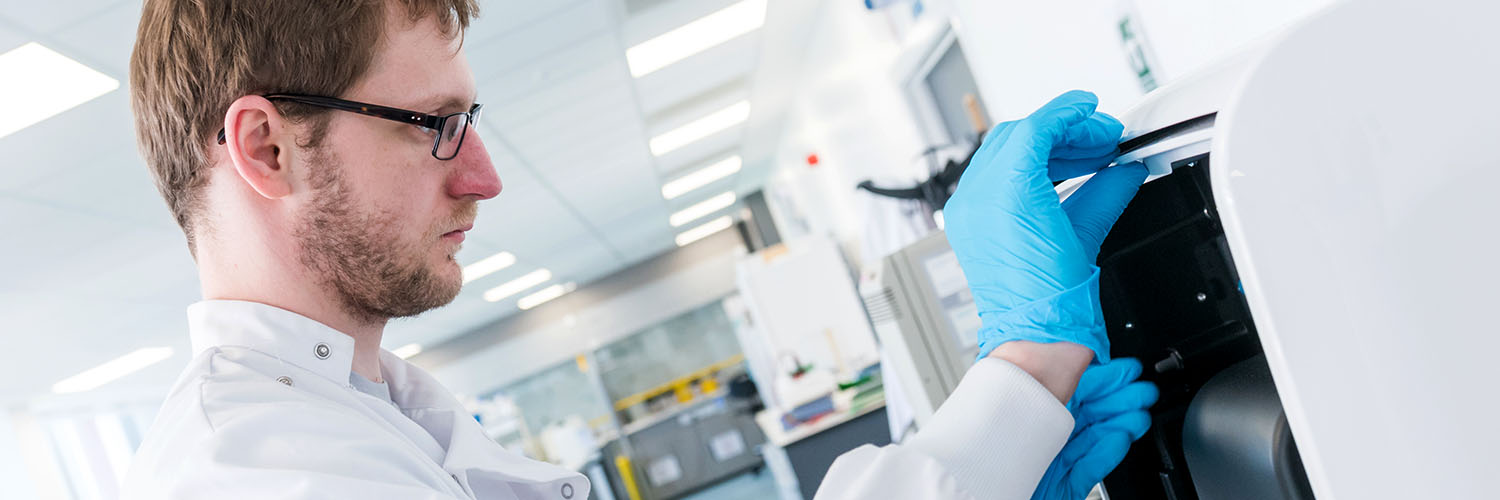
With training allowing you to develop your own personal skill set in laboratory science, theoretical science and softer skills ready for the working world, this programme will enhance your employability and personal development, allowing you to enter the working world with an enhanced and divergent skill set. Here in the North West there is a burgeoning life sciences and chemical sciences sector, and this course is aligned to the demand for skills that this industry is generating.
Biochemistry is at the cutting-edge of research and is an exceptionally versatile scientific discipline with opportunities in the field continuing to grow and develop. The knowledge and methods developed by biochemists are applied to all fields of medicine and agriculture as well as many chemical and health related industries. Biochemistry is also unique in providing teaching and research in both protein structure and function, and genetic engineering - the two basic components of the rapidly expanding field of biotechnology.
This course is ideal if you are interested in a career in the biotechnology, pharmaceutical, food or brewing industries, as well as in clinical or other biomedical areas such as forensic science and analytical biochemistry. Our graduates are employed across bioscience by companies such as AstraZeneca and the Cancer Research UK Manchester institute, or many carry on to further study. Additionally, biochemists with knowledge of physiology are in demand in sports science, in healthcare and hospitals and in the pharmaceutical industry, as well as in research establishments and other areas of bioscience.
Further study
You might find you want to learn more about biosciences. Building on our scientific expertise, we offer a range of postgraduate courses that can take your interests and career opportunities further. Salford graduates and alumni also receive a generous fees discount.
Biochemistry graduates can also choose to follow a research programme with our Biomedical Research Centre to further their knowledge in topics such as microbiology, parasitology, medicinal chemistry, cancer and cell biology. Learn more about postgraduate research opportunities available through our Doctoral School.
Modules
Foundation year
This Foundation Year places a strong emphasis on Biology and Chemistry, providing the core scientific grounding needed for a wide range of human and natural science degrees.
This course will provide you with a strong foundation in the fields of chemistry and biology, allowing you to progress onto a BSc (Hons) Biochemistry degree course within the School of Science, Engineering and Environment.
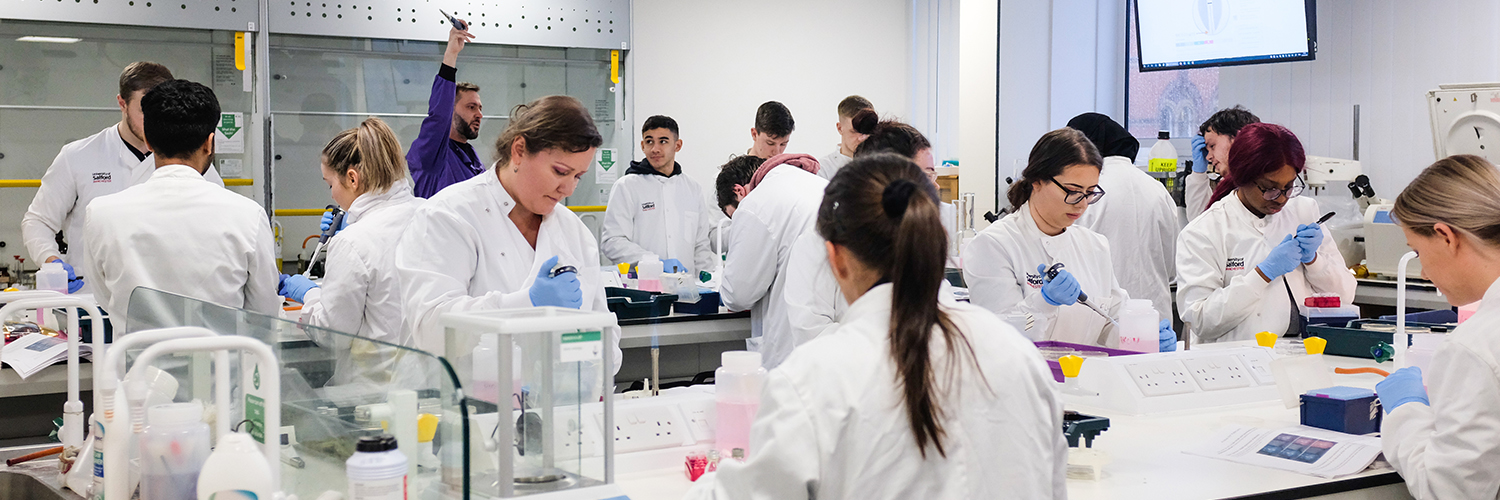
With an emphasis on both understanding and problem solving in addition to practical and communication skills, you will build knowledge across the breadth of the subject. You will also experience laboratory work, and develop your study skills.
If you successfully complete and pass your Foundation Year but you're still not sure this is the subject for you, we have an extensive suite of Human and Natural Sciences (HANS) subjects you can still progress to:
- Biological Science
- Human Biology and Infectious Diseases
- Marine Biology
- Geography
- Environmental Management
- Pharmaceutical Science
- Biomedical Science
- Zoology
- Wildlife Conservation
- Wildlife Conservation with Zoo Biology
BSc degree
Course delivery
BSc Biochemistry is delivered full-time over three years (or four if you choose to include an industry placement) via a programme of practice-focused modules. You'll explore important scientific subjects including biological chemistry, organic chemistry, and genetics, while developing your practical skills in our Bodmer laboratories.
Throughout your studies you will also choose from a selection of specialised biochemistry modules and complete your studies with a supervised research project in a subject of your choice.
Learn more about the course modules in the section below.
Learning experience
With a focus on practical learning, throughout the degree you will learn cutting edge scientific knowledge and techniques. You will develop your knowledge of how organisms work at the molecular level in the fields of medicine, agriculture, and in many chemical and health-related industries.
For example, in the second year of your degree you’ll take a module focusing on Genomics and learn how you can study genes to accurately predict, diagnose and treat diseases more precisely than ever.
Industry placement
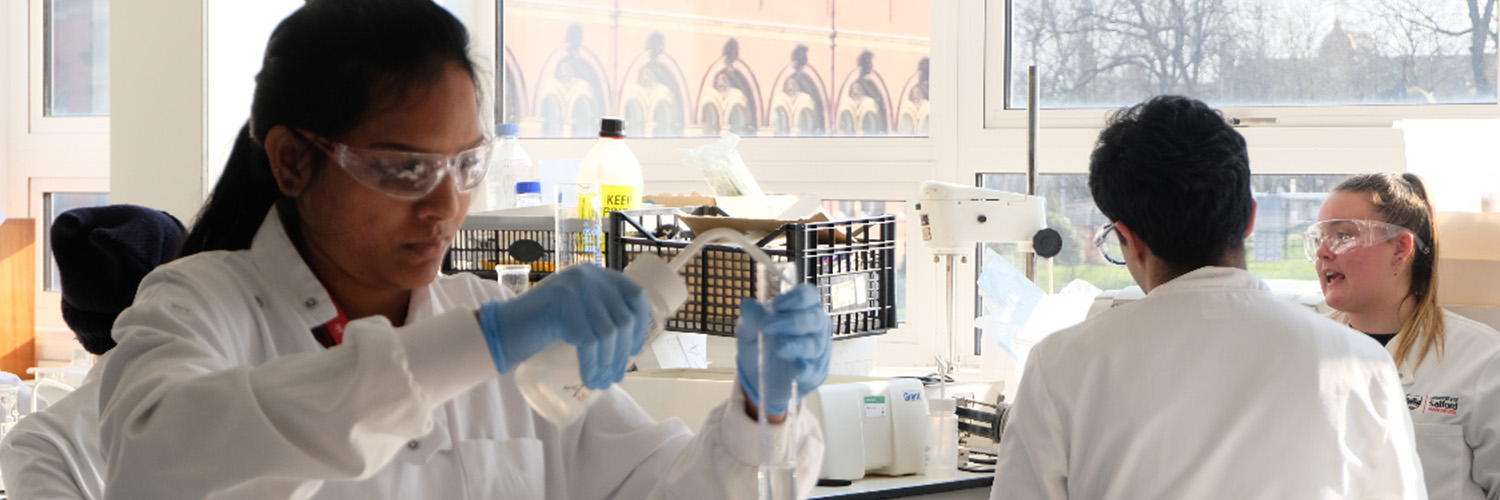
On this course, you'll have the option to take an industry placement year between years two and three. Although you'll be responsible for securing your placement, a tutor will support you, monitor your progress and assess your final placement report.
Recent biochemistry students have undertaken placements at the Respiratory Physiology Unit at the Royal Aintree Hospital in Liverpool, AstraZeneca in Cheshire, the Cancer Research UK Manchester institute and the Hochschule in Bremen, North Germany.
Foundation year
Chemical Principles
This module will help you develop an understanding of the fundamentals of the periodic table, classification within chemistry, reaction processes and quantities, and the fundamentals of organic chemistry through lectures, laboratory workshops and independent study via an interactive learning platform.
Scientific Methods
This module will help you develop practical skills in the fields of biological, chemical and environmental science. It includes the use of glassware and instrumentation, developing data recording and analysis skills, and foundational laboratory-training. It also aims to train all students on how to write-up experimental work via an interactive learning platform, which includes pre- and post- laboratory training exercises.
Data Handling
Develop skills for the application of statistical and mathematical methods and practise using Information Technology for effective the presentation and communication of data and ideas.
Professional Communications
This module will provide students with a structured and supportive environment in which to develop their academic practice and professionalism. This will be achieved through a series of lectures and tutor-led seminars that will equip students with the skills required for successful study in Higher Education.
Biological Principles
Explore the characteristics of plant and animal cells which are the building blocks of all life forms; their interactions with micro and macro environments, and learn about the diversity of animal and plant life in a range of ecosystems.
Science for Health
Evaluate a range of environmental and scientific factors that interact to influence health – e.g. pollution, nutrition, drug development and consider examples of environmental interventions and clinical trials.
Year one
Biological Chemistry
This module will help you understand key concepts in biological chemistry, including spectroscopy and spectrometry techniques for identifying small organic molecules; chemical reactivity and molecular interactions; chromatography; and kinetics and thermodynamics.
Genetics
Genetics has become a central topic not only in biological science, but also for topics such as data science, art and culture. Genetics is revolutionising all spheres of life at an unprecedented speed. It is central to all areas of biology, from cellular development and reproduction to conservation and biodiversity. In this core module, we will provide you with the framework of this diverse area, covering areas from DNA fingerprinting and DNA/RNA editing, to ethics and conservation biology. We will expose you to the latest research in the area of molecular genetics and provide the foundation for your future.
Introduction to Organic Chemistry
The aim of this module is to introduce organic chemistry through structure and mechanism. You will study organic reactions of key functional groups such as alkenes, carbonyl and aromatic compounds.
Biochemical and Pharmaceutical Skills
This is a practical laboratory based module aiming to develop practical skills in the areas of biochemistry, pharmaceutical sciences and general chemistry. The students will be involved in hands-on laboratory work covering a range of essential techniques used in academia and industry. Students will be given feedback on their work during the classes.
Introductory Biochemistry
The aim of this module is to introduce principles of biochemistry. You will study biochemical pathways and organelles, relevant to cell biology.
Cell Biology
This module provides a broad cell biology knowledge base, building a solid foundation of key scientific content relevant to subsequent modules within several bioscience degrees.
Year two
Clinical and Molecular Genetics
Clinical and Molecular Genetics will enable students to gain practical skills in molecular biology and bioinformatics, through linked laboratory and computer sessions. The lecture programme is delivered by three academics, each an expert in their specific area of clinical and molecular genetics. Topics covered include, current molecular biology and bioinformatics techniques, the control of bacterial and eukaryotic gene expression and the effect of mutations on gene expression and how this can lead to human genetic diseases.
Fundamentals of Biochemistry
This module comprises a series of laboratory practicals and lectures that focus on teaching core skills in protein biochemistry and key aspects of metabolism.
Chemical and Biochemical Research Skills
This module will help you develop your scientific writing and communication skills, and understand key statistical methods that may be applied to the chemical and biochemical sciences.
Human Physiology
Investigate the function of major organ systems and how they regulate homeostasis. Using cutting-edge lab equipment, you will develop practical skills to analyse physiological adaptations as true physiologists do in the world sport and exercise science.
Genomics and Proteomics
This module provides an appreciation of topics in biochemistry with an emphasis on genomics, proteomics, structural biology and their application in research and industry.
Medical Biochemistry
You will be introduced to the concepts of chemical and biochemical testing and their relevance to clinical diagnostics. The module will develop your knowledge and understanding about biochemical changes in disease, and you will learn practical techniques used in clinical chemistry laboratory. This module is a combination of lectures and practical sessions.
Choose one option from the following:
Year three
Biochemistry of Drugs and Disease
This module will provide a contemporary overview of some important disease processes and associated drug intervention mechanisms.
Current Topics in Biochemistry
This module comprises a series of lectures based around the latest research developments in biochemistry. There is also a lab practical/mini-project on gene function analysis in Caenorhabditis elegans using the technique of RNA-interference (RNAi).
Final Year Project and Professional Skills
This dissertation module allows you to develop independent research skills, including both data collection/generation (for example, via lab-based research or fieldwork) and analysis, while conducting research on a topic in an area relevant to your programme of study. You will also develop your professional skills, with a focus on employability.
Choose one option from the following:
Science and Industry BSc Hons
This module will help you develop an understanding of the fundamentals of sustainability and greenness, and recovery from a post-pandemic landscape featuring skills sets of biochemistry, chemistry, biomedical, pharmaceutical and personal health care, from the laboratory to gaining understanding of the workings of industry. The material issued as lecture notes and support guides will be all released pre-module and each lecture session will flip learning to workshop through the academic staff and invited industry speakers for real world experience.
Cancer: Bench to Bedside
Students will learn the critical biological capabilities that enable tumour cancer initiation, maintenance and progression, and how some of these hold promise as therapeutic targets for cancer treatment. The module contains an overview of the basic biology of cancer and applicable therapeutic strategies, with attention paid to relevant current technologies and future directions in cancer biology. Lectures will be complemented with tutorials where students will be involved in critical reading of scientific papers, while learning to evaluate scientific data and familiarise themselves with a variety of modern techniques.
Plus one option from the following:
Biotechnology
This module will help you develop an understanding of molecular techniques underpinning the science associated with the societal grand challenges of feeding the world and antibiotic resistance, and introduce the principles and techniques of genetic modification. On completion you will be able to apply a range of research and presentation techniques to a choice of research projects.
Clinical Immunology
Immunology is the study of the immune system. It is now a well-developed basic science, which is useful for the diagnosis and management of a great number and variety of human diseases. This module is designed to give an in-depth view of the basic components of the immune system and how these influence human diseases. Research-based discussion will be part of this module in understanding immune mechanisms in defense against human diseases and how these mechanisms can be dysregulated. Understanding the immune system leads to better clinical diagnostic and monitoring possibilities. Towards the end of the module you will also be given an overview of how the immune system can protect the body from developing cancers.
We take a flexible approach to our course delivery that promotes diversity and inclusivity and provides a blended learning experience, which will vary to meet specific programme requirements. This learning time includes formal lectures and interactive activities such as seminars, tutorials, practical sessions, laboratory and studio learning. Smaller classes may be used to support collaborative activities such as project and group work and presentations. A range of different assessments and feedback is offered to meet the needs of both our diverse student body and specific subject needs.
Our undergraduate courses are normally made up of 20 credit modules which are equal to 200 hours of learning time. A three-year degree qualification typically comprises a total of 360 credits (120 credits per year).
Please note that exact modules and content offered may vary in order to keep content current and, for courses that offer optional modules, may depend on the number of students selecting particular options. When accepting your offer of a place to study on a programme with optional modules, you should be aware that optional modules may not all run each year. Your tutor will be able to advise you as to the available options on or before the start of the programme. Whilst the University tries to ensure that you can undertake your preferred options, it cannot guarantee this.
Entry requirements
International applicants
This course isn’t suitable for international students.
If you are an international student and interested in studying a foundation year, please visit our International Foundation Year course page.
Applicant profile
We are looking for applicants with a strong interest in both the chemical and biological sciences, and a desire to operate in a cutting-edge research field.
English language requirements
All of our courses are taught and assessed in English. If English is not your first language, you must meet our minimum English language entry requirements. An IELTS score of 6.0 (no element below 5.5) is proof of this, and we also accept a range of equivalent qualifications.
Read more about our English language requirements, including information about pathways that can help you gain entry on to our degree courses.
Standard entry requirements
UCAS tariff points
64 points.
A levels
64 UCAS points. At least one full A level is required.
BTEC Level 3 National Extended Diploma
MPP
T Level
Pass (D or E on the core) - Science only accepted subject
Access to HE
64 UCAS points from a QAA Approved Level 3 Access to HE Diploma.
GCSE
In addition to Level 3 requirements, you must have evidence of Level 2 GCSE English and Maths at Grade C/4 or above.
Scottish Highers
64 UCAS points from Higher Level. At least one full Higher level is required.
Irish Leaving Certificate
64 UCAS points from Higher Level. At least one full Higher level is required.
International Baccalaureate
26 points.
Alternative entry requirements
Salford Alternative Entry Scheme (SAES)
We welcome applications from students who may not meet the stated entry criteria but who can demonstrate their ability to pursue the course successfully. Once we have received your application we will assess it and recommend it for SAES if you are an eligible candidate.
There are two different routes through the Salford Alternative Entry Scheme and applicants will be directed to the one appropriate for their course. Assessment will either be through a review of prior learning or through a formal test.
Not sure how many UCAS points you have? Use our UCAS Tariff Calculator to find out.
Fees and funding
See fees below
2027/28
| Type of study | Fees |
|---|---|
| Foundation year |
£8,970
for foundation year
£10,050
for subsequent years
|
| Part-time | Part-time fees will be calculated on a pro rata basis |
The tuition fees shown are for the first year only. If your course lasts longer than one year, fees may increase each year in line with inflation, up to the maximum limits set by the UK Government.
Additional costs
All field trips are funded by the school but you may need to consider additional costs such as food and spending money.
International field trips that are part of core modules are also funded by the school but you will need to pay towards international field trips that are part of optional modules (although these are subsidised by the school) and you will be made aware of these costs before selecting the module.
You should also consider further costs which may include books, stationery, printing, binding and general subsistence on trips and visits.
How to apply
Enrolment dates
Student information
Terms and conditionsUCAS information
Course ID C750
Institution S03