

MSci (Hons) Pharmaceutical Science
- Course type
- Undergraduate
- Course qualification
- MSci (Hons)
Course summary
What is the fee?
For all course options, see fees and funding
Where will I study?
Peel Park campus
What is the UCAS code?
F152
How long will I study?
Full-time: Four years
Part-time: Eight years
International students accepted?
Yes, available to international students
Overview
New for 2026 entry
Medical breakthroughs such as the Human Genome Project have made it possible to identify the genes associated with many inherited disorders, including cancers. With our BSc (Hons)/MSci Pharmaceutical Science degree courses, you can join the next generation of scientists applying new knowledge to create new treatments and interventions.
These courses are perfect if you would like to pursue a career in the pharmaceutical and biotechnology industries. With a research-focused learning and laboratory-based delivery, the course is recommended if you want a career in research, teaching and related professional fields such as animal health, food science, cosmetic science, in medical laboratories, technical sales, patent law and scientific journalism.
Pharmaceutical science is at the cutting-edge of research and is an exceptionally versatile scientific discipline with opportunities in the field continuing to grow and develop.
This programme includes an optional placement year approved by an academic placement coordinator, which offers you the chance to put your studies to use in a real working environment.
Start your MSci Biochemistry study journey
Register for our next Open Day where you can learn more about the course, tour our impressive new computing suites and meet the tutors
You will:
- Have the opportunity to gain real-world experience through a placement year
- Develop skills to meet the challenges created by the completion of the Human Genome Project
- Apply scientific knowledge to design drugs that improve the quality of people's lives
- Learn with visiting scientists and entrepreneurs currently working in industry and who will support you by teaching industry related skills on your modules
This is for you if...
You have a strong interest in how medicines work, are designed and manufactured
You are highly skilled and motivated in biological and chemical sciences
You want a career in the pharmaceutical and biotechnology industries
You wish to learn key and transferable skills needed to take advantage of career opportunities in an ever-expanding field
You wish to gain experience in working with industry professionals, which is facilitated by having guest industry-based working lecturers visiting from local and national employers in addition to the placement year opportunity
School of Science, Engineering and Environment

Rising to the challenge of a changing world, our postgraduate courses are designed to shape the next generation of urbanists, scientists, engineers, consultants and leaders.
Shaped by industry, and delivered by supportive programme teams, you can develop the skills to take your career potential further.
How you'll learn
Future careers
EMPLOYMENT
Integrated Master’s courses are becoming increasingly popular across the UK as they are highly valued by employers due to the greater depth of knowledge and skills that graduates possess and they boost career prospects and earnings potential.
This course will provide you with specialist and transferable skills which are highly regarded by employers from different sectors, including Contract Research Organisations (CROs), small and large pharmaceutical and biotechnology companies. The transferable skills you will develop can be applied in research, development and quality assurance, in government and non-governmental organisations. Your scientific expertise could also be applied to assisting with legal cases.
This degree is ideal if you want a career in the biotechnology or pharmaceutical industries, as well as clinical or other biomedical areas, such as analytical biochemistry. Recent graduates have secured roles working with the NHS in hospitals and laboratories, at research institutes working on clinical trials, and on graduate schemes with large pharmaceutical companies.
FURTHER STUDY
This is a course that contains an integrated PG course, it is ideal for enhanced employability and for those wishing to go on to further PhD studies.
Career Links
The programme has strong industry links, going back many years through the long established 3-year BSc Biochemistry course at Salford. This course includes a unique L6 Science and Industry module that involves external industry visitors. An integral part of this is a “Dragons Den” session for students to showcase a product they have developed for commercial release. This course is part of an academic partnership with the Oil and Color Chemistry Association (OCCA), which is collection of over 80 companies working in the Chemical Sciences area. They sponsor students with a bursary, provide lab coats and organize bespoke career and recruitment events for students taking this and related degrees at the University of Salford. Member companies from OCCA donate staff time and resources to teach our students on campus and graduating students have forged careers with OCCA companies.
Modules
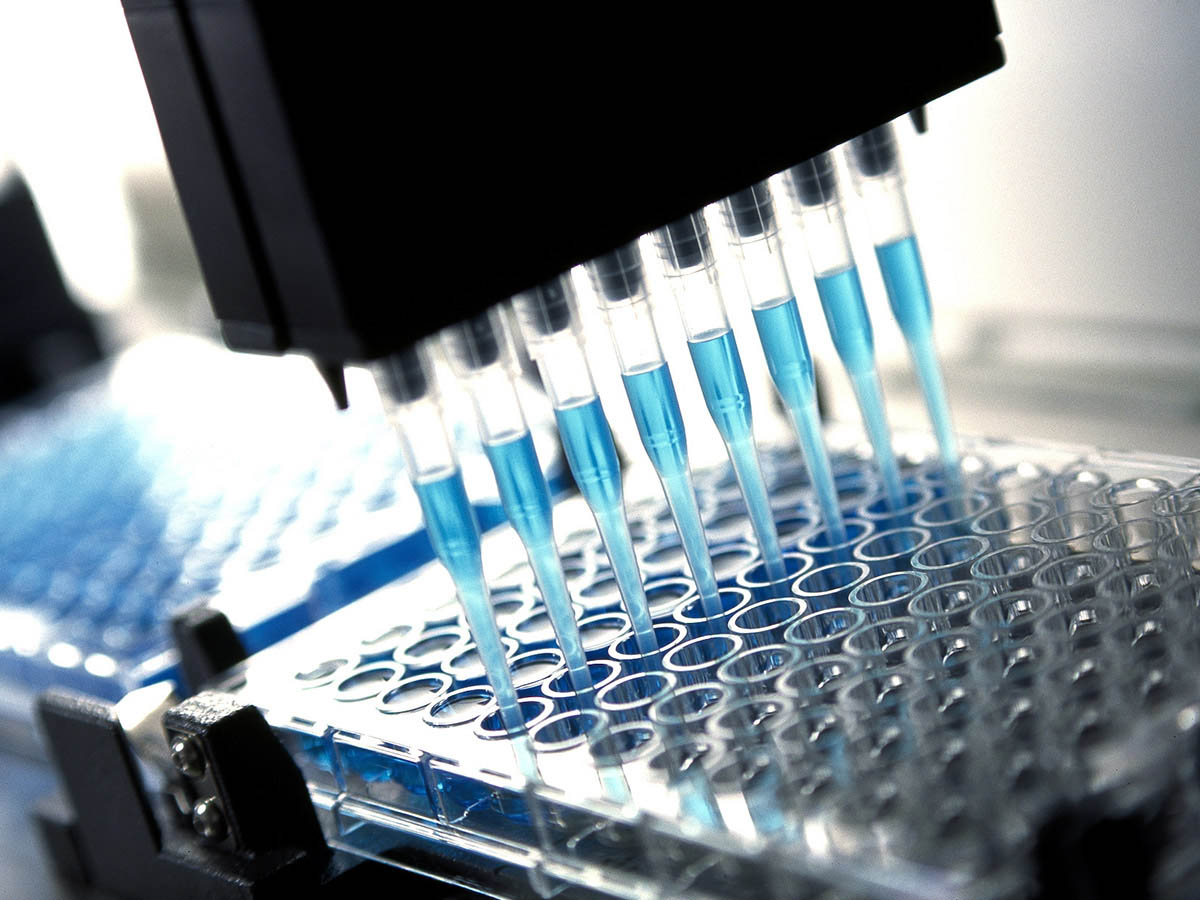
With a focus on practical-based approaches you will learn about cutting edge scientific knowledge and techniques. For example, medical breakthroughs have made it possible to identify the genes associated with many cancers and other inherited disorders.
On this course, you will have the option to take an industrial placement year. Although you'll be responsible for securing your placement, a tutor will support you, monitor your progress and assess your final placement report.
Recent Pharmaceutical Science students have been offered placements at Pfizer in Kent, the Transplant Centre at Wythenshawe Hospital, and the Cancer Research UK Manchester institute.
Course leader: Robert Hyde
Year One
Cell biology
This module provides a broad knowledge base in cell biology that acts as a foundation for content covered in other areas of the programme. The syllabus primarily focuses on mammalian cell biology and includes key content on the structure, function, cell cycle and techniques used in visualising healthy and diseased cells. The content also focuses on cellular processes and mechanism that occur during growth and death, you will learn about cell signalling and finally the metabolic processes that occur at a cellular level that are essential for life.
Introduction to Organic Chemistry
The aim of this module is to introduce organic chemistry through structure and mechanism. You will study organic reactions of key functional groups such as alkenes, carbonyl and aromatic compounds.
Genetics
Genetics has become a central topic not only in biological science, but also for topics such as data science, art and culture. Genetics is revolutionising all spheres of life at an unprecedented speed. It is central to all areas of biology, from cellular development and reproduction to conservation and biodiversity. In this core module, we will provide you with the framework of this diverse area, covering areas from DNA fingerprinting and DNA/RNA editing, to ethics and conservation biology. We will expose you to the latest research in the area of molecular genetics and provide the foundation for your future.
Introductory Biochemistry
The aim of this module is to introduce principles of biochemistry. You will study biochemical pathways and organelles, relevant to cell biology.
Biological Chemistry
This module will help you understand key concepts in biological chemistry, including spectroscopy and spectrometry techniques for identifying small organic molecules; chemical reactivity and molecular interactions; chromatography; and kinetics and thermodynamics.
Biochemical & Pharmaceutical Skills
Year Two
Chemical and Biochemical Research Skills
This module will help you develop your scientific writing and communication skills and understand key statistical methods that may be applied to the chemical and biochemical sciences.
Human Systems Physiology
The aim of this module is to provide a reflective, systems-led approach to understanding the functions of human physiological structures. You will develop awareness and understanding of the multidisciplinary aspects of taking human physiological measurements with a clinical emphasis. This module will illustrate the adaptations of human organ structures to perform their functions within changing environments and physical activity.
Clinical and Molecular Genetics
Clinical and Molecular Genetics will enable students to gain practical skills in molecular biology and bioinformatics, through linked laboratory and computer sessions. The lecture programme is delivered by three academics, each an expert in their specific area of clinical and molecular genetics. Topics covered include, current molecular biology and bioinformatics techniques, the control of bacterial and eukaryotic gene expression and the effect of mutations on gene expression and how this can lead to human genetic diseases.
Genomics and Proteomics
This module provides an appreciation of topics in biochemistry with an emphasis on genomics, proteomics, structural biology and their application in research and industry.
Introduction to Drug Discovery and Medicinal Chemistry
Pharmacology
This module aims to introduce you to the general properties of pharmacologically active ingredients and their effect upon the major organ systems. You will develop an understanding of techniques applicable to research and industry in the field of pharmacology.
Year Three
Biochemistry of Drugs and Disease
This module will provide a contemporary overview of some important disease processes and associated drug intervention mechanisms.
Final Year Project and Professional Skills (Bio 40A)
Content coming soon
Science and Industry
This module will help you develop the understanding of the fundamentals of sustainability and greenness and recovery from a post-pandemic landscape featuring skills sets of biochemistry, chemistry, biomedical, pharmaceutical and personal health care from the laboratory to gaining understanding of the workings of industry. The material issued as lecture notes and support guides will be all released pre-module and each lecture session will ‘flip-learning’ to ‘workshop’ through the academic staff and invited industry speakers for ‘real world’ experience
Applied Pharmacology
This module will enhance your understanding of pharmaceutical analysis and other aspects of drug development including pre-clinical and clinical trials.
Choose from the following:
Biochemistry and Pharmaceutical Sciences Placement
Content coming soon
Advances In Pathophysiology
This highly interactive optional final year module allows students to explore methods used in the diagnosis, monitoring and treatment of cardiovascular and respiratory (thoracic) diseases. Assessment of the module uses real case studies to enable students to develop both their analytical and critical narrative skills. Students will learn mechanisms of disease, how these relate to clinical outcomes, how patient care plans are developed, and the future approaches of thoracic medicine. Special features of the module include full CPET testing in the Health School human performance lab and the opportunity to visit to the North West Lung Centre to engage with clinical pulmonary testing.
Frontiers in Medicine Design
This module will introduce you to the latest technologies and techniques used in modern medicine design. A major component of the module will focus on computational techniques used in the drug development process and computer lab classes will provide you with the opportunity to use industry standard software. In addition, you will also learn about the latest developments in 'wet' laboratory techniques that are assisting in the development of treatments for conditions such as HIV and SARS-COV-2.
Year Four
Advanced Biochemical and Pharmaceutical Analysis
Content coming soon
Data Analysis Skills
Content coming soon
Research Project
Content coming soon
Advanced Topics in Pharmaceutical Science
We take a flexible approach to our course delivery that promotes diversity and inclusivity and provides a blended learning experience, which will vary to meet specific programme requirements. This learning time includes formal lectures and interactive activities such as seminars, tutorials, practical sessions, laboratory and studio learning. Smaller classes may be used to support collaborative activities such as project and group work and presentations. A range of different assessments and feedback is offered to meet the needs of both our diverse student body and specific subject needs.
Our undergraduate courses are normally made up of 20 credit modules which are equal to 200 hours of learning time. A three-year degree qualification typically comprises a total of 360 credits (120 credits per year).
Please note that exact modules and content offered may vary in order to keep content current and, for courses that offer optional modules, may depend on the number of students selecting particular options. When accepting your offer of a place to study on a programme with optional modules, you should be aware that optional modules may not all run each year. Your tutor will be able to advise you as to the available options on or before the start of the programme. Whilst the University tries to ensure that you can undertake your preferred options, it cannot guarantee this.
Entry requirements
APPLICANT PROFILE
We are looking for applicants with a strong interest in how modern medicines work, from their initial design to final manufacture. You will be motivated to study biological and chemical sciences with an interest in developing advanced laboratory skills.
ENGLISH LANGUAGE REQUIREMENTS
All of our courses are taught and assessed in English. If English is not your first language, you must meet our minimum English language entry requirements. An IELTS score of 6.0 (no element below 5.5) is proof of this, and we also accept a range of equivalent qualifications.
Read more about our English language requirements, including information about pathways that can help you gain entry on to our degree courses. If you do not have the English language requirements, you could take our Pre-Sessional English course.
INTERNATIONAL APPLICATIONS
Please check international intakes for the latest information and application dates.
Standard entry requirements
GCSE
The minimum requirement is a Level 4 GCSE (Grade C) or above in English and Maths.
International student entry requirements
We accept qualifications from all around the world. Find your country to see a full list of entry requirements.
UCAS Tariff
112 UCAS Points.
GCE A Level
You will need 112 UCAS points including Biology and Chemistry (Grade C).
Scottish Highers
You will need 112 points including Higher Level Chemistry and Biology
Irish Leaving Certificate
You will need 112 points from Higher Level including Higher Level Chemistry and Biology
T Levels
Overall Merit required in Science.
Alternative entry requirements
Accreditation of Prior Learning (APL)
An applicant who does not possess one of the qualifications which satisfies the General Academic Entry Requirement may be considered through the Accreditation of Prior Learning (APL) as per the University's Admissions and Retention Policy.
International Baccalaureate
You will need 30 points including grade 4 in Higher Level Biology and Chemistry.
Salford Alternative Entry Scheme (SAES)
We positively welcome applications from students who may not meet the stated entry criteria but who can demonstrate their ability to successfully pursue a programme of study in higher education. Students who do not have the traditional entry requirements may be able to apply through the Salford Alternative Entry Scheme. Support in preparing for the written assessment is available from the University.
Not sure how many UCAS points you have? Use our UCAS Tariff Calculator to find out.
Fees and funding
See fees below
2027/28
| Type of study | Fees |
|---|---|
| Full-time | £10,050 per year |
| Part-time | Part-time costs will be calculated on a pro-rata basis. |
2027/28
| Type of study | Fees |
|---|---|
| Full-time | £18,120 per year |
The tuition fees shown are for the first year only. If your course lasts longer than one year, fees may increase each year in line with inflation, up to the maximum limits set by the UK Government.
Additional costs
You should consider further costs which may include books, stationery, printing, binding and general subsistence on trips and visits. Scholarships are available to home fee students who are part of one of nine underrepresented groups as identified by the OfS, with scholarships prioritised for women, black students, students registered disabled and those from low socioeconomic backgrounds. For full eligibility criteria and further information, visit our fees and funding page. International student scholarships If you are a high-achieving international student, you may be eligible for one of our scholarships. Learn more about our latest international scholarships.
How to apply
Enrolment dates
Student information
Terms and conditionsUCAS information
Course ID F152
Institution S03