Building sustainable and accessible prosthetic services across Uganda

Timothy Isingoma is an orthopaedic technician based at Fort Portal Regional Referral Hospital in Uganda, providing services to prosthetic users just like himself. Researchers at the University of Salford work in partnership with Timothy and his team to exchange knowledge and support the development of sustainable care for people with limb loss in Uganda.
Limb amputations are much more common in low- and middle-income countries than in high-income countries. For many people in Uganda, this is the result of traumatic events such as road traffic accidents or experiences of conflict. Others are affected by congenital conditions, infections, or tumours - each bringing its own challenges and impact on people’s lives.
Employed by Knowledge for Change, Timothy is the Head of Rehabilitation, based at Fort Portal Regional Referral Hospital, providing holistic treatment and care for people with limb loss. He also leads a programme providing community-based education to people with type two diabetes.
“I’ve worked for Knowledge for Change in Uganda since 2020 as the head of the rehabilitation section providing prosthetic services to people with prosthetic limbs, such as artificial legs or artificial hands.
“The government is implementing a strategic plan that focuses on extending services into the community and reducing congestion in hospitals, so more recently we have also decided to go deeper into the community areas to educate people with type 2 diabetes on how to manage their condition.
“People with type 2 diabetes are particularly at risk of getting ulcers, which tend to be very complicated and can take a long time to heal. Sometimes they don’t heal and that’s when it may lead to amputation.
“The programme is about preventing people from reaching that point and reducing the numbers of people losing limbs, as well as the pressure on the hospitals.”
Losing a limb can have profoundly life-altering consequences in low- and middle-income countries. Many people rely heavily on physical work - such as manual labour, farming, or transport - to support themselves and their families. When this is taken away, it often means not just a loss of mobility, but a loss of livelihood.
Without the safety net of social security systems to provide financial or practical support, individuals are left to navigate this hardship largely on their own, making recovery and adaptation especially challenging.
Timothy had his own leg amputated while he was studying to be an orthopaedic technologist, following a road traffic accident 10 years ago.
“Life is really challenging for people with limb loss in Uganda – including myself; I’m a service user as well as a service provider.
“While I was studying for a diploma in orthopaedic technology, I used to drive a lorry during the holidays to earn a living. And that’s when the accident happened on the highway, in October 2016.
“I didn’t lose my leg straight away after the accident, however after a period of treatment at the hospital, they decided it was the only option and it was amputated in 2017. I couldn’t believe, as someone who was so used to doing so many things, that I wasn’t going to be able to walk by myself or access anywhere easily.
“It changes the entire life of the person who has lost a limb in many ways – socially, financially. You have to go through the really hard process of accepting this has happened and this is how I’m going to live the rest of my life. And I really found life difficult at first.
“Sometimes I would forget that I don’t have my leg, I’d wake up in the morning thinking I was going to work and fall down getting out of the bed.”
Access to prosthetic or orthotic devices is extremely limited in Uganda due to them being relatively expensive to design, manufacture and maintain.
“At the time, I was trying to adapt to using my first prosthetic, it wasn’t easy trying to get my head to understand that the leg I’m using is a prosthetic leg, an artificial leg that isn’t flexible and can’t bend. But I could walk independently and I found it better than crutches, which gave me a hard time.
“Eventually I completed my studies and graduated in 2019 with a diploma in orthopaedic technology. During one of my placements at Fort Portal Hospital, I had met a really nice guy and I kept asking him if there were any job opportunities. One day, he finally got in touch and told me there was an opening for a medical technologist. The next day I took a six hour bus journey from my village to the hospital and I met Professor Louise Ackers. Since then, I’ve been working with Knowledge for Change, supported by the University of Salford.”
Researchers from the University of Salford work closely with partners in Uganda to improve access to prosthetics services, develop affordable and locally-manufactured prosthetic devises, and a better understanding of the everyday realities faced by people living with limb loss.
Their work includes some of the first user-needs studies conducted in these settings to centre the voices and experiences of prosthetic users, helping to shape more effective services and inform policies that truly reflect people’s needs.
The partnership is a perfect example of The Power of Us, the University’s rallying call and shared story of progress, resilience and achievement built on teamwork and collaboration.
“It’s through the University of Salford that I’m able to learn new and innovative approaches in different areas, such as orthotic management, diabetes prevention and wider clinical practice.
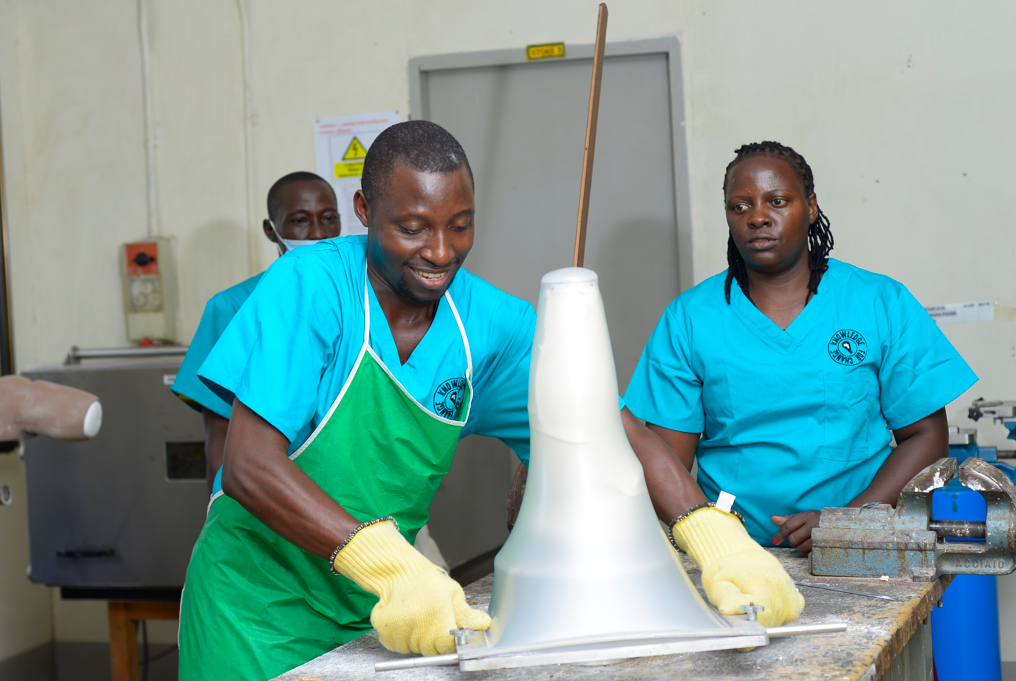
“The team is really supportive and encouraging. I’ve learnt new ways of doing things such as socket manufacturing or bubble draping, so we are now able to produce various devices using different techniques. We’ve often shared knowledge through virtual learning with the team in Salford and us in Uganda, and I’ve recently visited the University of Salford for three months on a UK Commonwealth Fellowship programme.
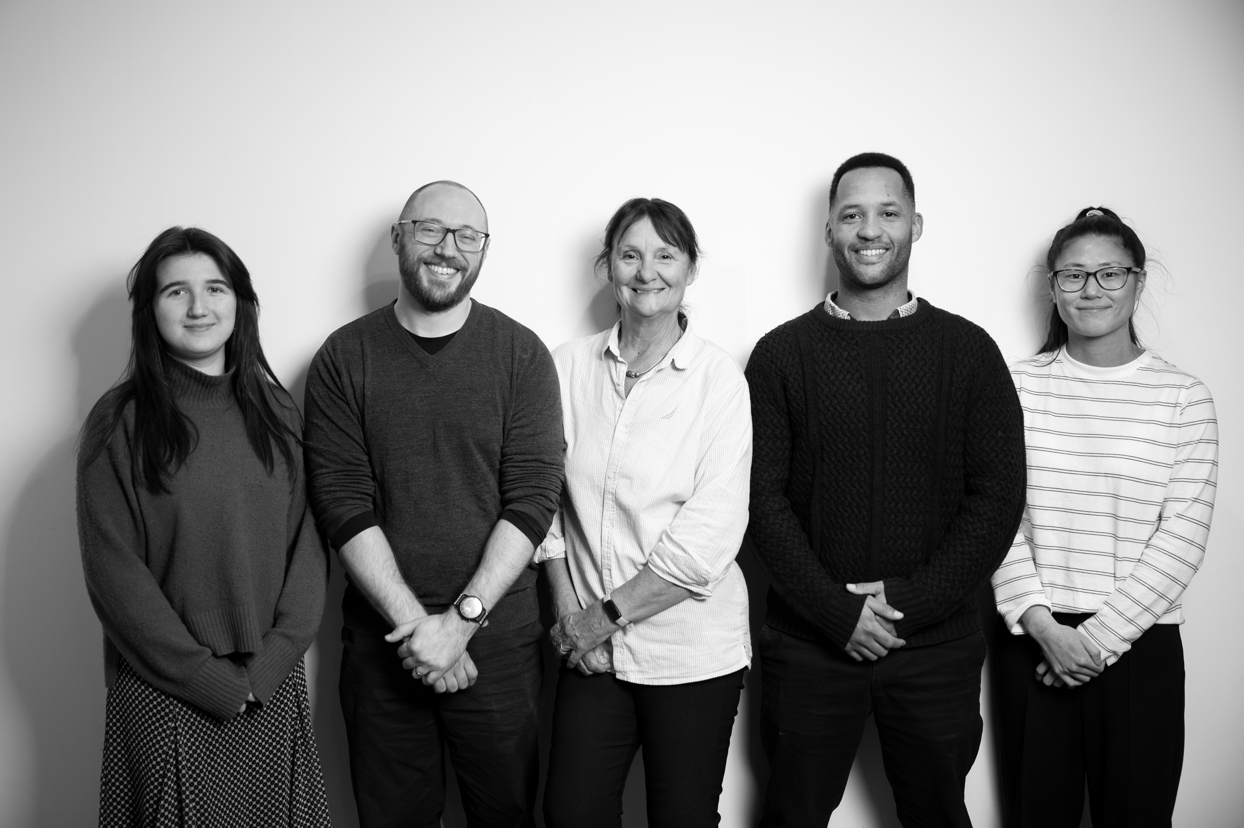
“As well as learning new techniques, my knowledge professionally and my personal experience also helps to inform the efforts of the researchers at the University of Salford. Together, we’re influencing policy and encouraging change with partners like Uganda’s Ministry of Health.
“One of the things we’re currently advocating for is co-ordinating all the services around surgery and rehabilitation. When I work with patients and they share their journey with me, often they have very different experiences in terms of the treatment and services they access. "Hospitals don’t always make them aware of adaptations and the possibility of getting a prosthetic and actually being able to walk again. Our aim is to link the regional referral hospitals to the other services around rehabilitation.
“We’re also educating the surgical teams as they don’t have a lot of knowledge about what goes on in the prosthetic workshop, so that when surgeons are performing amputations, they are done in a way that means the residual limb will work well for a prosthetic fitting.”
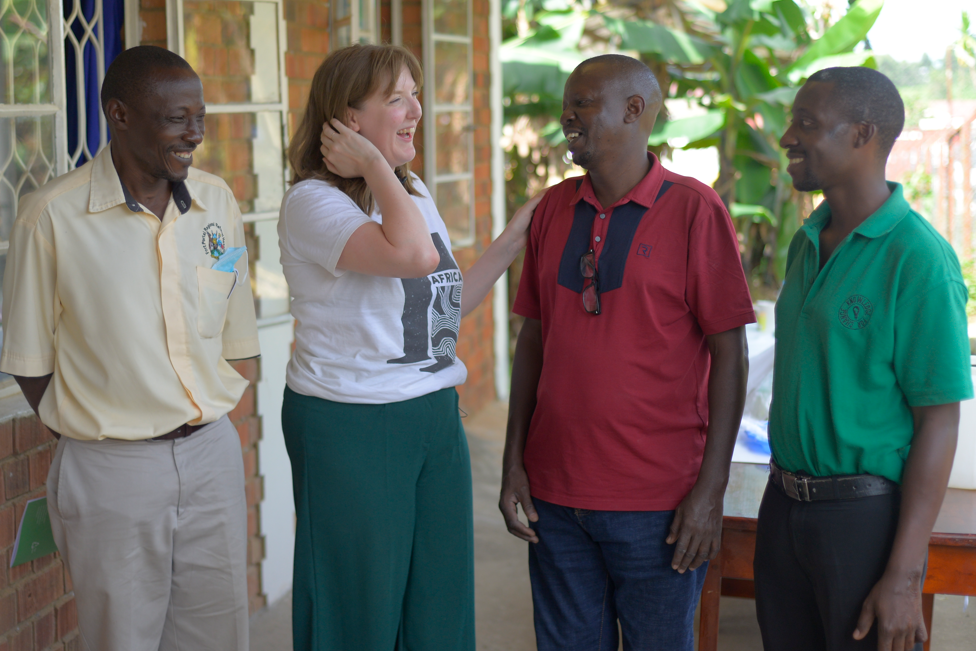
Timothy provides inspiration to his patients in the hospital who are undergoing amputation.
“When someone loses a limb, most times people tend to think it is the end of it all. When people see me working, they often don’t realise I have a prosthetic. When I tell them that we are the same, they can’t believe it. I show them my prosthetic leg and it gives them hope that it is possible, that they can walk again.”
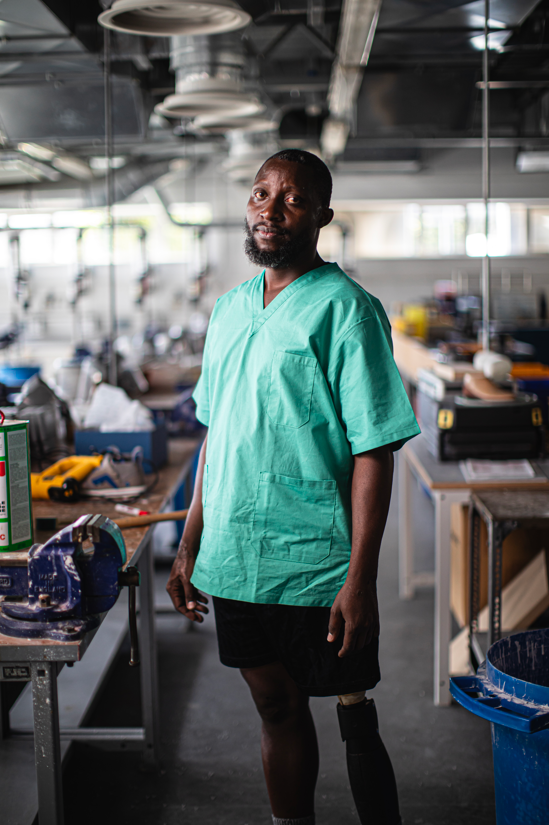
Timothy Isingoma features in the University of Salford’s Heart of the Community exhibition, which includes portraits of seven different people in the community who have collaborated with the University’s academics on a variety of research projects. Timothy is pictured in the prosthetics workshop at the University of Salford. The exhibition runs from Monday 22 June to Thursday 27 August 2026 in the New Adelphi building on the University of Salford’s Peel Park campus.
For all press office enquiries please email communications@salford.ac.uk.