
Bringing the local community together to co-create an urban food project in Clayton

Alicja Golicz has called Clayton home for more than a decade, building strong connections with the people and place around her. Drawing on her background as a nurse, therapist and herbalist, she is committed to both community wellbeing and the natural world.
When the opportunity arose to take part in a University of Salford research project bringing local residents together to co-create an urban food initiative, Alicja was keen to get involved, believing it would have wider benefits for the community.
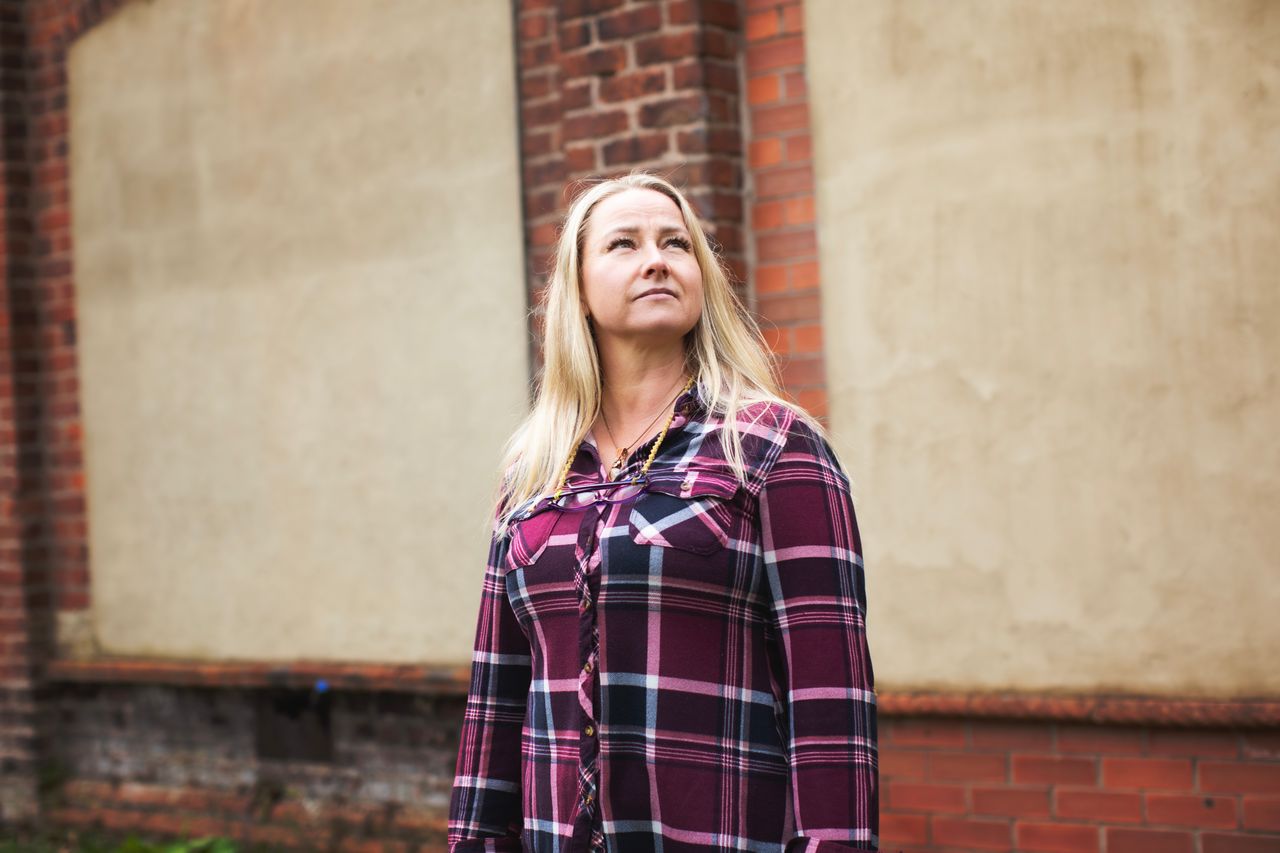
Alicja said: “The community here means a great deal to me - not just as a neighbour or in my role as a therapist, but because I’ve lived here for over 10 years. Through that time, I’ve come to know many people from all kinds of backgrounds and ages.
“I feel safe here, and I think others do too. When people know each other and see the good being done around them, it creates a real sense of trust. You recognise faces, you understand each other and that builds a feeling of security.
“That’s why community matters so much to me. It’s incredibly important, especially the one I’m part of and call home.”
Alicja heard that the University of Salford was launching a research project in Clayton that would bring local people together to develop an urban food project.
“As a nurse, I really cared about health promotion, from the very beginning of my nursing. Now, as a therapist and a herbalist, I am very close to nature. I know that it gives you physical and mental wellbeing, it supports you so much.
“When I heard about the idea of the community getting together to grow our own food, which I am doing anyway in my little garden, I really loved the idea.”
 Andy Jenkins, University Fellow
The University of Salford’s Think It Make It Grow It research project is all about bringing people together around a shared goal. It works with local communities to co-create urban food projects, helping people feel a real sense of ownership over what they build. The research also looks at how this collaborative, co-creation approach can contribute to the long-term success and ongoing legacy of these initiatives.
In Clayton, Dr Andrew Jenkins and the team from Salford partnered with The Resonance Centre, which offers holistic health and wellbeing classes to the local community. They invited residents to take part in a series of workshops shaped around a design sprint process - working together to imagine, design and test ideas for urban growing.
Alicja explains: “The University of Salford came with knowledge and support for our community, and the local people could bring their experience of the area and ideas of what they would like to create. I thought I could also share my own knowledge as a domestic gardener and a professional herbalist too.”
During the initial workshop, participants were introduced to urban agriculture and invited to think about what they would want to grow, how they would use the space and what would matter most to their community. The residents were encouraged to consider their favourite meals to develop a list of useful crops and hundreds of precedent images were used to help create a foundation for design development.
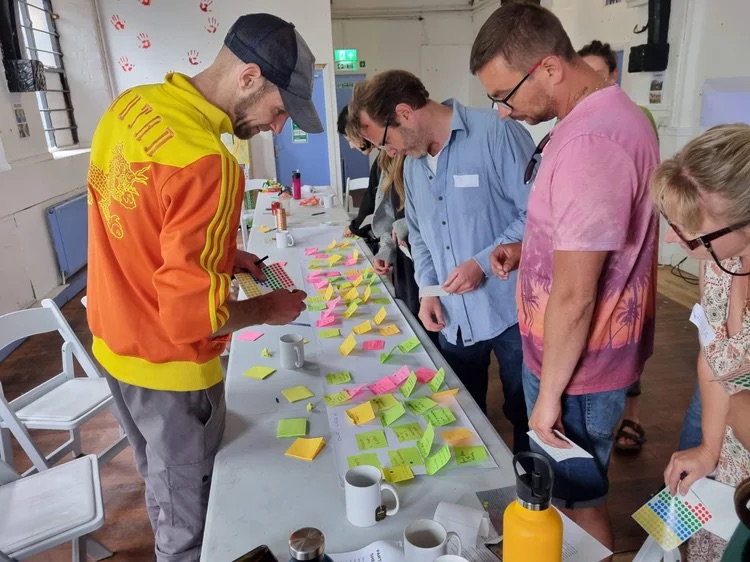
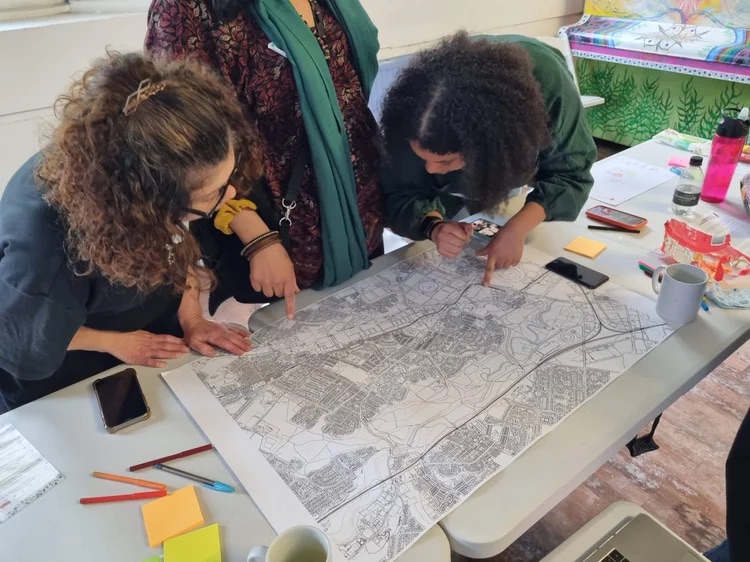
In a follow-up workshop, the group’s ideas were combined together to shape a final design that reflects the community behind it.
Storyboarding was used to explore how the proposal might be used on a daily and weekly basis, and the group decided on a location for the design.
“My partner Tom also came to the workshops – he’s a handyman and a builder – and it was actually his idea that was chosen by everyone as the one we wanted to take forward! Obviously everyone has now played a part in shaping that and what the final design looks like.”
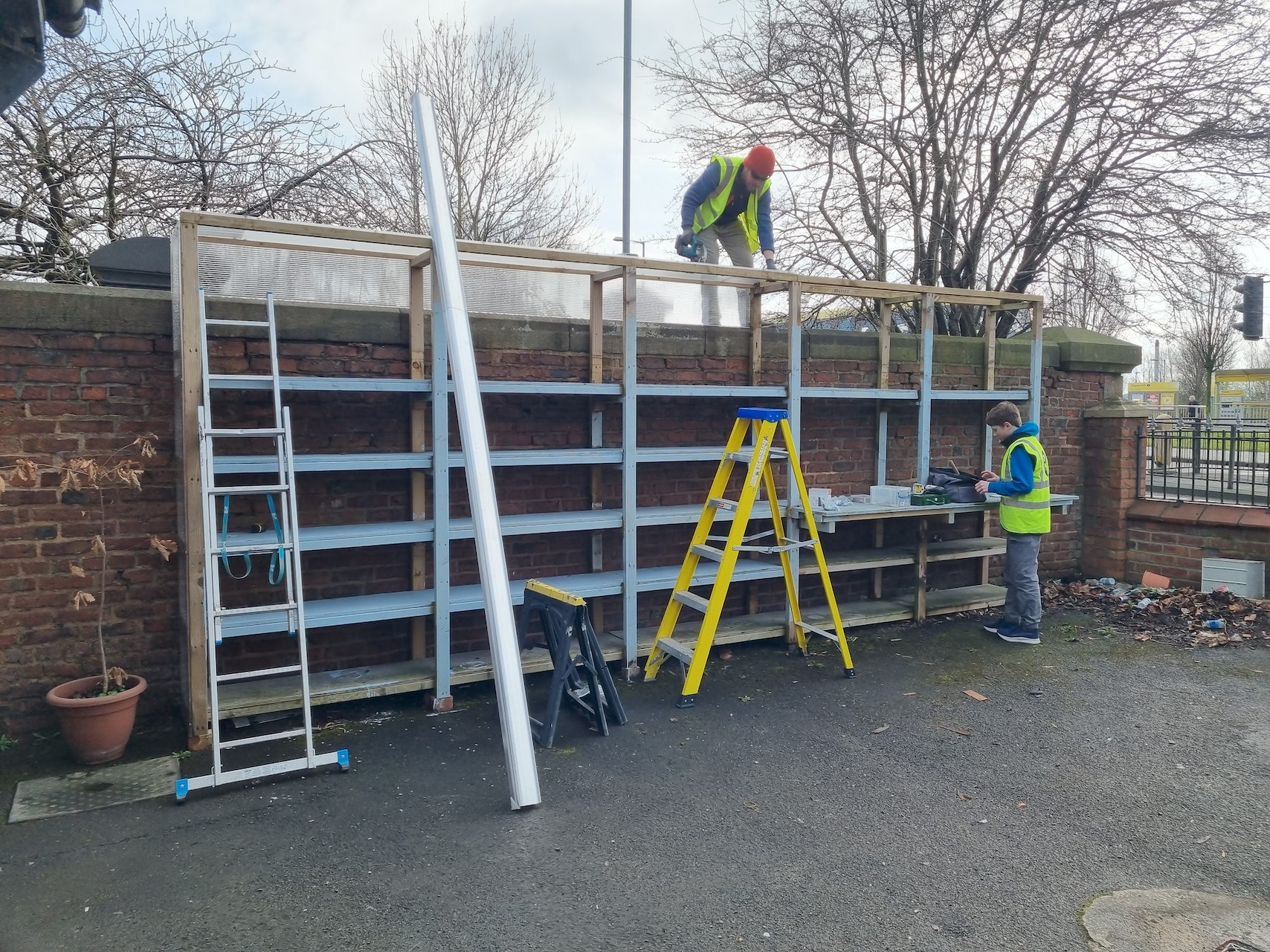
The community called their chosen design the Wonderwall, which made use of an existing structure in the car park of The Resonance Centre. It would capture rainwater that would later be used to feed a hydroponic system – a method of growing plants without soil, using water, nutrients and a growing medium.
The Wonderwall was developed in detail over the coming months and later constructed on-site. With a sliding door on the left hand side to maintain conditions for a seedling bank where people can share and swap plants, a growing space along the top and a potting shed-cum-market stall, the project is almost ready to deliver high impact in the local community.
Alicja said: “We’re currently in the process of changing and slightly amending the Wonderwall. We’ve decided to move the shelves a little so there is more variety in size. There will be smaller ones for the seeding part and seedlings, and larger ones for the plants to have space to grow bigger.”
Growing food in cities offers a wide range of benefits. It encourages people to be more active and can improve physical health, while University of Salford research has shown that regular contact with green spaces has a positive impact on mental wellbeing.
Urban growing can also support better nutrition, it reduces food miles and makes communities more resilient by producing food closer to home. It also creates space to rethink and innovate our food system, helping to ensure equitable access to food for everyone.
For Alicja, it’s about providing an opportunity for the community.
“This project was really about collaboration and bringing local people together. The Wonderwall is a place where people can come, connect and make something good together as a community.
“These days I think because of the internet, people are isolated, and they are lacking physical contact. This project has provided a space where it takes us back to people connecting together in person and exchanging good energy, good vibes – which is ultimately for the benefit of our physical and mental health.
“It’s about a sense of ownership as well. Feeling proud knowing you’ve done something positive – not only for myself, but for others too.
“I think the full process of the workshops was inspiring, from the teamwork and building something together to seeing the finished structure. I believe it can have a really positive impact on the local community in the coming years - bringing people together and giving them the chance to share and learn from each other.”
Alicja Golicz from Clayton features in the University of Salford’s Heart of the Community exhibition, which includes portraits of seven different people in the community who have collaborated with the University’s academics on a variety of research projects. Alicja is pictured in front of the Wonderwall outside The Resonance Centre. The exhibition runs from Monday 22 June to Thursday 13 August 2026 in the New Adelphi building on the University of Salford’s Peel Park campus.
For all press office enquiries please email communications@salford.ac.uk.