
Supporting vulnerable communities with accessible and sustainable warmth

Growing up across south and southeast Asia, Sri Hollema witnessed firsthand the daily challenges faced by vulnerable communities with limited access to reliable energy and heating. She is now the founder of Mat Zero, which is developing safe, portable and sustainable heating solutions for displaced communities and disaster relief efforts.
The team from the Energy House Labs at the University of Salford supported Sri to develop the Mat Zero product, testing it in extreme conditions to ensure it would be able to withstand even the most exceptional circumstances.

“My parents are humanitarians and throughout my childhood I lived in different countries around the world. One thing that didn't really sit well with me - a difficult thing to try and comprehend growing up - was the disparity in energy access between people within countries.”
Sri studied design and technology, with a focus on simple but effective designs for both people and planet. After graduating, Sri established Mat Zero as an impact-first enterprise.
“When I first started out, it wasn't like there was this light bulb moment. It was more an accumulation of the constraints I had set for the design - considering how much energy is needed to keep someone warm, what happens when there is no access to mains power or generators, and how the product would need to endure harsh environments. All of these research points, combined with conversations with people on the ground, began to come together almost organically, eventually presenting themselves in the form of a mat.
“I graduated from university with a prototype that was basically a yoga mat with heaters on it.
“We created the company based on this initial concept and then immediately started developing it – we knew the yoga mat wasn’t going to cut it!”
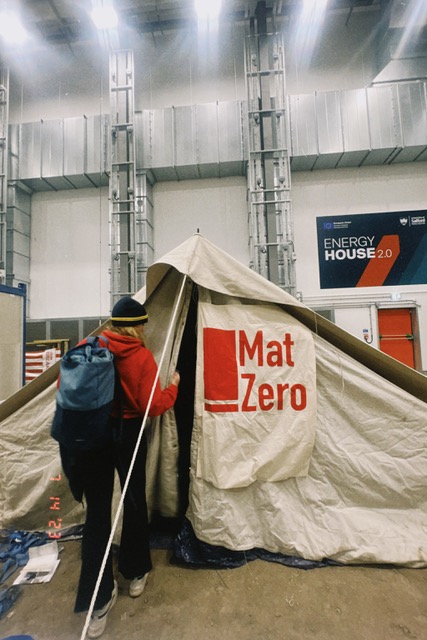
Energy House 2.0 at the University of Salford is a unique facility that can test the energy performances of buildings and products in any climate - it has a temperature range of -20°C to 40°C and can recreate winds of 30mph, rain, snow and solar gain. It reduces the time taken to collect the data needed to evaluate performance from months or years to a matter of weeks, meaning accurate results can be achieved very quickly.
“Our partnership with the Energy House team has been fundamental to Mat Zero from the very beginning – all of our prototyping has taken place in their labs.
“One of the first things we did together was figure out how little energy is needed to keep someone warm.
“And then we kept iterating – testing, learning and improving - understanding the thermal implications of different environments and how heat works around the person.
“It didn’t actually work the very first time we tested it, so it was back to the drawing board. We sat down with Professor Richard Fitton and he came up with ideas and materials that we could use, that they knew performed really well in cold conditions.
“We’d make tweaks and then test again, until we landed on the product we’ve got today. The climate control chamber was perfect because, even in the height of summer, we could go and test our product in extremely cold conditions. Having access to that level of facility has been a huge part of why the product is so well built.”
The version of Mat Zero developed by Sri has come a long way from the original yoga mat and now has three different variations in size.
“Mat Zero is a relatively simple, but radical idea. It's a product that heats the person and not the space. It's in the form of a mat, so you can sit, lie or sleep on it and, as heat rises, it warms you up directly. It's part of a three part system of a solar panels, battery and the mat.”
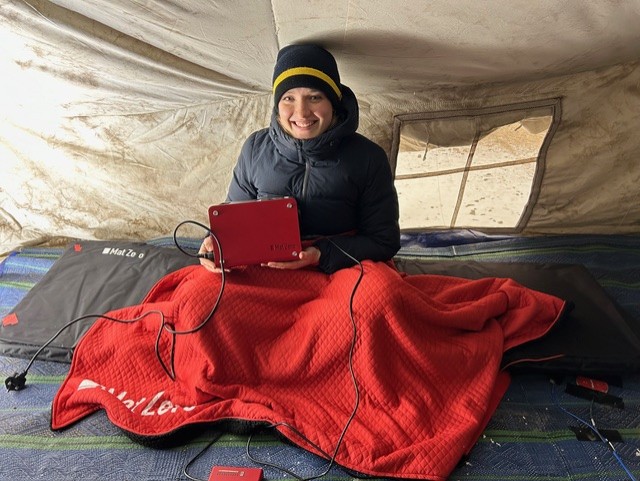
“One of the unique aspects of our heaters, which came out of our testing in Energy House, was embedding sensors in the mat that measure you so that it doesn't use as much electricity once you've heated up.
“Instead of constantly drawing continuous power, it recognises that you’re warm and you don’t have to now take as much energy. It stops, while you cool down, and then it heats back up when needed. It's like a sine wave approach of heating, which makes it more energy efficient and conserves battery power.
“During the development of Mat Zero, the original intention was to put it into refugee camps, disaster relief, humanitarian efforts and that’s definitely the core of our company. We’ve also had interest from people going camping or exploring – it's been on an expedition to Everest – and also within everyday use for comfort, in home offices when it’s cold or to heat seats in stadiums, as a low energy, effective heating solution.”
Sri has focused her efforts on supporting people in Ukraine and Nepal, however she has ambitions to expand worldwide.
“Because of the war, people in Ukraine are living in extreme conditions. Last winter, there were two million people without power and it's -20 degrees celsius. So we sent our Mat Zero kits there working with a Non-Governmental Organisation (NGO).
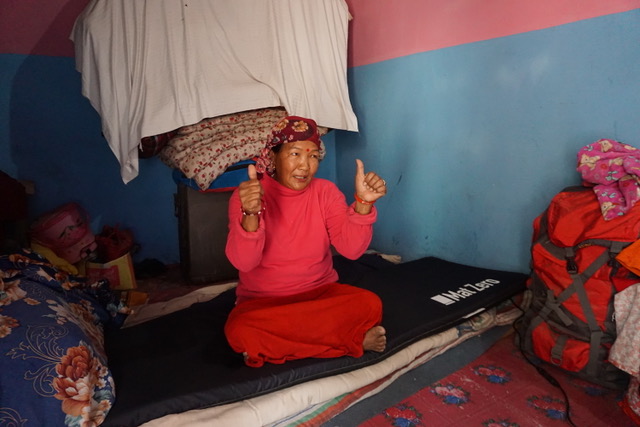
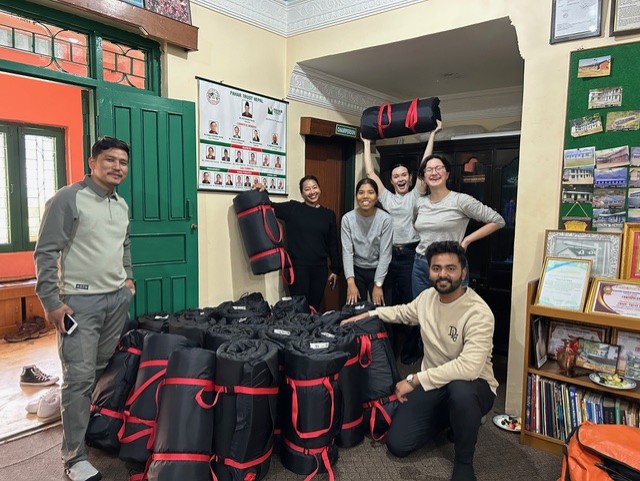
“In Nepal, we've done some government-funded projects and research projects around air quality and on introducing this technology into homes and medical centres, particularly given the country’s remote nature. There are medical clinics across Nepal that are often off-grid or reliant on unstable electricity, so we support these by providing the mats as a heating solution in these challenging environments. They've been our focus countries for now but we hope to expand across the globe in future.”
Mat Zero is now making a real difference in the settings where it has been introduced.
“Hearing the feedback during our first pilot study in Nepal is something that I think about quite a lot.
“People were in tears explaining how warmth had helped to relieve their back pain or pelvic pain. I'm not claiming Mat Zero will solve all of those medical challenges, but it just shows that something so basic, like being warm, is not accessible to so many people. When times are tough in a start-up, I go back to that moment. This is why we’re doing this – being warm is such a fundamental need and it’s also a dignity piece.”
The academics at the University of Salford supported Sri throughout her journey. The partnership is a perfect example of The Power of Us, the University’s rallying call and shared story of progress, resilience and achievement built on teamwork and collaboration.
“We’ve continued to have a really good relationship with the team at Energy House and they’ve been so generous - they let us go back recently to do some more testing in –20 degrees celsius before sending Mat Zero to Ukraine and on the expedition to Everest.
“And actually, we’re really aligned with the mission of the team at Energy House. I founded Mat Zero with a simple belief: warmth is a human right, not a luxury. Heating is an everyday necessity, yet its inaccessibility for millions is rarely spoken about, and too little is done to change it.
“While often associated with extreme poverty, the struggle for safe and affordable heating is also a reality in countries like the UK, where rising energy costs leave many unable to heat their homes. A lot of what Energy House does is about trying to tackle fuel poverty at scale through energy-efficient housing.
“We do it on a more individual level and take our product into settings and environments that are a little outside of that scope but still aiming to tackle the same issue – making sure everyone has accessible and sustainable warmth.
“Ultimately, Mat Zero’s mission is to innovate, deliver safe and sustainable heating for people who need it, empowering communities around the globe through clean and sustainable technology.”
Sri Holleman features in the University of Salford’s Heart of the Community exhibition, which includes portraits of seven different people in the community who have collaborated with the University’s academics on a variety of research projects. The exhibition runs from Monday 22 June to Friday 14 August 2026 in the New Adelphi building on the University of Salford’s Peel Park campus.
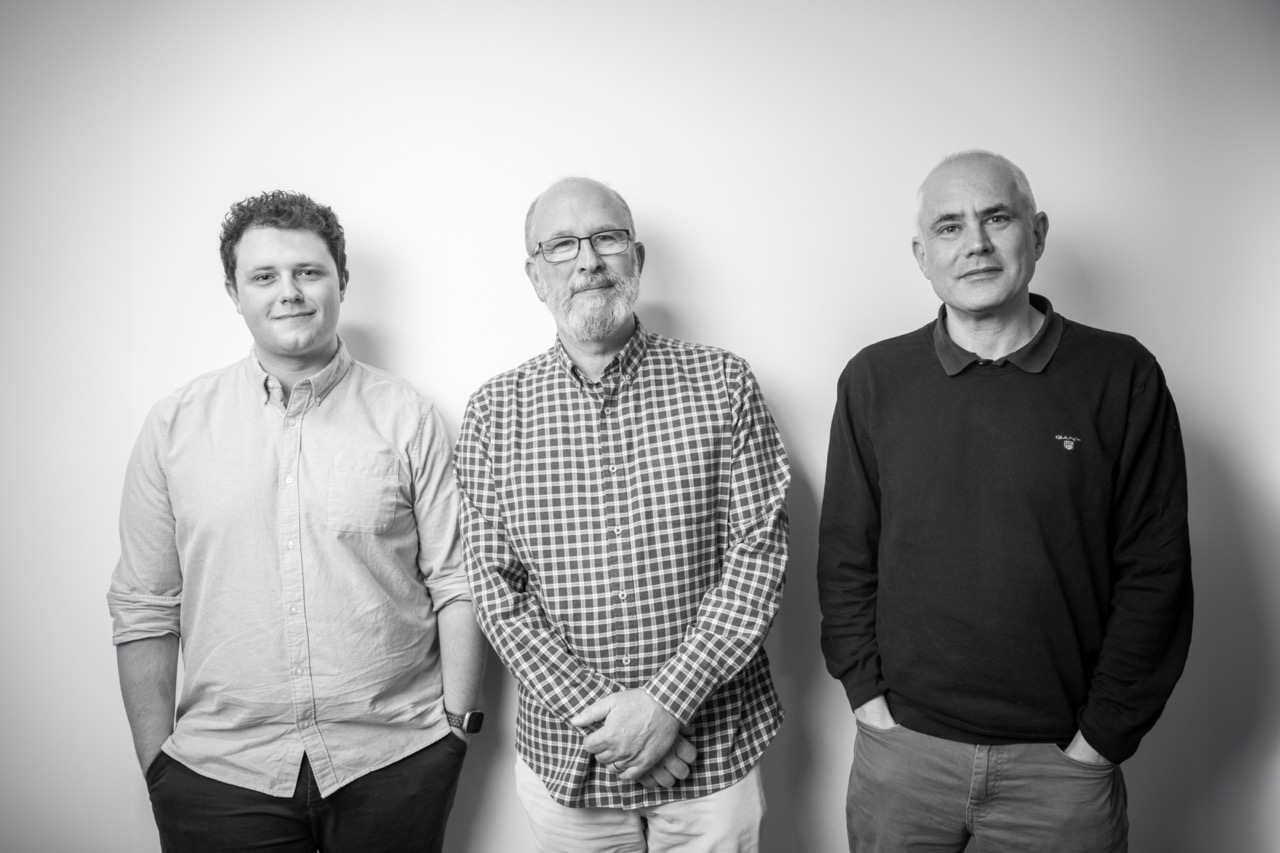 The team at Energy House
For all press office enquiries please email communications@salford.ac.uk.