
Architecture portfolio advice

Architecture is an engaging degree that combines creativity with critical theory. But this also makes it a popular choice, and means that competition for places is high. Make your architecture application stand out from the crowd by reading our hints and tips on writing your application and preparing your portfolio.
Why we ask for a portfolio
Your portfolio helps us understand how you think, develop ideas and communicate visually. We are not only interested in finished work. We want to see your curiosity, experimentation and creative process.
A strong portfolio reflects how you observe the world around you and explore architecture through making, drawing, modelling and visual thinking.
Shape your portfolio
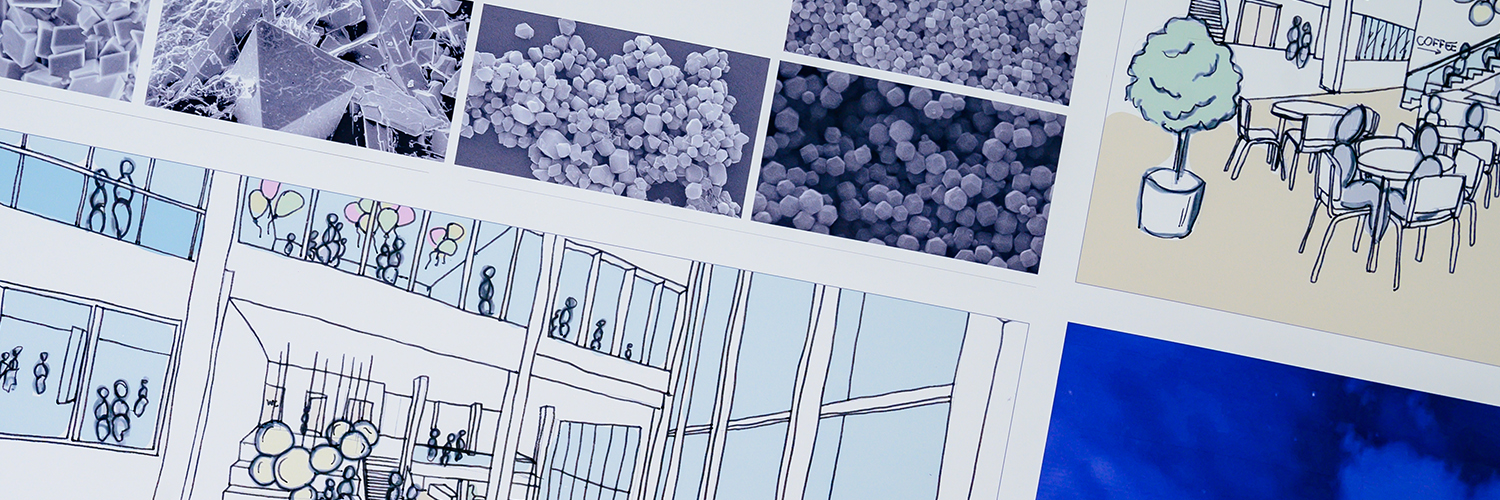
There is no single correct way to put an architecture portfolio together.
Your portfolio should be a clear, well‑organised collection of your work that shows:
- how ideas begin and develop
- how you explore form, space and context
- how you communicate visually
Think about how each piece is presented so your work can speak for itself.
Who this guidance is for
This guidance is for both undergraduate and postgraduate applicants.
- BSc (Hons) Architecture
- BSc (Hons) Architectural Engineering
- BSc (Hons) Interior Architecture
- MArch Architecture
Portfolio guidance
What do I need to do?
Submit an online portfolio
The portfolio we ask you to submit will give us understanding of not only your representational and creative skills, but also your critical thinking. This document should therefore contain your work showing how it demonstrates both your creative skills and the way you look at the world around you.
Putting your portfolio together
We recommend using an A3 format and a range between five to ten pages.
Your work should be easy to look through and it should be clear what each piece is – remember that you are not, in general, there to explain individual items to the people looking at your portfolio. Text, neat labels, or a sheet of contents, for example, can help to explain what you have produced. Give a value to what you do and make sure that you present it in a way that does the work justice – this might mean that you produce a ‘cover’ page or carefully consider the layout of images submitted.
Make sure that a very short description of the task given is included in order to assist the person looking at your portfolio to understand the task you were given and how you have developed it. It is very important that if you are taking photographs of your original work, that you select a neutral environment with good quality light and a high-resolution camera. If you are scanning the pieces, make sure the resolution is also appropriate.
Undergraduate applicants
The portfolio does not need to be architectural in any way and may include drawing, painting, sculpture, photography, graphics, product design or any other work in visual design. What we like to see is an interest or affinity with architecture in the portfolio.
Postgraduate applicants
Your portfolio should include relevant work from an undergraduate architecture course which shows achievement of ARB/RIBA Part 1 (or non-UK equivalent), plus any work completed in practice which might be relevant. Portfolios should demonstrate a range of creative and representational media, including various forms of drawing and three-dimensional making. Relevant written work should also be included.
Visit the ARB website for more information on the ARB/RIBA Part 1 criteria.
What are we looking for?
Your portfolio does not need to be architectural in a technical sense. We welcome work from art, design or creative subjects you have studied or explored independently.
You can include:
- Freehand drawing/sketching
Many architects use quick free-hand sketches to communicate their ideas. We are interested in seeing your sketching and drawing skills.
- 3D work such as modelling or sculpting
Models are a way to understand a design. They demonstrate the dimensions of spaces, their relation to each other, how light enters them and much more. 3D work and models show your skills in model making and your ability to communicate the quality of architectural spaces.
- Visual/conceptual ideas
What are you curious about when looking at architecture? How do you 'see' and interpret the world around you? Which connections do you make between building and it's context? Such questions can be explained in a range of ways and images.
- Graphic communication and photography
A building can be presented in a range of different ways through photography and the medium of photography itself is very broad. Interpretations of a mood, travel photography, detail shots or digitally enhanced images can help you to show what you think about a building.
- Drafting and digital work
If you have any ICT skills, we would like to know about it. Can you use modelling software, have you worked in an architectural firm and prepared drawings? Have you modelled any existing building in a school project? ICT skills are not essential when submitting a portfolio - you will learn those while you are studying - but if you already have worked with drafting software, then such images can be a good addition to your portfolio.
- What is it about architecture and art - old and new - that fascinates you?
A personal view and interpretation of a building or art form can show us a lot about your interests.
What format does this need to be in?
- A single PDF, no larger than 5MB
- We recommend a clear, uncluttered layout
- You may also include links to your online platforms such as: Instagram, blogs, websites, iCloud, ArtStation, DeviantArt, WordPress, Blogger, issuu.com and YouTube videos or Vimeo. You are also welcome to use Google docs.
We cannot accept work via WeTransfer; due to the limited timeframe your work will be available for review.
Please ensure that the link being shared is not password protected.
What am I being assessed on?
- Your passion for studying an architecture degree
- Your creative ability
- Your critical thinking and thought process involved in your creations
The strongest portfolios show personal exploration, experimentation and reflection across different types of work.
How do I submit my work?
Submit your online portfolio in the Application Portal. When we are ready for you to send your portfolio, the Admissions Tutor will email you with instructions on how to do this.
There is a size limit of 5MB for each document, therefore please check the size of your portfolio before you upload it. If your portfolio is larger than 5MB, we advise you to save it to an online platform such as: Instagram, blogs, websites, YouTube, Vimeo etc and upload a link.
Undergraduate FAQs for Architecture portfolio submissions
What if I can't send my work to you in time?
If you are experiencing issues with submitting your work, within the two week timeframe please contact us on ScienceAdmissions-UG@salford.ac.uk and we will be happy to support you in this process. Please ensure you include your UCAS ID number and date of birth when contacting us.
I have submitted my portfolio and not heard back, what should I do?
We receive a large volume of applications for our courses. As a result, you may not receive an immediate response. If it has been over three weeks since you submitted your work and you have not received a decision, please contact the admissions team on ScienceAdmissions-UG@salford.ac.uk quoting your UCAS number, full name and date of birth. The Admissions Team can look into this for you.
What happens if I am unsuccessful?
The University has a range of foundation year programmes available, and if your portfolio score falls below the standard that we are looking for, then we will look to see if we can offer you a foundation year. The decision will be updated on UCAS.
What if I no longer wish to be considered for this course?
If you have changed your mind and wish to be considered for a different course, please contact the admissions team on ScienceAdmissions-UG@salford.ac.uk quoting your UCAS number and date of birth.
If you would like to withdraw your choice at Salford you can do this through UCAS.
Who should I contact if I have any further questions?
Please get in touch with the team on enquiries@salford.ac.uk if you have any questions. We are here to help.
Please ensure you include your UCAS ID number and date of birth when contacting the team.
Postgraduate FAQs for Architecture portfolio submissions
What if I can't send my work to you in time?
If you are experiencing issues with submitting your work within the two week timeframe, please contact us on ScienceAdmissions-PG@salford.ac.uk and we will be happy to support you with this process. Please ensure you include your Student ID from your offer letter and full name and date of birth when contacting us.
I have submitted my portfolio and have not heard back within three weeks, what shall I do?
We receive a large volume of applications for our courses. As a result, you may not receive an immediate response. If it has been over three weeks since you submitted your work and you have not received a decision, please contact the admissions team on ScienceAdmissions-PG@salford.ac.uk quoting your Student ID from your offer letter along with your full name and date of birth. The Admissions team will look into this for you.
What happens if I am unsuccessful?
The University has a range of courses available and if your portfolio score falls below the standard that we are looking for, we will look to see if we can offer you an alternative course. The decision will be updated on the Applicant Portal.
What if I no longer wish to be considered for this course?
If you have changed your mind and wish to be considered for a different course within the School of Arts, Media and Creative Technology, please contact the Admissions team on ScienceAdmissions-PG@salford.ac.uk quoting your Student ID from your offer letter, along with your full name and date of birth.
If you would like to decline your offer from the University of Salford, please log into the Applicant Portal and select the 'My Applications' tab. Click on the 'Decision & Response' button against the course you wish to decline.
Who should I contact if I have any further questions?
Please get in touch with the team on enquiries@salford.ac.uk if you have any questions. We are here to help.
Please ensure you include your UCAS ID number and date of birth when contacting the team.
Final advice
Choose work that best represents how you think and explore ideas, not just what you think looks most impressive.
Be selective, thoughtful and clear.
Good luck! We’re looking forward to seeing what you put together.