

BSc (Hons) Architectural Engineering
- Course type
- Undergraduate
- Course qualification
- BSc (Hons)
Course summary
What is the fee?
For all course options, see fees and funding
Where will I study?
Peel Park campus
What is the UCAS code?
K132
How long will I study?
Full-time: Three years
International students accepted?
Yes, available to international students
Overview
Studying an undergraduate course in Architectural Engineering at Salford University offers a unique opportunity to develop and practice your design skills, and a comprehensive perspective of building design and structures.
Learning and experimenting are integral to our accredited course, with all forms of design processes, from hand and digital drawing to model making, and by using our cutting-edge design software and facilities.
Drawing on our strong industry connections, our accredited course, will provide opportunities to engage with collaborative cross-disciplinary working scenarios, real world-live projects, visit to construction sites and awarded buildings, and learn from experienced academics and tutors-practitioners. The course will prepare you for professional practice, encouraging you to consider your future career path.
This course is accredited by the Chartered Association of Building Engineers (CABE).
Start your study journey
Register for our next Open Day to learn more about studying Architectural Engineering, explore our facilities and meet the course team
You will:
- Explore interactions between a building and its internal and external environments, and the relationships between shape, material, performance, load, and construction
- Understand the role of nature, people and technology in design, alongside the economic and environmental dimensions that impact on the building design process
- Be part of a vibrant multidisciplinary learning environment, working with students from other built environment disciplines, including architects, architectural design technologists, building surveyors, construction managers and quantity surveyors
- Develop key skills required by an architecture professional, including project appraisal, team working, critical analysis and problem-solving
Course accreditations


This is for you if...
You're fascinated by the design of buildings, and you are curious to explore cities, urban life
You have a passion in innovative architectural structures and want to explore and learn further
You are interested in highly imaginative and creative skills and have a passion for technical exploration
You want to be part of a vibrant learning environment and work with students from other built environment disciplines
You have ambitions to become an architectural engineer and want to start your journey towards professional status
Frequently Asked Questions
Are Architects and Architectural Engineers the same?
Architects and Architectural Engineers will collaborate closely on the same project since they're both crucial in the process of constructing buildings. An architect communicates with clients to design and create blueprints to their needs, while an architectural engineer is focused on the practical elements of designing and constructing the building and its functional systems based on those blueprints.
Is it hard to study architectural engineering?
Studying architectural engineering can be challenging since it involves many practical aspects and tasks, however, our students find our programmes incredibly rewarding when gaining a wide range of skills during their studies.
There are methods to ensure you’re getting the best of your degree, including practicing good time management and making time for yourself to recharge. If you find your studies overwhelming, there will be support available from your lecturers and university support staff.
What is an Architectural engineering degree?
Architectural engineers apply practical and theoretical knowledge to the engineering design of buildings and building systems. The goal is to engineer high-performance buildings that are sustainable, resilient, economically viable, that ensure the safety, health, comfort, and productivity of occupants.
Is there a difference between an architect and architectural engineer?
Architects specialize in aesthetic, functional and spatial design, while architectural engineers use engineering principles and technology to construct necessary systems within a building.
What does architectural engineering deal with?
Architectural engineering includes the design of building systems including heating, ventilation and air conditioning (HVAC), plumbing, fire protection, electrical, lighting, architectural acoustics, and structural systems.
School of Science, Engineering and Environment

Rising to the challenge of a changing world, our degree courses are designed to shape the next generation of urbanists, scientists, engineers and industry leaders.
Driven by industry, and delivered by supportive programme teams, you can develop the knowledge and skills to become unstoppable in your career.
Facilities

As an Architectural Engineering student, you will experience a modern learning environment, enriched with accessible lecture theatres and AV-equipped classrooms, computing suites and multimedia libraries, with access to industry journals, databases and simulation software.
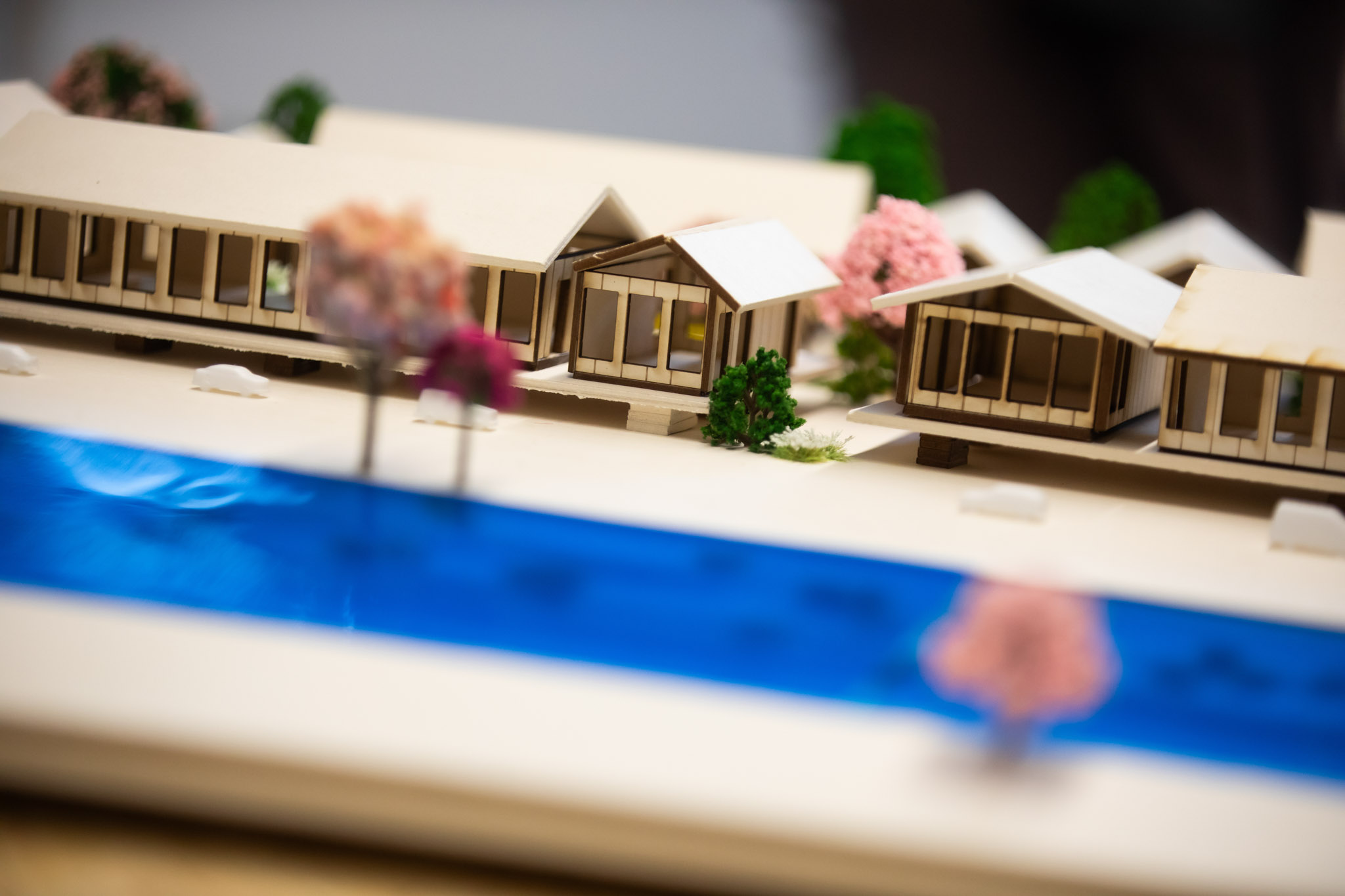
You will be based in our architecture studios, designed to inspire you to develop ideas and collaborate. You'll also have access to workshops that feature laser cutters and 3-D printers, to help you bring your ideas, models and concepts to life.
Industry Collaboration

When you start this degree with Salford, you are also joining a community making a difference in industry, our local region and in our wider society.
Many of our academics and technicians who support your course also deliver collaborative, interdisciplinary, high-impact work in a range of local and global built environment issues and challenges.
Discover how you are part of something bigger.
How you'll learn
Future careers
EMPLOYMENT
Successfully completing our accredited Architectural Engineering degree, a wide range of exciting career prospects will be open to you, in Architecture and Design, Construction and Creative Industries, Structural Engineering and Architecture. The course is designed to enable you to develop professional skills in architectural design, building engineering and technology, and provide you with opportunities to develop a range of personal, professional, and transferable skills.
These skills will help you identify and build your successful career path in the future; including in architectural practices, local authorities, central government, property developers, structural and civil engineering, construction management and building contractors.
FURTHER STUDY
If you decide to take your studies further, we offer a range of related postgraduate built environment courses. Salford graduates and alumni will also receive a generous fees discount.
MSc Project Management in Construction
MSc BIM and Digital Built Environments
MSc Real Estate and Property Management
Career Links
Bursaries for BSc (Hons) Architectural Engineering in 2023-24
In 2023-24, our alumni and industry offered a few bursaries to our year 1 students in the construction industry, engineering and STEM courses.
First year students were awarded the following four scholarships:
1) Three scholarships from Barratt Developments Sustainable Housing: £3,000 (for year 1)
2) One scholarship from GHD Foundation Scholarship: £10,000 (for years 1-3)
Modules
Course Delivery
The course is delivered full-time over three years, you will study a carefully-designed suite of modules which blend architecture and engineering disciplines. As you learn about structural principles, you will explore architecture theory, developing design awareness and an understanding of integral systems.
Course Content
Reflecting on our University of Salford Heritage on Technical and Scientific knowledge and its strategy to prepare students for the future, we offer a studio environment for research-led teaching and learning and industry focused experiences. Our academic team has a range of international academic and industry experiences and close industry partnerships. Teaching and learning are enriched with guest lectures, site visits, live projects, networking and employability events, and opportunities to collaborate with world leading research groups and facilities (Acoustics, Energy House 2.0). All our graduate students have the opportunity to showcase their work at our annual end of year Degree show, which is attended by regional and international architectural practices and industry professionals.
Learning Experience
Through our enviable location at the heart of Greater Manchester, our expert academic team draw on close industry links with architecture, engineering and construction sectors, to bring you guest lectures, professional networking opportunities and local architectural projects that will support your knowledge and skill progression.
During year one of your studies, the Architectural Design, Architectural Engineering and Construction Technology, modules will introduce you to architectural design, structural performance, and manufacturing technologies. You’ll study in an inspiring, engaging way, so that you are prepared for real world challenges once you start your exciting career. The History and Theory module will introduce you to architectural history and theory, architectural heritage and cultural context and critically examines its relevance to the practicing architect today. During Year two Design studio module comprises the further development and formation of an iterative architectural design methodology. In the Construction Technology and Architectural Engineering Modules you will develop your ability to select and apply structural assemblies, stability systems and construction details, and develop your understanding of technological innovation in architecture. The
Multidisciplinary project will allow you to engage in a multidisciplinary practiced-based environment and gain an insight into industrial practice with other disciplines. During year three, in the Design module you will develop, apply and test your design skills in the context of complex design projects. In the Architectural Engineering Module you will develop the ability to propose structural schemes, learn to apply risk assessment and understand the effects of accidental loading. The Practice Management and Law Module prepares you for your first year industry, equip you with a comprehensive understanding of the profession.
Based at our green Peel Park campus, you will thrive in our dynamic studio environment. There’ll be plenty of opportunities to tackle real life creative project briefs, sketch ideas and make models, as you fill your Instagram feed with impressive local architecture. As a student at Salford, you’ll also showcase your design skills at our annual Degree show so you will receive an immersive, rewarding learning experience.
End of Year Exhibition
Our students have the opportunity to exhibit their work every year in the Salford Laboratory of Architecture's End of Year Show. You can explore the work of the 2024-25 cohort in the Salford Laboratory of Architecture Catalogue.
Year one
Architectural Engineering 1
This module introduces you to the fundamentals of structures. You will learn about the forces acting upon structures and how these are analysed. You will be introduced to different material properties used in various methods of construction, and you will be able to calculate the performance of simple structural elements. Sketching and calculations are an important part of the module.
Design Studio 1A
You will be introduced to architectural thinking and the implications of the relationships between people, environment and place through creative and engaging small-scale design projects. Through the projects you will practice a wide range of architectural representation techniques, from orthographic drawing to model making.
Design Studio 1B
You will develop your skills and knowledge in architectural representation and build design through larger scale design projects and live engagement opportunities.
Design Technology 1
This module introduces you to construction technology, systems and services by focusing on principles of structures, construction assemblies, techniques and sustainable design of domestic architecture. Within the context of the climate emergency you will explore the fundamental approaches to construction used to achieve safe, environmentally sound tectonic strategies. The module will discuss building physics and the building’s fabric, and how its environmental services and systems need to be combined to provide physiological, thermal, visual and acoustic comfort.
History and Theory 1
You will be introduced to the canon of western architectural history and its underlying ideological assumptions. The module locates the major practices and sites of western architecture in a wide visual, cultural and ideological context and critically examines its relevance to the practicing architect today.
Year two
Design Studio 2A
This module explores the use of architectural representation to analyse and critique urban contexts and develop contextually appropriate design propositions.
Practice 2: Multidisciplinary Project
The multidisciplinary module allows you to engage in a multidisciplinary practice-based environment and gain an insight into industrial practice. Utilising a real-world scenario student’s work collectively and collaboratively to communicate a project solution to a panel of assessors through varying forms of media. This module is supported with a series of industrial guest speakers to offer real life practices, procedures, technologies, and communication techniques.
Architectural Engineering 2
This module requires that you study and critically analyse various examples of design concepts for structures. You are required to analyse the parameters (environmental, structural) that had been taken into consideration to resolve structural issues, such as types of soil/foundations, structural characteristics and properties, construction materials and techniques and aesthetic quality. You will develop a wider understanding and knowledge on various structural systems, properties of construction materials, and methods of construction. You will apply this knowledge on your own design solutions in your design concepts in other modules.
Design Technology 2
This module further develops your understanding of technological innovation in architecture integrating the parallel strands of Structure and Services introduced to you in year 1 through two core themes central to Building Fabric Design: Design for Climate and Sustainability and Design for Human and Life Safety. Through these themes you will develop competencies in more advanced construction techniques, systems and assemblies for non-domestic buildings and through this you will extend and develop your technical vocabulary and grasp of building physics and building fabric design for more complex building forms.
Design Studio 2B
This module expands on a site-specific practice, utilising a landscape-responsive strategy through an iterative and holistic architectural design response. We continue exploring architectural design as “a practice of disturbing ecologies and accelerating de/stabilisations,” and assemble them as part of our architectural collectives.
Year three
Architectural Engineering 3
This module will introduce you to a holistic approach in the analysis of decision making in the design of advanced, complex and challenging structures. You are required to carry out individual research and consider the following factors: the function of the structure, construction materials and techniques, loads and forces, sustainability and environmental impact of the structure such as embodied energy, life cycle assessment-using sustainability tools, indoor comfort, the structural forms and structural performance, and aesthetics.
You will apply the knowledge to your own design solutions in other modules.
Design Technology 3
This module comprises the development of tectonic rationale and detail design at a variety of scales and levels of detail and the continued formation of an iterative design methodology. It builds on the formation of technical assemblies, structural and environmental rationales and communication of detailed design solutions developed in parallel with a design task of some complexity and asks that you both build upon and challenge accepted performance and evidence-based modes of integrated design whilst seeking compliance with technical standards and regulatory frameworks for sustainability, health and life safety, and delivering a plausible and buildable project.
Integrated Design Studio
This module consolidates your ability to provide architectural solutions to problems and synthesize space to address complex architectural problems of increased complexity. It requires you to apply the principles of architectural design, in a complex urban setting and in response to an architectural brief to provide an integrated building design process.
Practice 3
This module aims to prepare you for your first year in industry by equipping you with a comprehensive understanding of the profession of architecture. You will develop an understanding of the role of the architect in society. You will learn about the management of the construction industry, the role of the architectural practice and responsibilities of each within the regulatory legal context within which architecture operates.
We take a flexible approach to our course delivery that promotes diversity and inclusivity and provides a blended learning experience, which will vary to meet specific programme requirements. This learning time includes formal lectures and interactive activities such as seminars, tutorials, practical sessions, laboratory and studio learning. Smaller classes may be used to support collaborative activities such as project and group work and presentations. A range of different assessments and feedback is offered to meet the needs of both our diverse student body and specific subject needs.
Our undergraduate courses are normally made up of 20 credit modules which are equal to 200 hours of learning time. A three-year degree qualification typically comprises a total of 360 credits (120 credits per year).
Please note that exact modules and content offered may vary in order to keep content current and, for courses that offer optional modules, may depend on the number of students selecting particular options. When accepting your offer of a place to study on a programme with optional modules, you should be aware that optional modules may not all run each year. Your tutor will be able to advise you as to the available options on or before the start of the programme. Whilst the University tries to ensure that you can undertake your preferred options, it cannot guarantee this.
Entry requirements
Applicant profile
In addition to our academic entry requirements, we also look for certain characteristics in each applicant. Having these characteristics will not only help you to fulfil your academic potential, but they are also essential if you want a successful built environment career.
English language requirements
All of our courses are taught and assessed in English. If English is not your first language, you must meet our minimum English language entry requirements. An IELTS score of 6.0 (no element below 5.5) is proof of this, and we also accept a range of equivalent qualifications.
Read more about our English language requirements, including information about pathways that can help you gain entry on to our degree courses. If you do not have the English language requirements, you could take our Pre-Sessional English course, or the International Foundation Year to gain entry onto this degree.
Additional information
All candidates must submit a portfolio. Please read our Architecture Portfolio Submission Guidance for tips on producing your portfolio.
To submit your portfolio, please email ScienceAdmissions-UG@salford.ac.uk.
Standard entry requirements
GCSE
In addition to the following Level 3 requirements, you must have evidence of Level 2 GCSE English and Maths at Grade C/4 or above.
UCAS Tariff points
112 UCAS Tariff points.
A-level
Two full A-levels required as a minimum.
BTEC National Extended Diploma
DMM.
T level
Overall grade M. Must have passed all components.
International students
We accept qualifications from all around the world. Find your country to see a full list of entry requirements.
Not sure how many UCAS points you have? Use our UCAS Tariff Calculator to find out.
Fees and funding
See below
2027/28
| Type of study | Fees |
|---|---|
| Full-time | £10,050 per year |
| Part-time | Part time fee will be calculated on a pro rata basis |
2027/28
| Type of study | Fees |
|---|---|
| Full-time | £18,600 per year |
The tuition fees shown are for the first year only. If your course lasts longer than one year, fees may increase each year in line with inflation, up to the maximum limits set by the UK Government.
Additional costs
You should consider further costs which may include books, stationery, printing, binding and general subsistence on trips and visits. International student scholarships If you are a high-achieving international student, you may be eligible for one of our scholarships. Learn more about our latest international scholarships.
How to apply
Still have some questions? Register for one of our Undergraduate Open Days or contact us:
By email: enquiries@salford.ac.uk
By phone: +44 (0)161 295 4545
Enrolment dates
Student information
Terms and conditionsUCAS information
Course ID K132
Institution S03