
Centre for Engineering the Future

The Centre for Engineering the Future is a catalyst for innovation, bringing together world class research and industry partnerships to develop technologies that benefit society. By combining cutting edge facilities with a culture of creativity and experimentation, the centre empowers engineers to imagine new possibilities and deliver solutions that drive economic growth, environmental responsibility, and societal wellbeing.
Our mission
Our mission is to tackle pressing challenges in:
- sustainable infrastructure
- advanced manufacturing
- clean energy
- digital systems
- functional materials
through engineering that is interdisciplinary and connected to real‑world impact.
By combining cutting‑edge facilities with a culture of creativity and experimentation, the Centre empowers engineers to imagine new possibilities and deliver solutions that drive economic growth, environmental responsibility, and societal wellbeing.
The Centre for Engineering the Future is about shaping a world that is smarter, cleaner, and more equitable; engineering not just for today, but for generations to come. Updates from the centre can be found at our Centre for Engineering the Future LinkedIn page.
Interested in postgraduate study?
Enhance your employability across a wide range of engineering disciplines through a taught Master’s degree, with dedicated pathways outlined below for each subject area.
Advance the frontiers of knowledge by undertaking a research degree (MSc or PhD). Speculative applications in each research area are encouraged and details of current research opportunities can be found on FindAPhD.
Our research areas

Details of research centre members and outputs can be found on our Worktribe repository, or follow the links below to access further information about our research areas and postgraduate degrees.
Civil, Transport and Environmental Engineering
The Civil Engineering Research Group conducts experimental and numerical research alongside enterprise activities. Guided by the university’s research strategy, the group utilizes modern testing equipment, advanced software, and Artificial Intelligence, and collaborates with industry partners and national and international academic institutions to address global challenges and meet evolving industry demands.
- Contact:
- Dr Alireza Ahangar a.ahangarasr@salford.ac.uk
- Further information:
- Postgraduate study:
Electrical and Electronic Engineering
The Electrical, Electronic & Telecommunication Engineering Research Group conducts experimental and theoretical research alongside enterprise activities. Guided by the university’s research strategy, the group addresses research topics in Power sustainability, electrical vehicles, smart grids as well as research in advanced telecom systems in beyond 5G and 6G utilizes modern testing equipment, advanced software, and Artificial Intelligence, and collaborates with industry partners and national and international academic institutions to address global challenges and meet evolving industry demands.
- Contact:
- Dr. Omar Alani o.y.k.alani@salford.ac.uk
- Further information:
- Postgraduate study:
Robotics, automation and control
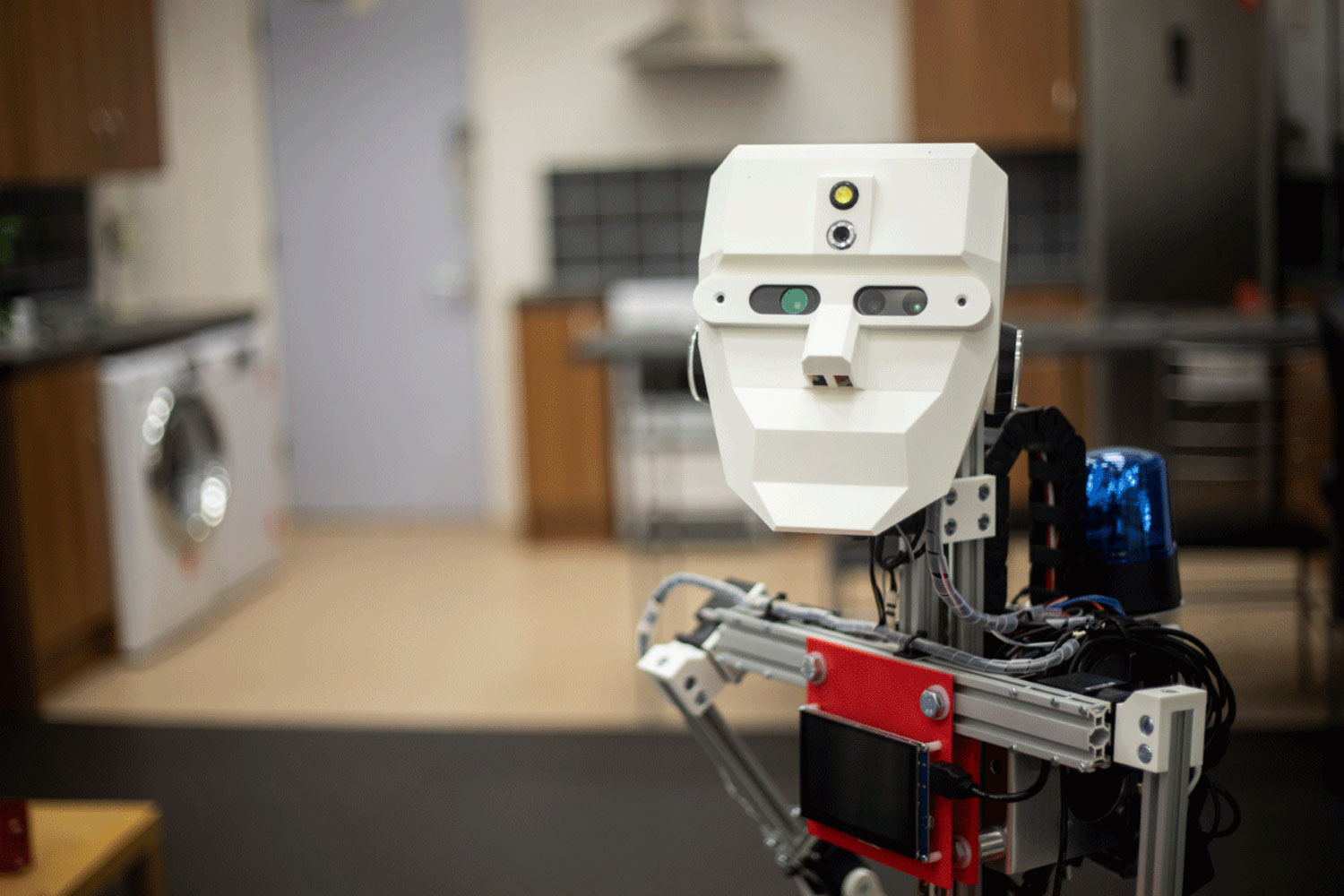
Expertise in this area includes advanced robot and machine design, dexterous end effectors, service robots, biologically-inspired robots, healthcare and medical robotics, haptics/telepresence, artificial intelligence (AI), mechatronics and embedded systems, human-robot interaction, rehabilitation and assistive robotics, and uninhabited autonomous systems.
- Contact:
- Dr. Guowu Wei g.wei@salford.ac.uk
- Further information:
- Postgraduate study:
Mechanical and aerospace engineering

The research group develops engineering solutions for complex fluid, thermal, and aerodynamic systems, with emphasis on optimisation, simulation, and design for real-world applications. Core work centres on computational fluid dynamics, reduced order modelling, and experimental validation. A key focus is on thermofluid application within domestic and industrial contexts, supporting applications in spraying technology, surface cooling, thermal management, emission control, and environmental monitoring. The group studies heat transfer and multiphase behaviour to improve system performance and reliability. Research also addresses energy and sustainability, including hydrogen production and storage, fuel cells, carbon capture, and indoor air quality. Advanced thermodynamic modelling supports clean energy system design. In aeronautics, the group works on aerodynamic optimisation, UAV and UAM design, propulsion, and aero-thermal systems. The work is multidisciplinary, integrating materials, structures, and fluid mechanics, and extends to new product development. Facilities include wind tunnels, gas turbines, mechanical testing, and clean energy laboratories.
- Contact:
- Dr. Amir Nourian a.nourian@salford.ac.uk
- Further information:
- Postgraduate study:
Photonics, microsystems and condensed matter physics
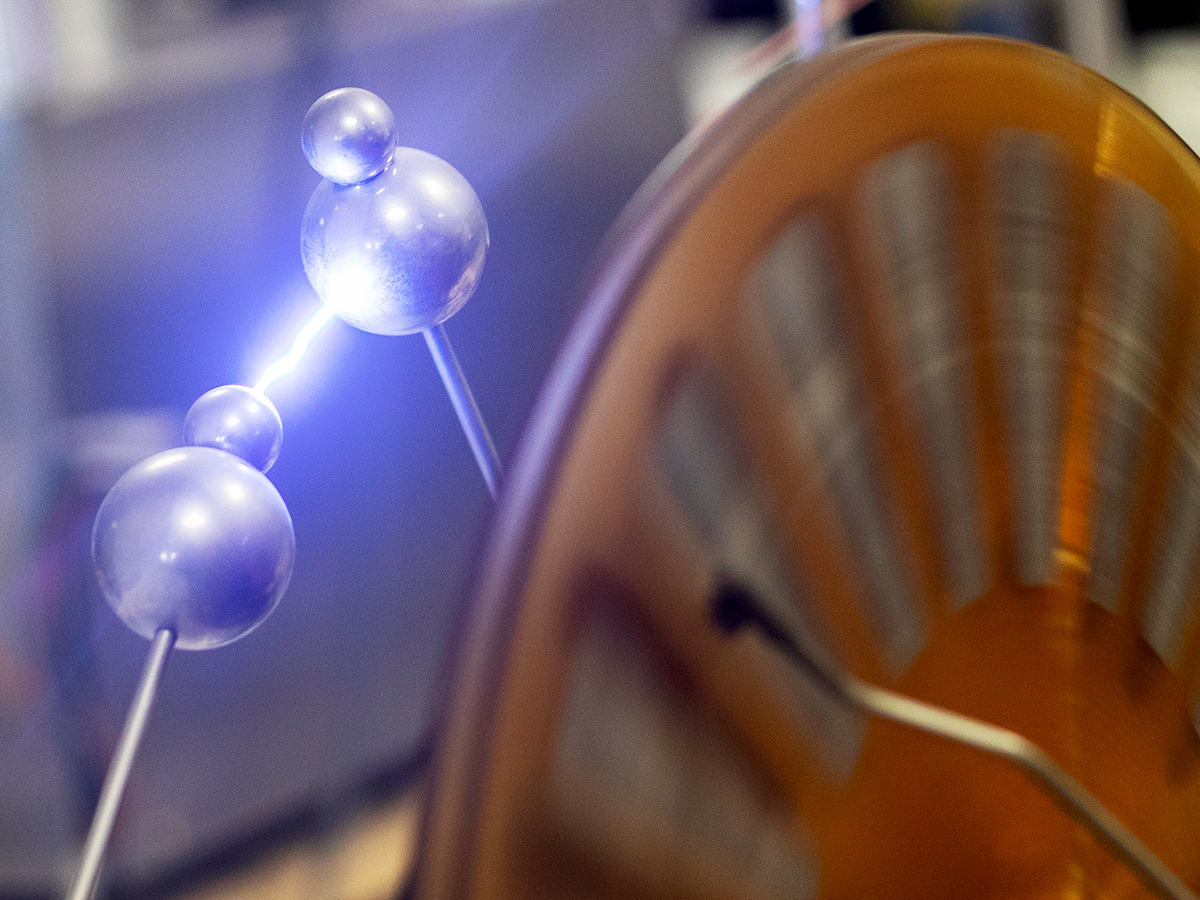
Our Photonics, Microsystems and Condensed Matter Physics experts pioneer breakthroughs in silicon photonics, MEMS platforms and light‑driven micro robotic systems. In quantum technologies, we study new solid-state materials with applications in optical communications and computing. We also explore ultrafast charge dynamics in colloidal quantum dots, synthesise superhard materials and novel hydrides at extreme pressures, and uncover the fundamental behaviour of molecular systems under extreme conditions.
This work is complemented by a theoretical programme which tackles some of the most challenging mathematical problems in physics: electromagnetic scattering, nonlinear wave instabilities and complex dynamical systems.
- Contacts:
- Prof. Maziar Nezhad m.p.nezhad@salford.ac.uk
- Dr Marina Leontiadou m.leontiadou@salford.ac.uk
- Further information:
- Postgraduate study:
Advanced manufacturing and materials
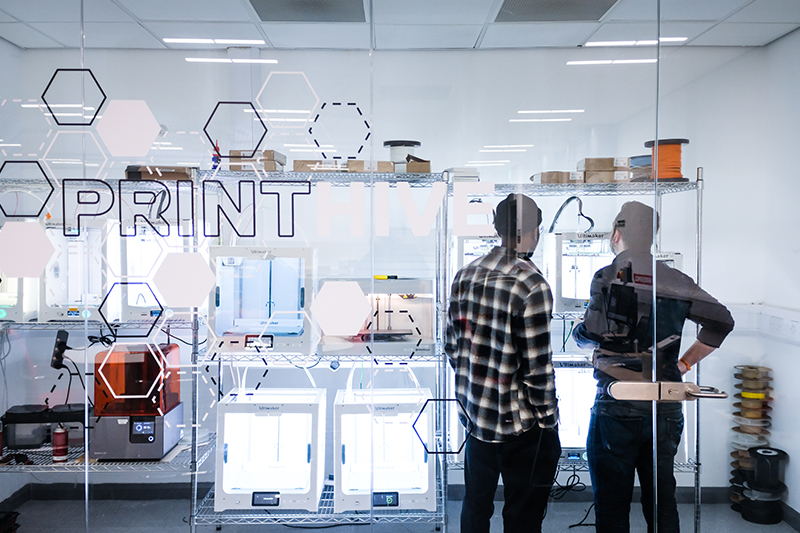
The Advanced Manufacturing and Materials Group brings together expertise in cutting-edge manufacturing, design and characterisation to tackle complex challenges across a diverse range of engineering applications.
This research spans nuclear isotope modelling, CO₂ conversion, hydrogen production, gas capture technologies, nanoparticle engineering, and biomedical materials, underpinned by advanced analytical techniques. There is further focus on thermo-mechanical forming of metals and composites to develop of high-performance, durable materials tailored for demanding environments. This is complemented by a collaborative maker space, which enables rapid prototyping and the translation of ideas into real-world solutions.
- Contact:
- Dr Marina Leontiadou m.leontiadou@salford.ac.uk
The Northern Engineering and Robotics Innovation Centre (NERIC)
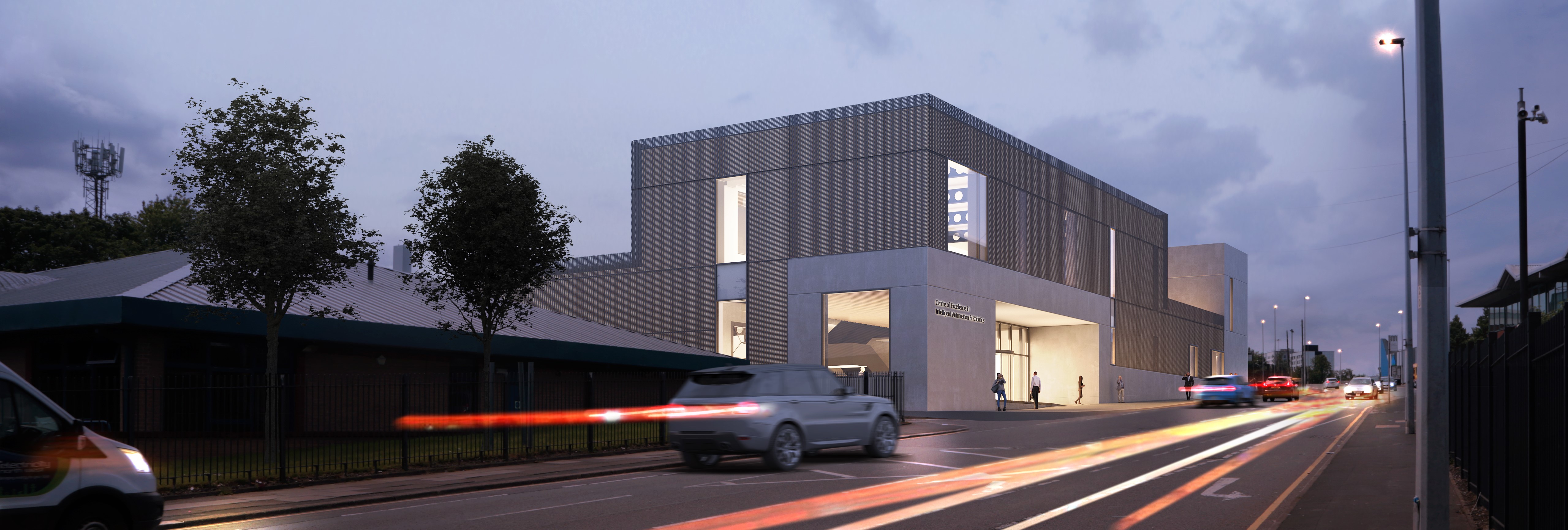
The Northern Engineering and Robotics Innovation Centre (NERIC) is a focal point of the University of Salford’s commitment to industry collaboration, innovation and skills in an established and continually expanding area of expertise. NERIC provides a hub which adds value to the university and Greater Manchester’s technical infrastructure.
- Contact:


Get in touch
For more information, please contact:
- Professor William Holderbaum: w.holderbaum@salford.ac.uk
- Professor Maziar Nezhad: m.p.nezhad@salford.ac.uk
- Dr Amir Nourian: a.nourian@salford.ac.uk