
Universities have a unique role to play in creating a fairer society for all

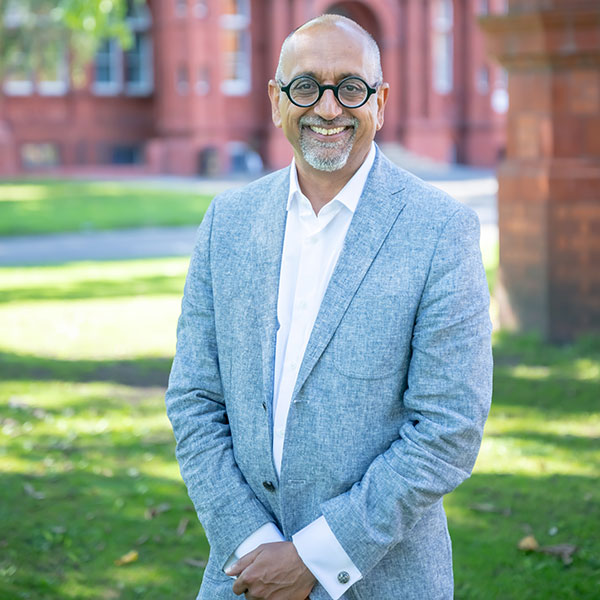
By Professor Simon Green, Pro Vice-Chancellor, Research and Knowledge Exchange at the University of Salford, and Dr Pradeep Passi, Pro Vice-Chancellor, Social Justice and Equity at the University of Salford.
Our overarching purpose is to drive forward innovation in order to enrich lives. Within this, principles of social justice are key to ensuring ideals of fairness, equity and inclusion underpin our efforts, as we strive to address systemic inequities to ensure that all individuals are able to thrive and flourish. This pursuit is rooted in the belief that societies should be just and compassionate, recognising the inherent dignity and worth of every person and which ultimately will benefit all.
We are proud to be based in the heart of Salford’s thriving community and we truly care about using our position to help address the challenges facing those around us. These values are reflected in the Higher Education Policy Institute’s (HEPI) 2024 Social Mobility Index, which has ranked the University of Salford the fifth best in England.
Recent global events have led to intense scrutiny in areas such as the positioning of marginalised voices, geopolitical conflict and oppression, sustainability initiatives, free speech or initiatives that simply challenge the status quo.
Despite this scrutiny, inequity, exclusion and unfairness persist both nationally and globally across many areas including education, finance, health, culture and criminal justice.
More than ever, there is a need for universities to use their unique position in society to tackle these growing disparities. Historically, universities have been accused of being sometimes insular, however arguably they are uniquely placed to act as a catalyst to the type of multi-agency collaborations needed to solve these problems and must step up in their civic partnership roles.

We may talk in very intellectual ways about certain challenges across society, but the key is to find solutions within communities themselves. Higher Education Institutions are uniquely positioned to bring together knowledge, not just from within the university but from outside of the University to help co-create some of the solutions to those challenges – whether that be poverty, sustainability or injustices that relate to people’s lives in many different ways.
At Salford, we are purposefully deeply embedded in the local community, with strong and meaningful links to the NHS, criminal justice system, local authorities, charities and community groups. Through close collaboration with communities, we are able to get to the root cause of some of those inequities and injustices. Universities don’t have all the answers and that’s why working with communities is so integral to this.
If we can bring our unique understanding together – our education, our research, the knowledge that we have through our links with community and the lived experience – there's a real opportunity to find meaningful solutions for some of those challenges around social justice.
How do we define social justice?
We acknowledge that there is a real complexity and ambiguity of social justice as a concept and a goal, and tensions and conflicts may arise from different interpretations and expectations of social justice among various stakeholders. Social justice is such a broad term and there is so much that could fall underneath that umbrella.
Embedding social justice within university agendas is fraught with challenges, including achieving consensus on its definition and navigating societal debates that may undermine such initiatives. There needs to be a sense of clarity around the definition of social justice and what it truly means for an institution.
For us, the first step in developing our clearer strategic focus on social justice has been understanding how the broad concept of social justice sits across many of the things we have done for years - such as our pursuit of equity through the EDI Statement of Ambition and Access and Participation Plan, our sustainability initiatives, our People plan or our dedicated research centre for inclusivity.
We are now in a phase of understanding what this means as we look forward as an institution for how we continue to grow our impact to ensure a fairer society.
We have set up an advisory group involving academics, professional services colleagues and students to help shape this. And crucially, we are also including external stakeholders in the discussion. We are taking the conversation outside of the University because we recognise that we’ve got to involve the community in helping us to define what social justice means for us – the whole process from figuring out what social justice means to actually developing solutions to advance social justice needs to be anchored on co-creativity and co-creation.
Knowledge dissemination
At Salford, there’s a huge amount of work that comes under the umbrella of social justice – whether that’s in our research spaces or the way in which we provide education to our students. We are also considering what social justice means for our people and how we run our organisation and employ our colleagues.
There is an opportunity that social justice can play in our education approaches to ensure that all of our students are able to flourish and succeed and our new education delivery plan will seek to strengthen our approach here. Our collaboration with educational charity IntoUniversity and The University of Manchester, provides long-term educational support to young people from economically disadvantaged backgrounds. With a progression rate to higher education of 52% compared to the local average of 20%, the centre is making a remarkable difference in expanding opportunities for local young people.
Our Campus Connectivity Plan, a long-term vision for Salford over the next 20 years developed with our partners Salford City Council and the English Cities Fund (ECF), will interweave the University’s inner world with the Salford community – we want to ‘open up’ our campus so it becomes a civic space for all.
Higher education research can also be a force to advance social justice, where students, colleagues and researchers are able to engage in critical and transformative research that aims to address social challenges and promote positive social change.
Currently, a quarter of our research outputs at Salford are focussed on social-justice related themes, through projects on tackling sustainability, social welfare and economic justice. Our academics are shaping policy to ensure marginalised communities, including military veterans, are able to access the social security system in an equitable way. We’re tackling fuel poverty and exploring the challenges of living in a cold home, and we’re working with the NHS and other care providers to shape the support available for young people who are experiencing mental health challenges.
Through our acoustics expertise, we are redefining our understanding of hearing and exploring how we can create a world for an aurally diverse society that experiences sound in different ways. Our focus on labour law justice is protecting workers and helping them to live better working lives, and we support marginalised communities who experience health inequity and social exclusion. Our SILKS pro bono law clinic is a free community legal advice service provided by Salford’s Business School.
We have ambitions to increase the proportion of our research advancing social justice in the coming years, fostering the development and innovation of our research agendas with a social justice lens. This approach will empower and liberate our research communities, and also encourage greater diversity within them.
It starts in Salford
Central to Salford's new strategic vision is the explicit incorporation of social justice into its mission and values. By positioning social justice at the heart of our institutional purpose, the University underscores the belief that addressing societal inequities is fundamental to the role of higher education. This commitment challenges universities to not only generate knowledge but to actively participate in creating a fairer, more just society.
The global challenges around inequity and injustice that we are interested in – and higher education needs to be interested in – are not going to be solved in our offices on campus. We need to further strengthen our ways of working with communities in our city region and across the globe that will really inform our practise in developing knowledge and co-creating solutions.
Reducing some of those systemic inequities is going to take time but our hope is that through strong, long-term partnerships and leveraging our unique position at the heart of the community, we will build a legacy. By integrating this ethos into all aspects of university life, we aim to ensure that our innovations will positively enrich lives in ways that are valued and matter to the communities that we work with.
Striving for social justice is right at the heart of our new University strategy as a key purpose of why we are here. If universities cannot be here to reduce inequity and injustice in society, then why are they here?
For all press office enquiries please email communications@salford.ac.uk.