
Scientists discover two new species of howler monkey
Groundbreaking genetic research has uncovered two previously unknown species of howler monkey living in the Amazon rainforest, confirming the world's largest tropical forest is more biodiverse than scientists thought.
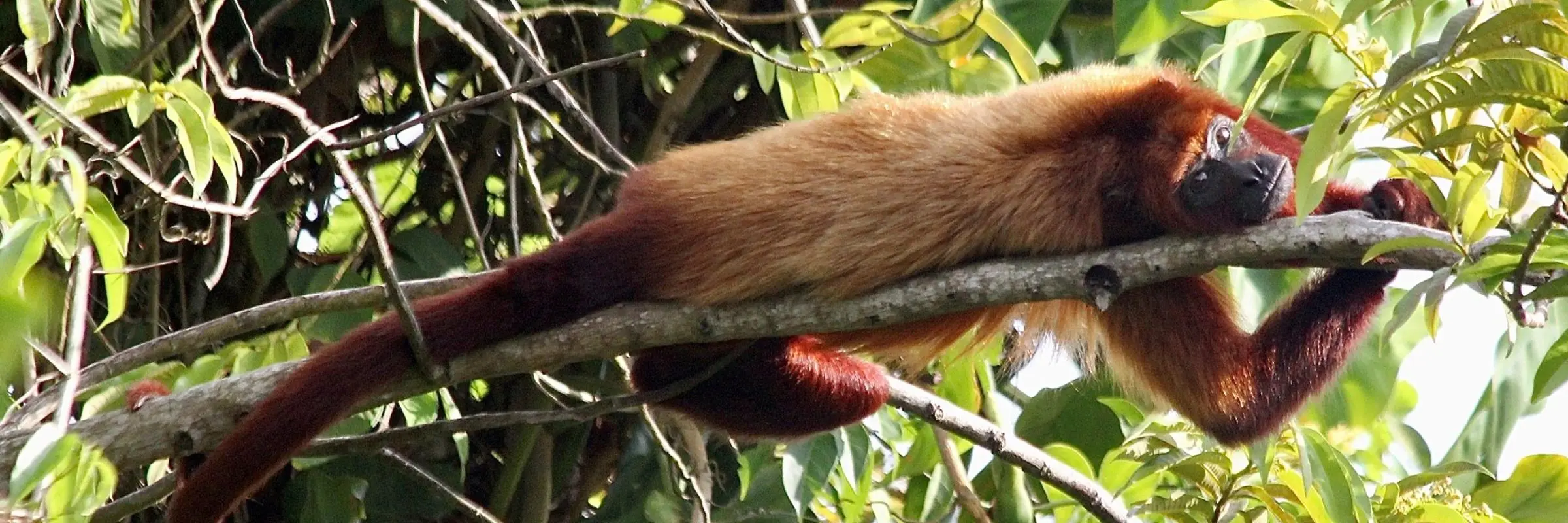
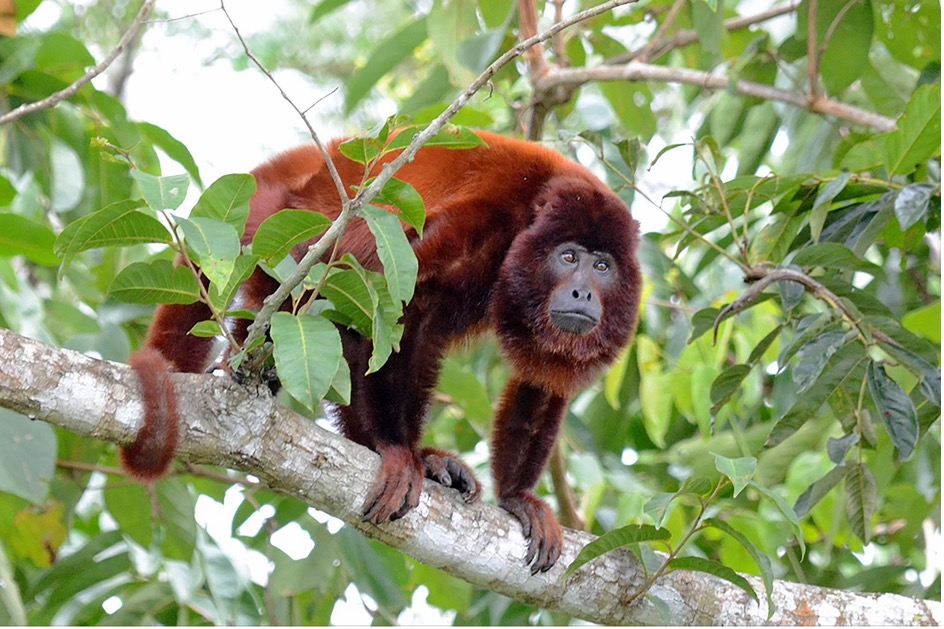
The study, led by researchers from the University of Salford and international collaborators, analysed the genomes of 11 howler monkey species across South and Central America. The findings not only identified two new species (Alouatta iroi and Alouatta matogrossensis) but also explained how they are related to other howler monkey species and mapped where each group lives.
Published in Communications Biology, the article helps address the long-standing Linnean and Wallacean shortfalls: the lack of knowledge about the actual number of species that exist (the Linnean shortfall) and their geographic distributions (the Wallacean shortfall).
Leveraging genome-wide analysis and morphological data from museum specimens, researchers were able to build the most comprehensive evolutionary history of howler monkeys ever documented, revealing that what had previously been considered a single species contained distinct evolutionary lineages.
The findings come 84 years after the last howler species was described (Alouatta puruensis, Lönnberg, 1941) and highlight the Amazonia rainforest as a rich centre of biodiversity where undescribed species are underestimated and may already be at risk.
These findings also provide a major update to scientists' understanding of how the primates evolved and spread across the region. Researchers found that major rivers such as the Amazon, Rio Branco and Xingu have acted as natural barriers for millions of years, preventing populations from mixing and allowing them to evolve into distinct species. These geographical barriers have helped generate the extraordinary diversity seen across the Amazon Basin today, with different howler monkey species evolving on opposite sides of rivers and in isolated forest regions.
The study also identified several populations that may be at significant risk of extinction, including newly recognised species that have never previously been assessed for conservation status. One example is the species, Alouatta matogrossensis, which occurs in southern Amazonia. This species' habitat is considered one of the world's fastest-deforesting regions due to croplands and other factors. This causes habitat loss and fragmentation, putting the biodiversity of this area at risk.
Professor Jean Boubli from the University of Salford said: “This discovery comes at a critical time, as increasing deforestation, climate change and habitat loss threaten many Amazonian species before they are fully understood or even discovered by science. We hope these findings will help conservation organisations identify the most vulnerable populations and prioritise protection efforts across the Amazon Basin.”
Dr Romina Batista, honorary Postdoctoral Research Associate at the University of Salford, said: "Our study shows that the Amazon still holds remarkable biological secrets, even among well-known animals such as howler monkeys. These findings are particularly important because many of these populations are facing increasing pressure from habitat loss and environmental change. Understanding the different species in existence is the first step towards protecting them."
Key initiatives like the Reconecta Project, led by conservationist Fernanda Abra, aim to reduce road mortality in arboreal species, connecting forest fragments to help species like the newly described Mato Grosso Red Howler Monkey.
Photo captions:
- Picture at the top of the page shows newly described species, Alouatta iroi, in Guiana (Photo copyright John Trent CC-BY-NC-ND)
- Picture below shows the newly described species Alouatta matogrossensis (Photo by Bruno Rennó)
For all press office enquiries please email communications@salford.ac.uk.