
Making electric flight quieter through innovation

Project at a glance:
- Partner: Greenjets Limited
- Sector: Aerospace and advanced air mobility
- Challenge: Developing quieter electric propulsion systems for next-generation aircraft
- Outcome: Developed new acoustic design tools, validated testing methods and quieter propulsion designs embedded into Greenjets’ product development
- Recognition: Innovate UK ‘Very Good’ grading
As drones and electric aircrafts become part of everyday life, one challenge is becoming impossible to ignore: noise.
Whether inspecting infrastructure, supporting emergency services or enabling future urban air mobility, aircrafts operating closer to people will need to meet increasingly demanding expectations around noise. For manufacturers, that creates a new challenge: how do you design quieter propulsion systems without compromising efficiency or performance?
That’s the challenge Greenjets Limited set out to tackle through a Knowledge Transfer Partnership (KTP) with the University of Salford.
By combining Greenjets’ expertise in electric propulsion with Salford’s internationally recognised research in acoustics, the partnership has helped the company build a completely new capability in aeroacoustic design, giving engineers the tools to understand, predict and reduce noise much earlier in the product development process.
Developing practical tools for quieter propulsion
Greenjets designs and manufactures electric ducted fan systems for unmanned aerial vehicles (UAVs) and advanced air mobility applications.
While the company already had extensive expertise in propulsion design, understanding exactly how and where noise was generated in their propulsors and how to reduce it efficiently remained a significant technical challenge.
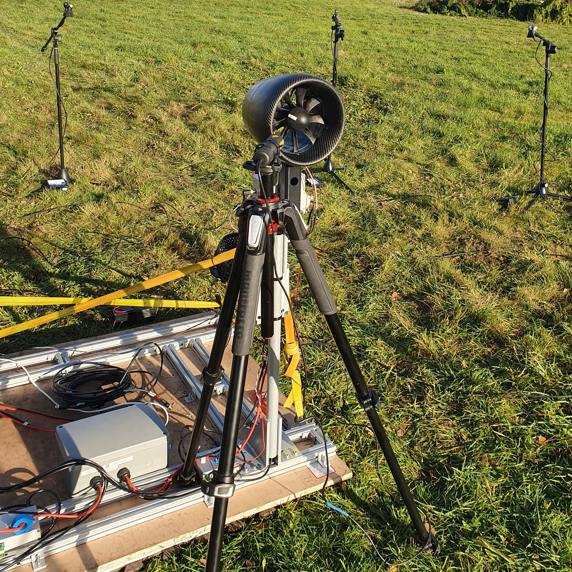
Working alongside a dedicated KTP Associate, Dr Steven Riul Jung, researchers from the University of Salford developed advanced experimental testing and computer modelling techniques to identify the sources of unwanted noise within electric ducted fan systems.
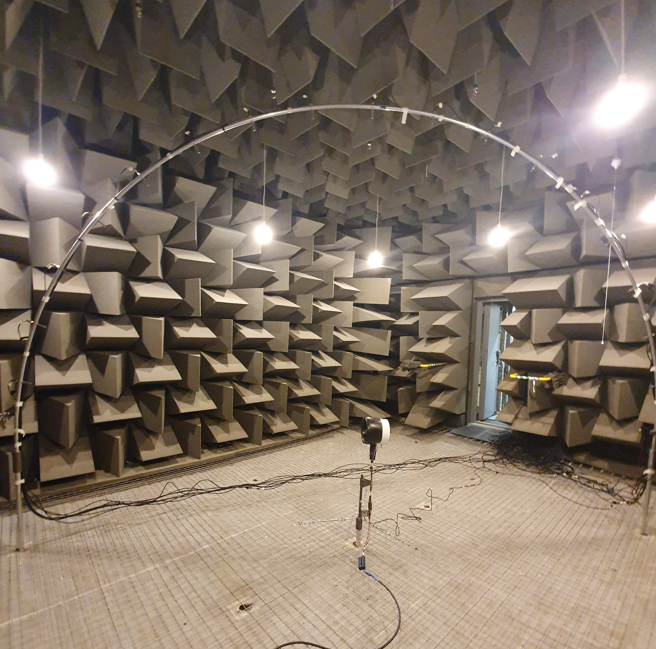
Using Salford’s specialist acoustic facilities, the team carried out detailed testing in anechoic chambers alongside computing modelling, creating a comprehensive acoustic dataset to support acoustic characterisation and design improvements.
The research identified and quantified the principal sources of noise in ducted fans, providing engineers with the evidence needed to develop and target effective noise-reduction strategies.
Alongside sophisticated simulation tools, the partnership also developed faster prediction models that engineers can use during day-to-day design work, enabling quieter concepts to be assessed much earlier in the development process.
Delivering measurable impact
The knowledge generated through the KTP quickly translated into practical improvements.
Testing identified key opportunities for acoustic improvement across the product portfolio. By understanding precisely why this was happening, Greenjets redesigned the engine before returning it to Salford’s anechoic chamber for validation.
The results showed measurable reductions in both overall noise levels and the tonal characteristics that are most noticeable to people.
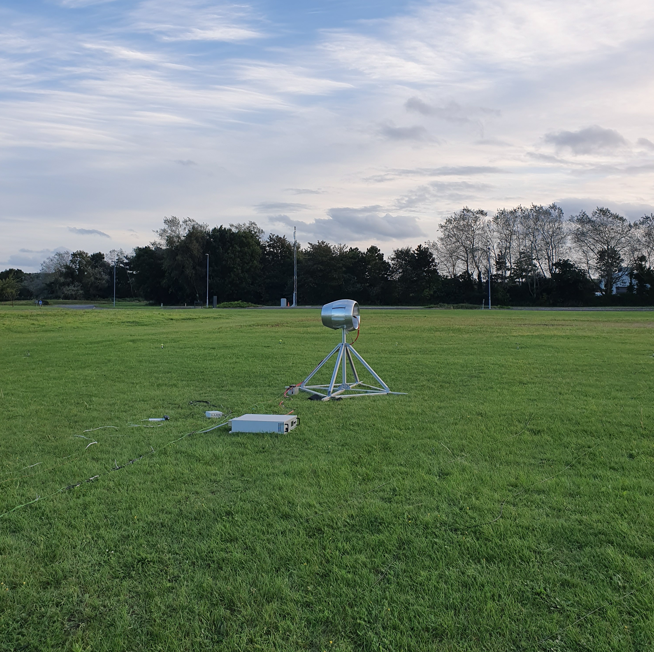
The same approach was then applied to Greenjets’ flagship electric ducted fan engines, with testing demonstrating between 4 and 10 decibels lower noise levels than comparable open propellers and competing electric ducted fan systems while maintaining equivalent thrust performance.
Beyond improving individual products, the partnership has fundamentally changed how Greenjets approaches product development.
Noise is now considered alongside thrust, efficiency and weight from the earliest design stages, supported by repeatable modelling tools, testing procedures and engineering workflows that are now embedded across the business.
Creating lasting value
The benefits of the partnership extend well beyond Greenjets.
For the University of Salford, the project has strengthened research capability in aeroacoustics and electric propulsion, helping establish the University as a growing centre of expertise in this rapidly developing field.
The partnership has already resulted in:
- A peer-reviewed journal paper (currently under review).
- Two conference papers presented at the International Congress on Sound and Vibration.
- Three MSc research projects and three undergraduate research projects linked directly to the KTP.
- An Accelerated Knowledge Transfer (AKT) Partnership by Innovate UK, investigating the aeroacoustics of lined shrouded propellers based on light-weight metamaterials.
- New teaching materials, guest lectures and case studies integrated into undergraduate and postgraduate programmes.
- A new module in aeroacoustics and noise and vibration control currently in development.
The expertise developed through the project has helped secure approximately £1.5 million in European Commission funding, positioning the University of Salford as one of the world’s most prestigious centres for research on noise in Advanced Air Mobility aircraft. This achievement has significantly enhanced the University’s international reputation and opened up new opportunities for high-impact collaborative research and innovation.
The partnership has also laid the foundations for continued collaboration between Greenjets and the University of Salford, including future research projects and doctoral training through the EPSRC-funded Centre for Doctoral Training in Sustainable Sound Futures.
As electric aviation moves closer to everyday use, reducing noise will become just as important as improving performance. This partnership demonstrates how Knowledge Transfer Partnerships can bring together academic expertise and industrial ambition to solve complex engineering challenges while creating lasting capability for both partners.
If you would like to explore how the University of Salford can help your business grow, please contact the Business Innovation team: innovation@salford.ac.uk
For all press office enquiries please email communications@salford.ac.uk.