
Cleavley Community Forest Garden: Creating a thriving hub for the community

In 2017, Ian Bocock first set foot on what would become Cleavley Community Forest Garden. What he found was an overgrown wilderness - dense greenery masking years of fly-tipped waste. With a clear vision for a space that could bring people together, he began imagining a community garden that would combine education, environmental learning and social connection.
Working alongside collaborators, including researchers at the University of Salford, Ian began to explore how the site could become a thriving, community-led space.
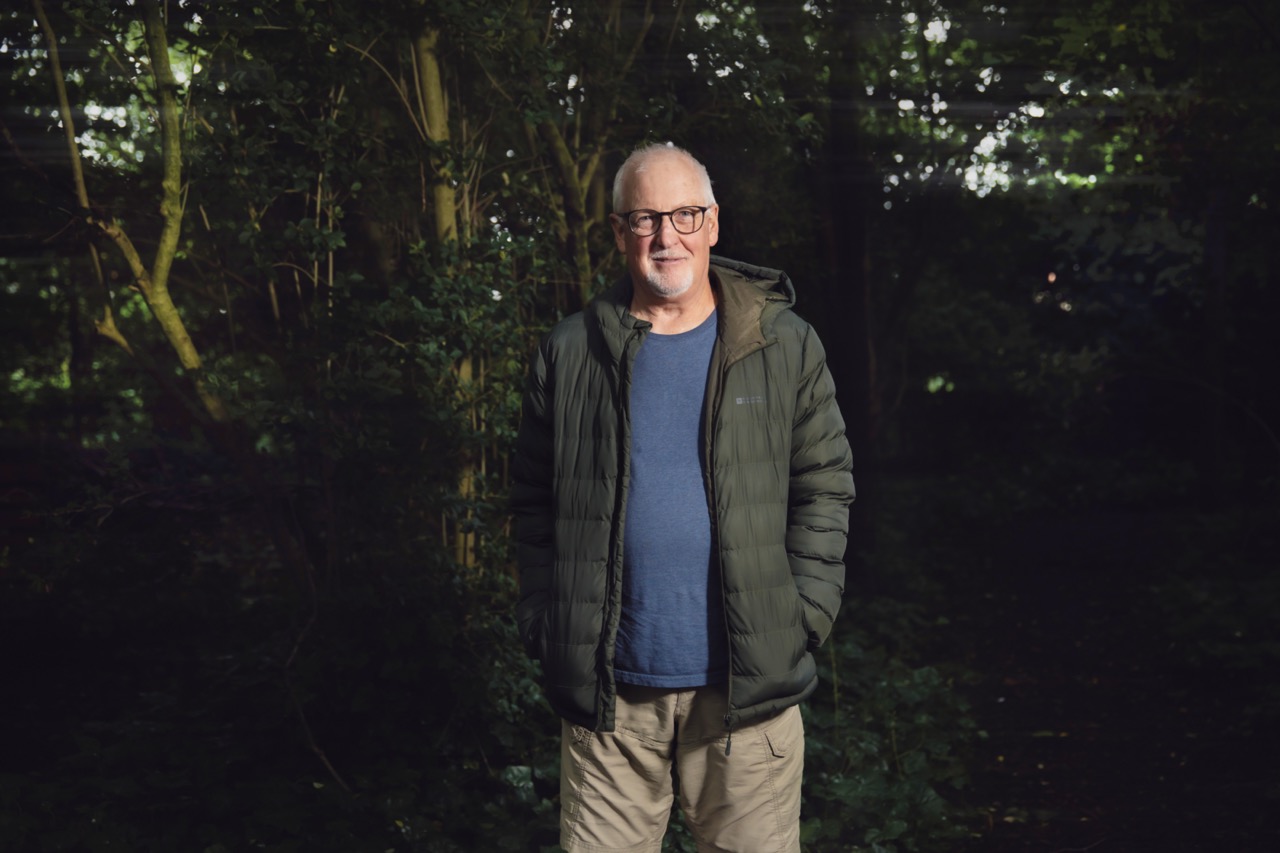
He first visited the site with co-founder Judith Bocock.
“We first discovered the site in 2017, Judith and I came here with someone from Salford City Council who had said they might have identified somewhere for us to create the community garden,” Ian said.
“It was an overgrown wilderness. On the surface it was amazing because it was just greenery and trees and ivy running through, but once you started to clear it back, you discovered what was underneath. We uncovered a giant chest freezer, a go kart and wheelie bins and bags full of rubbish that had been dumped, as well as 100 plastic horticultural crates. It was great greenery, but hiding a multitude of sins underneath.”
Adelina Court, a researcher from the University of Salford, supported Ian to communicate his ideas for the upscaled urban farming model, using drawing as a creative way to explore how the space could be transformed.
“We met Adelina from the University of Salford here on site and we walked around the garden as best we could because there wasn't much access - it was almost like beating your way through a jungle to get around the site. I'd seen visuals from above, we'd done some aerial views with some drone footage, so you could get an idea of the topography and what might go where.
“As we walked around, Adelina listened to what we'd like on site - a cafe, a little shop, a spot for forest school activities, a growing space and a teaching space. One of the ideas we came up with was about using shipping containers, which were going to be the quickest way to achieve getting somewhere to shelter.
“And as we did that, Adelina would take photographs or she might scribble something on her pad, which then evolved into the drawings of what Cleavley Community Forest Garden could look like.”
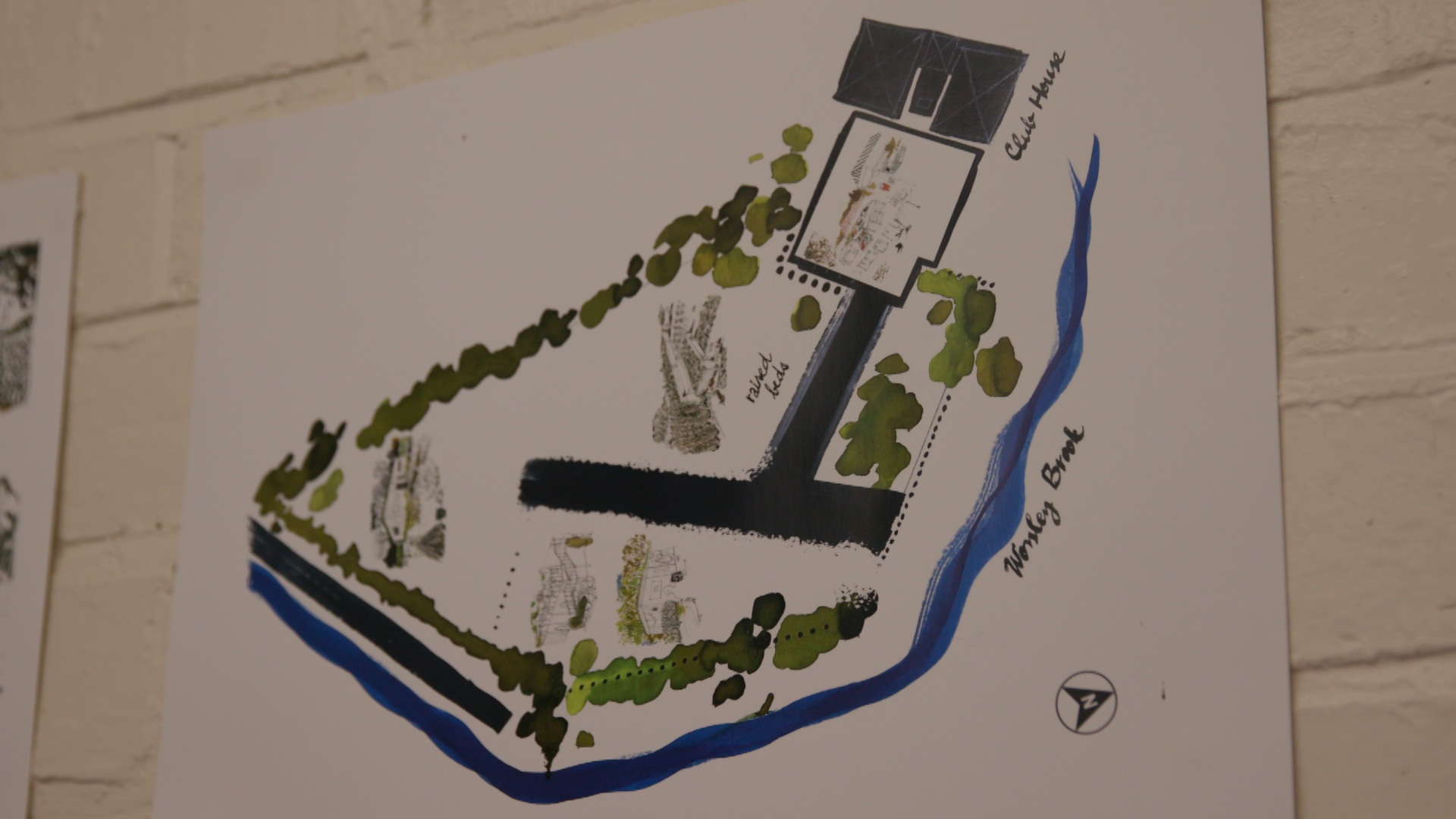
The drawings helped capture both the physical features and the potential of the space, while also allowing real-time discussion and feedback. Unlike computer-generated images, the sketches acted as flexible, imaginative tools that encouraged conversation and new ideas. By involving people in this visual and collaborative process, the project was able to explain complex plans more clearly, adapt to feedback and build a shared vision.
“We were then able to use those visuals that had been created by Adelina to demonstrate a vision to potential stakeholders to attract funding - particularly Salford City Council and local councillors, and Salford Community and Voluntary Services (CVS).”
Adelina went on to produce and direct a film, The Making of Cleavley Community Forest Garden, which documents how the pair met along with a visual timeline of the design process.
Ian began to develop the site into the community garden. It was overwhelming at times at first.
“There was one particular moment before the site was open when we were stood under the trees with Winifred, one of our volunteers, and Oakwood Academy. We had a blue tarpaulin tied over our heads as our only shelter and we’d been cutting vegetation back, and it started to absolutely throw it down with rain.
“I remember Winifred looking at me and I looked back at her, thinking, what the heck are we doing here? How are we going to achieve this?
“Ten students, one member of staff, me and Winifred - and it really did feel futile at that point. But with the support of Salford City Council, Salford CVS, the University, corporates - we did it. Even though it was tough, that was one of the most memorable moments in establishing the site.
“Getting the first shipping container was another significant moment. It was the first place we had where we could lock tools up in and that's all we had. We had one shipping container, all the children there, and we were operating forest school out of it.”
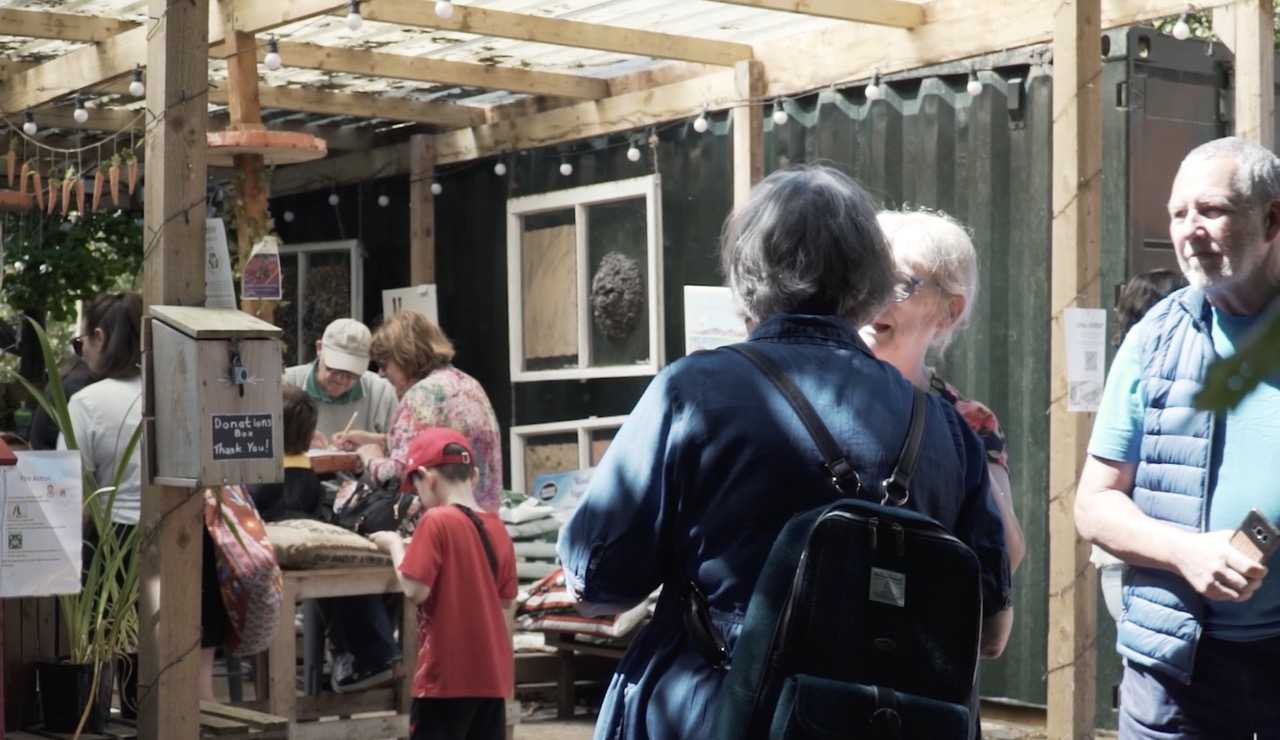
Since then, the garden has grown organically over time and is now a thriving hub in the community.
“With Cleavley Community Forest Garden, the big vision was about it being a community venue.
“The cafe has now become somewhere people can come and meet with others. It was also about education - having a good forest school set up, the fire circle, the canopy to be able to cover up the space when the weather was inclement.
“My side of the organisation was the horticultural side - having a community garden, a growing space where we learn how to grow food, but then we share food as well. Any produce that is grown in the garden that is surplus goes into the community space in the cafe for people to help themselves.
“Activity wise, there's a lot of engagement with local schools. We run horticulture sessions, some for enrichment, others leading to recognised qualifications. And the other side of it is the forest school activities.
“Volunteering has always been central. There’s a Thursday Working in Wood group, plus other regular volunteering opportunities, including corporate volunteering from organisations wanting to get their staff involved.
“There are also health and wellbeing activities - yoga sessions, forest school for adults, Forest Fox Cubs preschool sessions, and also Forest Bears, helping children develop key skills ready for starting school.
“And it’s also simply a space for people to come in and explore. The café is open throughout the week, and local people can come in and enjoy the space.”
The University has continued to have a close relationship with the Ian and the team at the site over the years.
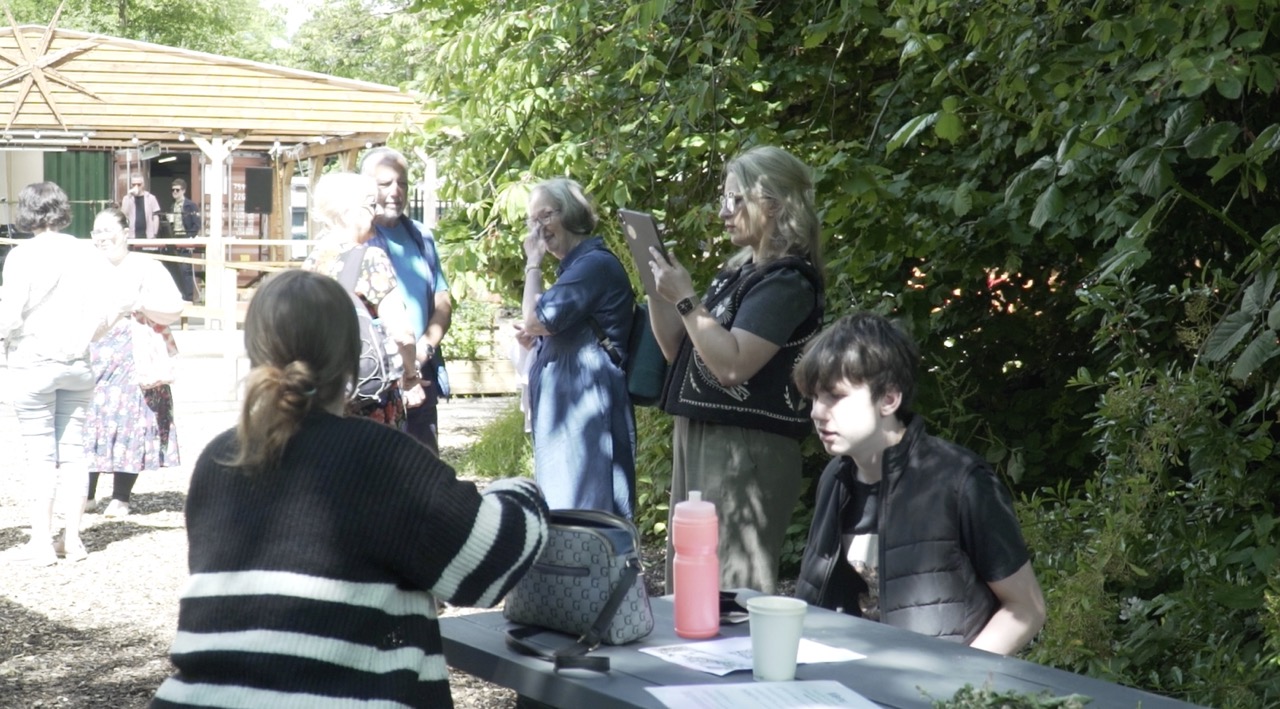
“Adelina’s input continued for nearly nine years as we developed the site into what it is now, supporting everything from gathering information to our official launch, which included a well-publicised event with live music.”
The University of Salford has a large team of researchers dedicated to advancing urban sustainability, including everything from sustainable transport and active travel to greening solutions such as living walls and green roofs, as well as urban agricultural projects like the Cleavley Community Forest Garden.
“We’ve had a lot of support from the team at the University of Salford over the years.
“Right at the start, Professor Mike Hardman and his team also helped with going out into the community gathering feedback, holding forums, and helping us shape what the garden should become. That research support continued - surveys on air quality and sound, water quality studies and wildlife monitoring using cameras across the site.
“They were able to calculate the harvesting potentials of the green roof, which gathers water and then deposits it into storage that can be used for watering. And they were looking at the qualities of the water that was dropping directly from the air into harvesting containers compared to the water that was going through a green roof system. We were interested to see if there were any changes in the contents in terms of nitrates and so on in the water.
“The great thing for us was that we could then use the research in application forms for grants and funding for the gardens.
“We also developed field trips for students. During lockdown, we ran our first one remotely - a live virtual tour of the site. Since then, students have continued to visit each year, taking part in forest school activities, woodworking and learning through the space.
“So the relationship is beneficial to both parties. And having that academic link works well for the local authority and funders because they can see that we have that support from the University. It has proved and continues to be such a successful relationship, and I know there's more in the pipeline from speaking to my colleague Kate who now runs the site.”
The garden is now making a big difference in what is one of the most deprived areas in Salford.
“There wasn’t really anywhere for people to come together before this. Now there’s such a strong community feel here.
“The feedback we’ve had from people has always been positive. One of my favourite things to do was in the cafe, being a barista as well as everything else that one got to do when you were working there, and that engagement with regulars who always spoke positively about what we’ve built and the reduction in anti-social behaviour and fly-tipping, and the value of having a presence here every day as a hub for the community.
“Ultimately, it’s always been about creating a community space. But it also has to sustain itself, so it operates as a Community Interest Company, generating income that goes back into benefiting the local community.
“Both Judith and I have great pride in the place. When it got to the point where we knew it was time for us to step back, the question was how to pass it on.
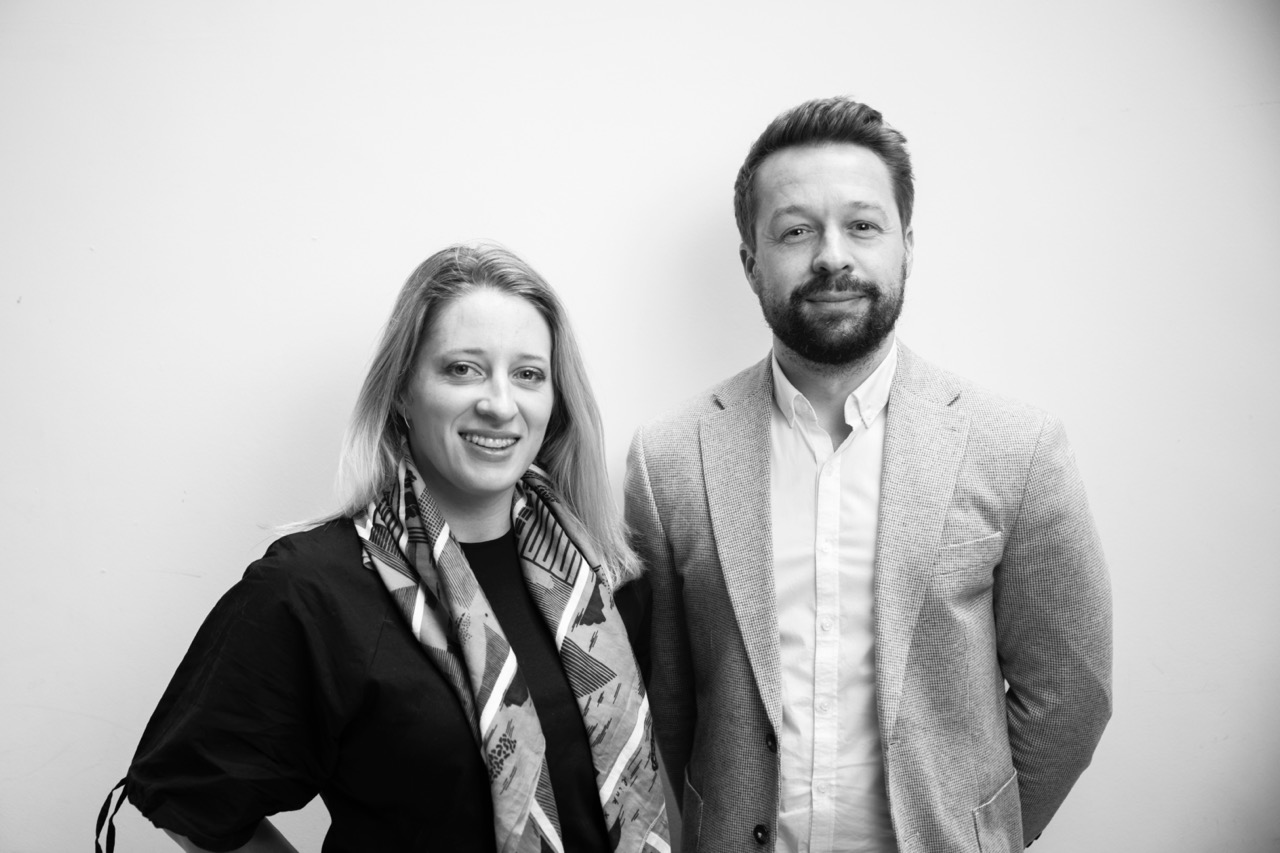 Adelina Court and Professor Mike Hardman
“That’s where Kate Bullock comes in, along with the support of the board. She’s been on this journey with us from the start, first as a volunteer and then we were able to provide some funding for Kate to do her forest school training with us and she became a forest school leader. She gradually got more and more involved and now she’s full time and managing the site. So that in itself is a lovely little story.
“And that’s perhaps the greatest point of pride - two years on from taking a step back personally, Cleavley Community Forest Garden is still thriving. That was always the goal, to create something that would last, something the community would embrace and carry forward.”
Ian Bocock features in the University of Salford’s Heart of the Community exhibition, which includes portraits of seven different people in the community who have collaborated with the University’s academics on a variety of research projects. Ian is pictured in Cleavley Community Forest Garden. The exhibition runs from Monday 22 June to Thursday 13 August 2026 in the New Adelphi building on the University of Salford’s Peel Park campus.
For all press office enquiries please email communications@salford.ac.uk.