
Human Physiology module
The Human Physiology module is taught to all Level 5 Biomedical Science Undergraduate and Degree Apprenticeship students. Education for Sustainable Development (ESD) is integrated throughout the module, with links to the UN Sustainable Development Goals (SDGs) featured in most lectures.
Education for Sustainable Development (ESD)
Course content related to sustainable development
Students taking this module develop a holistic understanding of sustainability within the context of biomedical science, with the inclusion of an Intended Learning Outcome related to understanding how environmental and sustainability challenges influence human health. The module showcases the relationship between the global environment and human physiological function, to prepare students for the ever changing world in which we live. Following the inclusion of the SDGs in most lectures, a lecture on extreme environment physiology highlights how changes in our environment can influence human organ system function.
Further sustainability initiatives are being implemented into the Biomedical Science curriculum at all levels of study, including the embedding of the Laboratory Efficiency Assessment Framework (LEAF) and Green Impact programme.
Competencies for sustainability
A key element of ESD is supporting learners to develop competencies that will help them to tackle and cope with sustainability challenges. Within the Human Physiology module the key competencies developed are:
- Collaboration and critical thinking: students collaborate to produce a critical poster focusing on a sustainability challenge.
- Strategic, anticipatory and integrated problem-solving: students identify strategic solutions to combat sustainability issues impacting global communities, considering if they would be feasible for the populations who are impacted most.
Pedagogical approaches
ESD uses action-orientated and transformative pedagogical approaches to facilitate taking sustainability knowledge and competencies into practice. Teaching methods and pedagogical practices used in the Human Physiology module include:
- Problem-based learning
- Enquiry-based learning
- Group based work and collaborative learning
- Use of case studies
- Independent research
Module leader, Dr Matthew Jones
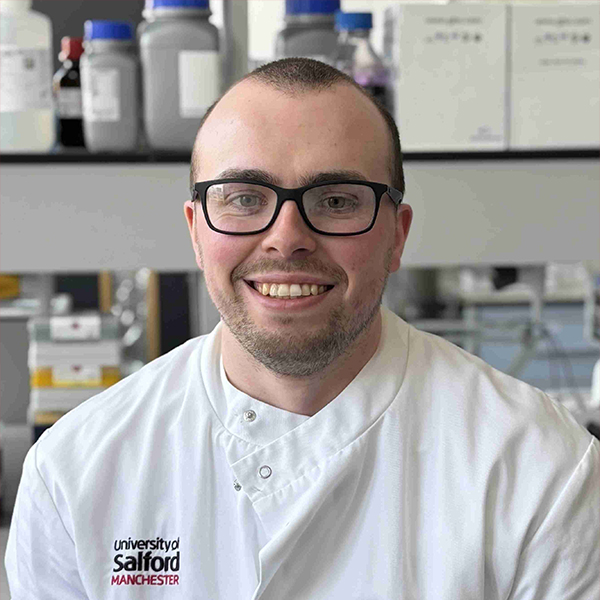
Dr. Matthew Jones is a Lecturer in Physiology at the University of Salford, with a background in Biomedical Science and a PhD focused on the anti-cancer potential of Boswellia carterii oleoresins. His research explores the therapeutic effects and cardiotoxicity of phytochemicals, particularly in treating childhood brain cancers, cardiovascular disorders, and inflammatory conditions. He also investigates how traditional phytomedicines interact with clinical therapeutics. Alongside his scientific work, Dr. Jones leads pedagogical research on student transitions, awarding gaps, and active learning in Biomedicine. His expertise includes advanced microscopy, cell culture, molecular biology, and analytical chemistry techniques.
Questions to Dr Matthew Jones
Is ESD is embedded in any assessments in the module?
Throughout the module, students prepare for a group-based poster presentation where they aim to use the knowledge of human physiology and showcase how particular global sustainability challenges will impact human physiology, supporting students to think locally and internationally about how sustainability influences human health. This allows students to be exposed to numerous lines of enquiry associated with the SDGs and identify the global impact of sustainability challenges, as well as the interconnections between environmental and socioeconomic factors.
Students also work together to devise tangible solutions to benefit local and global populations. They are encouraged to think about solutions which could be put into practice locally, in addition to what multinational/ governmental organisations could implement to address their selected issue, helping to address eco-anxiety.
The group-based approach to this assessment allows students to have open discussions with one another and academic staff, about how the selected sustainability challenge impacts human health, in addition to reflecting on their knowledge of sustainability acquired throughout the module to inform their future professional practice, preparing them to enable change in the future careers.
Why did you include ESD in your teaching?
I have been passionate about introducing ESD into the curriculum since joining the University as an academic in 2022. This is driven by the key conference communications from learned societies which I observed during my PhD, and global observations of the wide-ranging implications of sustainability challenges on human health.
I have been active in promoting the Sustainability Team and the events they organise to all students across the Biomedicine programmes, and sought the opportunity to integrate ESD across the whole Biomedical Science programme but in particular the Human Physiology module which I lead. The integration of sustainability within the curriculum was also stipulated as a part of new QAA Subject Benchmark Statements for the biomedical science subject area”.
What advice do you have for other academics looking to embed ESD into teaching?
My advice would be to start off small, maybe start with one lecture, and then build up over time. Take in feedback from your industrial partners and where they think sustainability could be embedded. Work with your cohort, through co-creation students can guide you with curriculum redesign and help you with making assessments or content appropriate for their level of study and relate to areas of most interest to the students. My final piece of advice is to make the most of the excellent Sustainability Team at the University of Salford, who are always there to advise on where to start with incorporating sustainability into your teaching.
Feedback from students about the module
- “I really enjoyed getting to apply my knowledge of physiology to real world issues related to sustainable practices”
- “Completing the assessment opened my eyes to how sustainability affects human health and may lead to diseases across the world”
- “I liked being able to link sustainability to my studies, as well as preparing me for challenges which may emerge when I enter employment”
- “Being able to work with my peers to research how sustainability impacts human health was really fun and added something new to my degree”
Most relevant goals to the Human Physiology module
No poverty

Zero hunger

Good health and well-being

Quality education

Gender equality

Clean water and sanitation

Affordable and clean energy

Reduced inequalities

Climate action
