
Built and Human Environments Research Centre

The Built and Human Environments Research Centre (BuHu) brings together interdisciplinary research exploring how buildings, cities, infrastructures, and landscapes shape human life. Our work addresses the social, environmental, technological, and economic challenges shaping and transforming contemporary built environments, advancing innovative pathways toward more sustainable, resilient, and just forms of inhabitation.
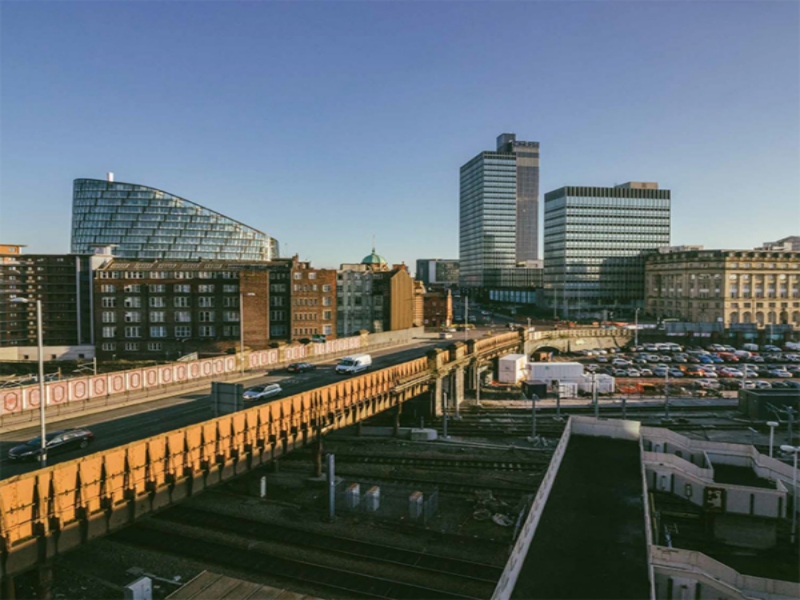
BuHu advances interdisciplinary research on the built environment and the conditions through which it is co-designed, simulated, inhabited, exposed to risk, and transformed. Building on the University of Salford’s established research, partnerships, and industry collaborations, the centre brings together a range of disciplinary practices to address the structural challenges shaping contemporary buildings, cities, infrastructures, landscapes, and forms of inhabitation.
The centre builds on strong foundations laid by colleagues across the School of Science, Engineering and Environment, drawing on a diverse range of methodologies that reflect the interdisciplinary nature of the built environment. These include digital and computational approaches (such as building information modelling, digital twinning, and automation); systems-oriented methods (including risk and disaster management, risk-sensitive urban planning, and lifecycle analysis); socio-economic evaluation tools (such as real estate valuation and social return on investment); and spatial research traditions rooted in architecture, urbanism, and heritage studies.
Across these approaches, the centre also emphasises community engagement and participatory research as essential methods for understanding how built environments are experienced and shaped in practice.
Research within BuHu is organised through collaborative research units that bring together complementary expertise to address the key challenges shaping contemporary built environments.
Transforming the Built Environment Research Group
- Lead: Professor Jason Underwood
- Deputy-lead: Dr Mustapha Munir
The Transforming the Built Environment Research Group investigates how digital technologies and advanced construction systems are transforming the design, delivery, and management of the built environment. Research focuses on building information modelling, digital built environments, lean construction, and integrated project delivery, advancing more efficient and collaborative construction practices.
Climate Resilience Research Group
- Co-lead: Professor Terrence Fernando (BuHu)
- Co-lead: Dr Giuseppe Forino (ERIC)
- Deputy-lead: Dr Devindi Geekiyanage
The Climate Resilience Research Group conducts interdisciplinary research on climate resilience across the built environment, social systems, and environmental landscapes. Combining digital systems, participatory governance, and environmental science, the group develops evidence-based strategies that support climate adaptation, disaster risk reduction, and resilient communities. The group brings together researchers from the Built and Human Environments Research Centre (BuHu) and the Environmental Research and Innovation Centre (ERIC), linking expertise in planning, geography, and the built environment.
Research in the group is organised through interconnected research clusters that address climate resilience across digital systems, community engagement, urban governance, and environmental change.
Digital Systems for Climate Resilience
Develops digital tools and data-driven approaches to support disaster risk reduction and climate resilience, including decision-support systems, modelling methods, and digital platforms for governments, communities, and organisations.
Community and Stakeholder Engagement
Examines participatory approaches to climate resilience, focusing on how communities, institutions, and stakeholders collaborate to co-produce knowledge and equitable resilience strategies.
Risk-Sensitive Urban Planning
Investigates how disaster risk reduction and climate adaptation can be integrated into urban planning and governance to support safer, more equitable, and climate-resilient cities.
Physical Landscapes and Environmental Change
Explores landscape and environmental change under climate pressure through interdisciplinary research combining geomorphology, hydrology, remote sensing, soil science, and socio-cultural analysis.
Salford Laboratory of Architecture / Research
- Lead: Dr Laura Coucill
S-LAB/R is an interdisciplinary laboratory exploring architecture as a site of experimentation across design, technology, and society. Through design-led and practice-based research, it investigates emerging forms of inhabitation, fabrication, infrastructure, and environmental transition, advancing experimental approaches to architectural and urban research.
Innovation Network on Cultures of Class
- Co-Lead: Dr Tanja Poppelreuter (SEE)
- Co-Lead: Dr Nicholas Barnett (SAMCT)
The Innovation Network on Cultures of Class (INCC) is an interdisciplinary network connecting research, practice, and public engagement on questions of social class, inequality, and everyday life across historical and contemporary contexts.
Bringing together researchers and partners from the arts, humanities, and social sciences - including museums, libraries, galleries, and stakeholders across academia, policy, industry, and the public - the network supports research, knowledge exchange, and impact.
INCC operates through open Interest Groups focused on specific class-related topics, such as social inequality, housing provision, working-class histories, and class identity, enabling collaborative research, discussion, and the production of shared outputs.
Our groups include:
- Media, Culture and Class
- Educational Pathways and Classed Trajectories
- Working Words Collective
- Social Housing and its discontents
INCC is a cross-school initiative spanning the School of Science, Engineering and Environment (SEE) and the School of Arts, Media and Creative Technologies (SAMCT).


Get in Touch
For more information, please contact the Interim Director of the Built and Human Environments Research Centre: Dr Fadi Shayya
Email: F.Shayya1@salford.ac.uk