
University of Salford maintains continued success in the Knowledge Exchange Framework for innovation with partners

The University of Salford has once again ranked highly for its strong collaboration with external partners in the Knowledge Exchange Framework (KEF) results, announced today, Wednesday 7 October 2026. Excelling in a number of key areas, the results highlight the University’s strengths in delivering innovation that benefits both the economy and society.
Developed by Research England – part of UK Research and Innovation (UKRI) – the KEF provides insights into how higher education providers in England work with external partners to share knowledge, expertise and innovation.
It measures performance across a range of activities, including research commercialisation, consultancy, public engagement and collaborative research, highlighting how universities create value for businesses, public sector organisations and communities.
The data also places Higher Education providers into clusters of peers with similar characteristics.
Building on previous KEF results, highlights for the University of Salford this year include:
- Continuing to maintain very high engagement in Working with Business, positioning Salford higher than average within its cluster.
- Achieving high engagement in Research Partnerships, Public and Community Engagement, Continuing Professional Development (CPD) and Graduate Start-ups, and IP and Commercialisation.
- Improving its Local Growth and Regeneration placing from low to medium engagement.
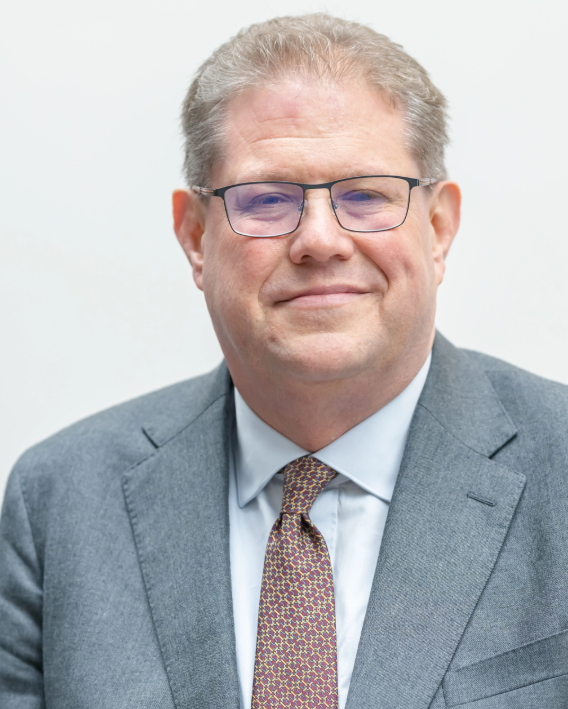
Professor Simon Green, Pro Vice-Chancellor for Research and Knowledge Exchange at the University of Salford, said: "Knowledge exchange continues to be an important part of our ambition as a civic university. The results demonstrate our commitment to innovating to enrich lives, driving economic and societal benefit at scale through collaborative partnerships.
"I'd like to thank all of our colleagues and partners who have contributed to our success this year and our impact on our city region and beyond."
A prime example of how the University works with business is through the strategic partnership with Farrat, an engineering company that specialises in controlling vibration and thermal energy in buildings and industrial machinery. The collaboration brings together Farrat's engineers with the world class expertise at Salford's acoustics innovation institute, which has been shaping the world with its research into sound for more than 60 years, as well as Energy House Labs, where researchers are working to make our current and future homes more energy efficient as we move towards Net Zero.
The long-standing partnership has delivered multiple Knowledge Transfer Partnerships (KTPs), sponsored PhD projects, site visits, masterclasses and guest lectures, creating valuable opportunities for knowledge exchange and innovation.
Oliver Farrell, Group CEO at Farrat, said: "Our relationship with Salford has been going strong for a good ten years now. It’s no exaggeration to say they really helped us go from a proud engineering company to an advanced engineering specialist.
“For us as a small-medium enterprise, there are limits to what we can provide, but the collaboration with the University of Salford has enabled us to project ourselves to become much more of a technology-driven organisation, which will have much more of an impact in the wider world.”
Professor Mandy Parkinson, Associate Pro-Vice Chancellor for Knowledge Exchange at the University of Salford, said: "We're incredibly proud of the strong relationships we've built with businesses and organisations across the region, and that is reflected in today's results. Those partnerships are at the heart of our approach to research and knowledge exchange, helping ensure that new ideas deliver real benefits for businesses, communities and society."
The University has also demonstrated progress in Local Growth and Regeneration, improving its placing from low to medium engagement. The biggest contributors to growth in this area have been a number of projects funded by the Innovate UK Innovation Accelerator Programme, including the University’s Future Homes project, the Centre for Digital Innovation and the MediaCity Immersive Technologies Innovation Hub (MITIH).
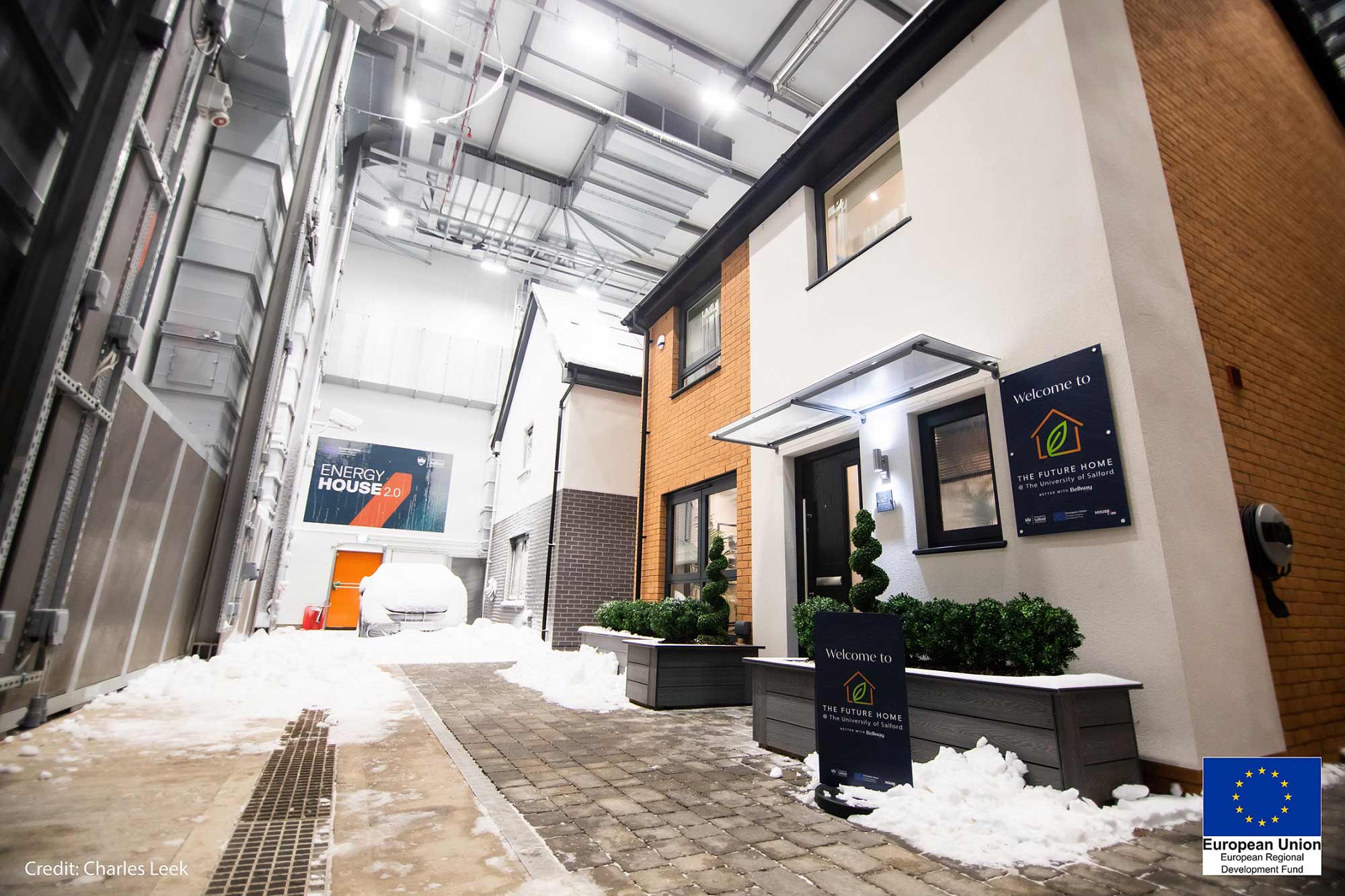
The accelerator programme has helped to transform the Greater Manchester region, boosting the economy, jobs, heath and the environment. The Future Homes project - a partnership between the University and housebuilders Barratt, Bellway and Saint-Gobain - delivered real knowledge and energy savings to our homes, through cutting edge research on heat pumps and making our homes energy efficient.
Using Salford’s Energy House 2.0 facilities, the partners were able to rapidly test new construction methods, heating systems, ventilation technologies and retrofit solutions under controlled conditions. The research has also provided new insights into heat pump noise, informed emerging standards and policy development, and highlighted the need for improved building performance modelling and simplified smart home technologies.
Beyond the technical findings, the project has fostered collaboration across industry, supported SME innovation and attracted more than 10,000 visitors to the facility. It has also helped to shape regional and national policy on retrofit, heat pumps, air quality and future housing standards.
For all press office enquiries please email communications@salford.ac.uk.