
Two Salford academics named as top innovators in the UK

Two University of Salford academics have been named as among the top innovators in the country by Universities UK.
Celebrating 50 researchers, founders and artists across every nation and region of the UK whose university-enabled work is already changing lives – it forms part of Universities UK’s Future Universities campaign, which makes the case that there is no national renewal without strong universities.
With over 300 people nominated, Professor Richard Fitton and Dr Cristina Vasilica, Reader in Digital Health, are among the final 50 which were chosen by an independent panel of expert judges: Darren Henley CBE, Dr Anne-Marie Imafidon MBE, Baroness Beeban Kidron OBE, Baroness Martha Lane Fox and Professor Dame Ottoline Leyser. Each nomination was assessed against four criteria: groundbreaking, contemporary, university-linked and impactful.
Having pioneered the development of the unique Energy House 2.0 research facility, Professor Fitton leads the team, continuing to work with major companies including Barrat and Bellway around the Future Homes standard, as well as small start-ups with innovative products.
Exploring building, fabric, heating systems, domestic hot water, overheating and EV performance under controlled conditions, Professor Fitton is constantly finding new ways to innovate homes.
Cristina’s innovation work brings together digital research, learning and community perspectives to understand and address inequalities in digital health engagement. Rooted in her doctoral research, she has developed a novel and sustainable engagement model for co-designing digital health and education solutions with service users, carers, clinicians, and industry.
She has co-developed projects such as the Kidney Information Network, which connects more than 3500 patients and carers with support, information and services, translating digital research into meaningful community benefit. Over the last 16 years KIN has grown from a regional initiative to a Community Interest Company supporting regions in the North with nationwide ambitions.
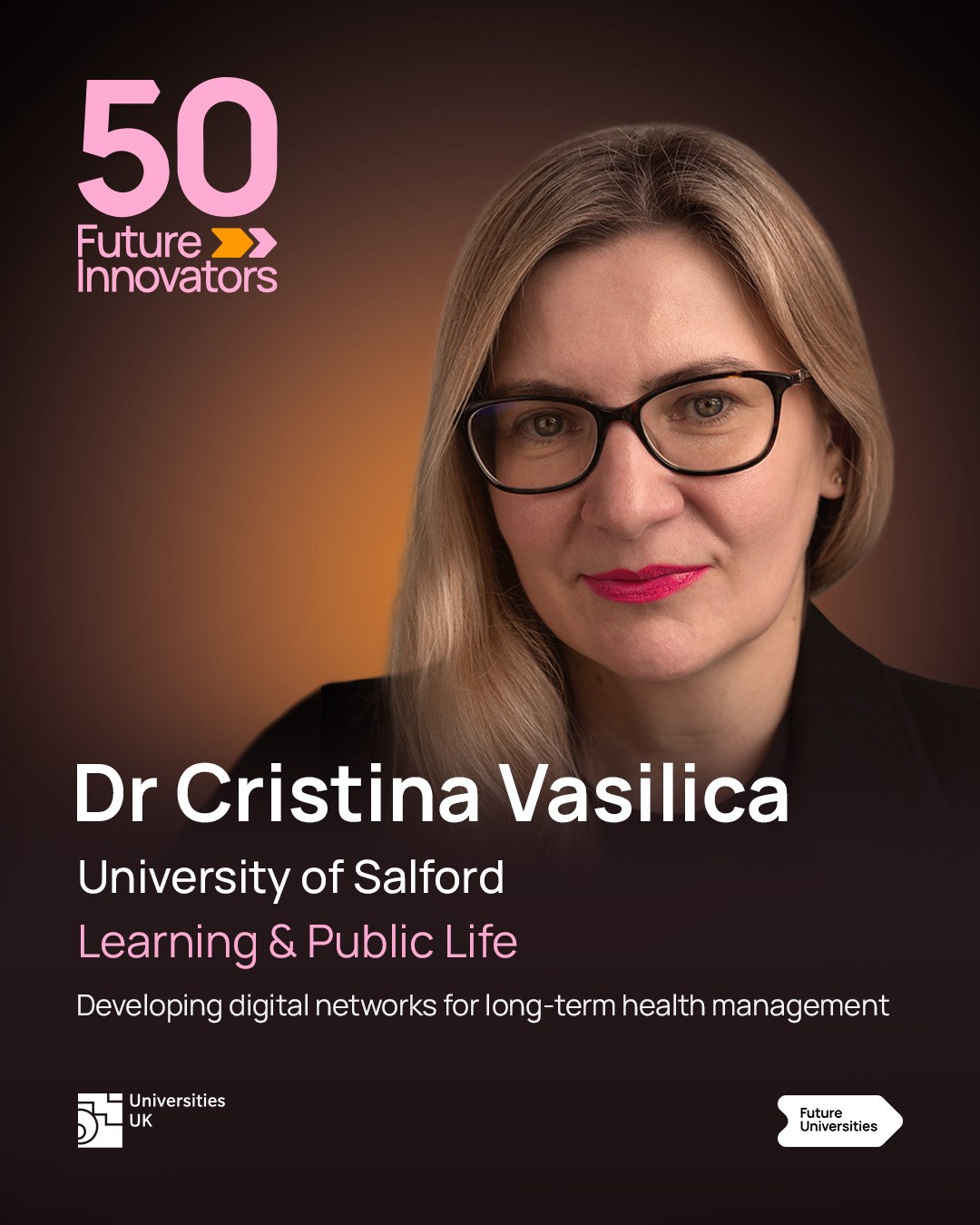
Recognising workforce readiness as a barrier to digital transformation in the healthcare sector, Cristina introduced the Digital Skills Passport (DiSkPass™) in 2021, an innovative digital learning model underpinned by learning science. She facilitated digital and IT skills sessions at community level for several years and contributed to the training of over 4,000 learners and healthcare professionals. She works with NHS Trusts and national organisations to advance digital transformation and develop stronger, more resilient digitally enabled communities of practice.
On her award, Cristina said: “The University of Salford has been instrumental in my innovation journey. The continuous guidance, encouragement, expertise and mentorship of my PhD supervisors Prof Paula Ormandy and Prof Alison Brettle, combined with the support of colleagues and institutional leadership, gave me the confidence to think differently, pursue ambitious ideas, and translate research into real-world impact.
“Through the University's commitment to research, innovation, knowledge mobilisation, and commercialisation, I have been able to co-create and scale initiatives such as the Kidney Information Network and DiSkPass™, delivering meaningful benefits for communities, healthcare services, and the workforce.
“Sadly, Paula is no longer with us to celebrate this achievement. However, her vision and remarkable superpower will continue to inspire me throughout my journey. With immense gratitude, I dedicate this award to her."
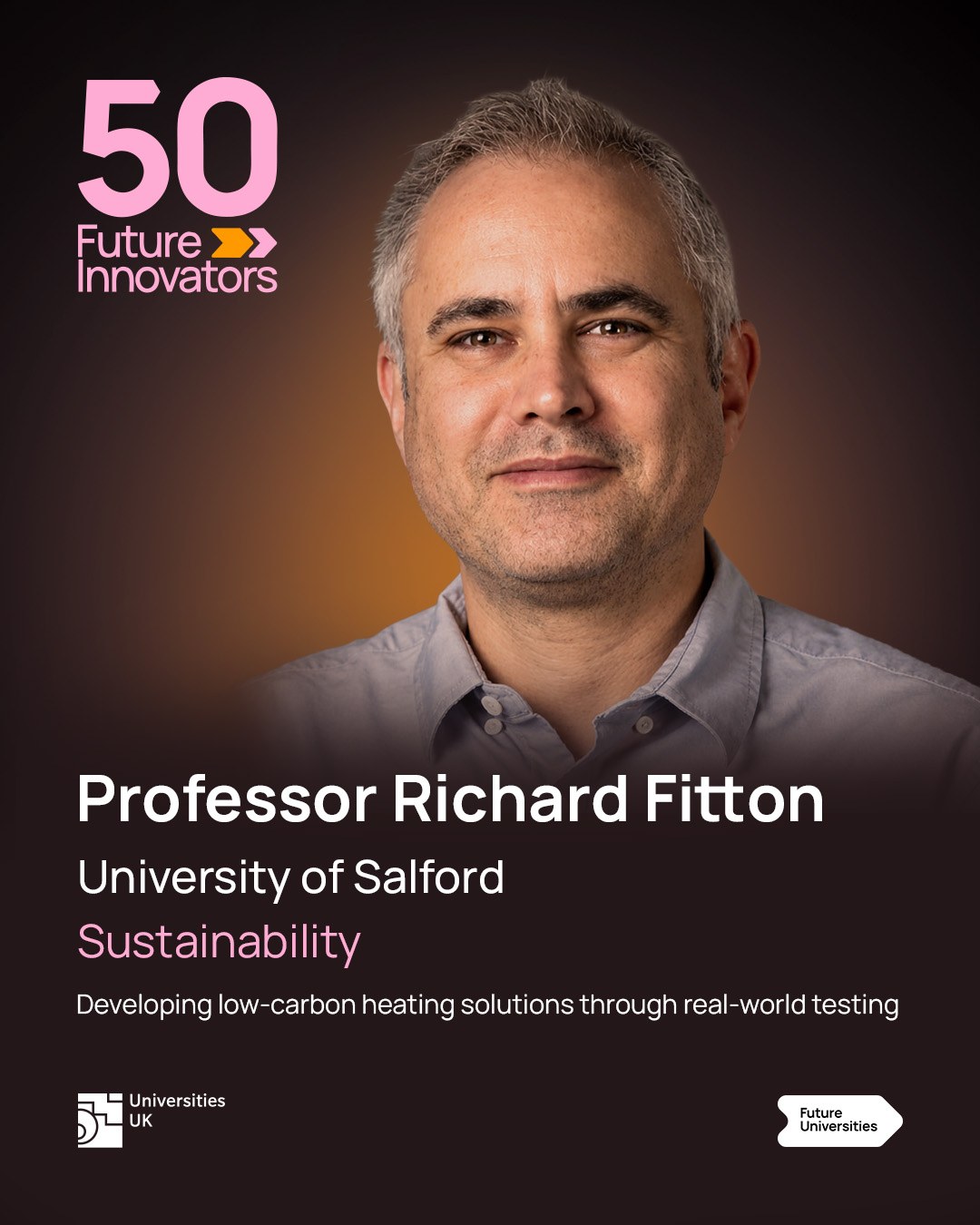
Professor Richard Fitton, Professor of Building Performance, said: “To be named as one of the 50 Future Innovators is really good because all we do here is innovation. We take something, we test it, and we improve it – innovation is what we’re about.”
“Measuring the performance of homes is key because we invest a lot of money in renovating and retrofitting homes. We spend a lot of money to buy homes, so knowing how we can improve them is vital to make them as comfortable and useful as they can be to the occupants.”
While the climate crisis is one of the most pressing concerns of our times, Professor Fitton’s work aims to solve the problem that buildings account for 17% of all emissions. The need to reduce the carbon footprint of domestic heating systems is one element of this – and has never been more urgent.
The University’s Future Homes study, carried out in EH2.0, led to a step change in helping manufacturers and policymakers understanding how best to do this by delivering the largest research project ever carried out under controlled conditions on domestic electrical heating systems in the UK.
Professor Simon Green, Pro Vice-Chancellor of Research and Knowledge Exchange at the University of Salford, said: "This national recognition for both Richard and Cristina is testament to the ambition and excellence of our researchers at Salford. Their work demonstrates how we turn research into practical solutions that address some of society’s most pressing challenges, from creating more sustainable homes to improving health outcomes and reducing inequalities.
"Through our commitment to innovating to enrich lives, we are proud to work alongside industry, public services and communities to deliver meaningful change and improve the lives of people in Salford and beyond. Congratulations to Richard and Cristina and their teams on this excellent achievement."
The University of Salford has a community of researchers dedicated to finding solutions to some of the most hard to solve problems facing society today. They collaborate with a range of partners to improve healthcare, help people with energy bills, make the world sound better, boost the economy and influence policy.
For all press office enquiries please email communications@salford.ac.uk.