
Photographs and posters digitised from the collections of the Working Class Movement Library in Salford.
Photographs
These date from circa 1910 to 1980. A highlight of the collection are photographs relating to the Spanish Civil War (1936-1939). These depict:
- fighters and volunteer nurses on the Aragon Front
- interns at a Republican Camp in Chorley
- paintings and books saved from the Palace of Liria.
The collection features photographs of various Communist Party meetings and demonstrations, many in the Manchester area.
Several images of the Manchester Communist Party Centenary Pageant and Sports Gala in 1938 are included. Members of the Party are shown taking part in various sports. The marching banners being paraded mention unemployment and trade to Manchester.
Neck and neck
Runners compete at the Manchester Communist Party Centenary Pageant and Sports Gala.
18 June 1937.
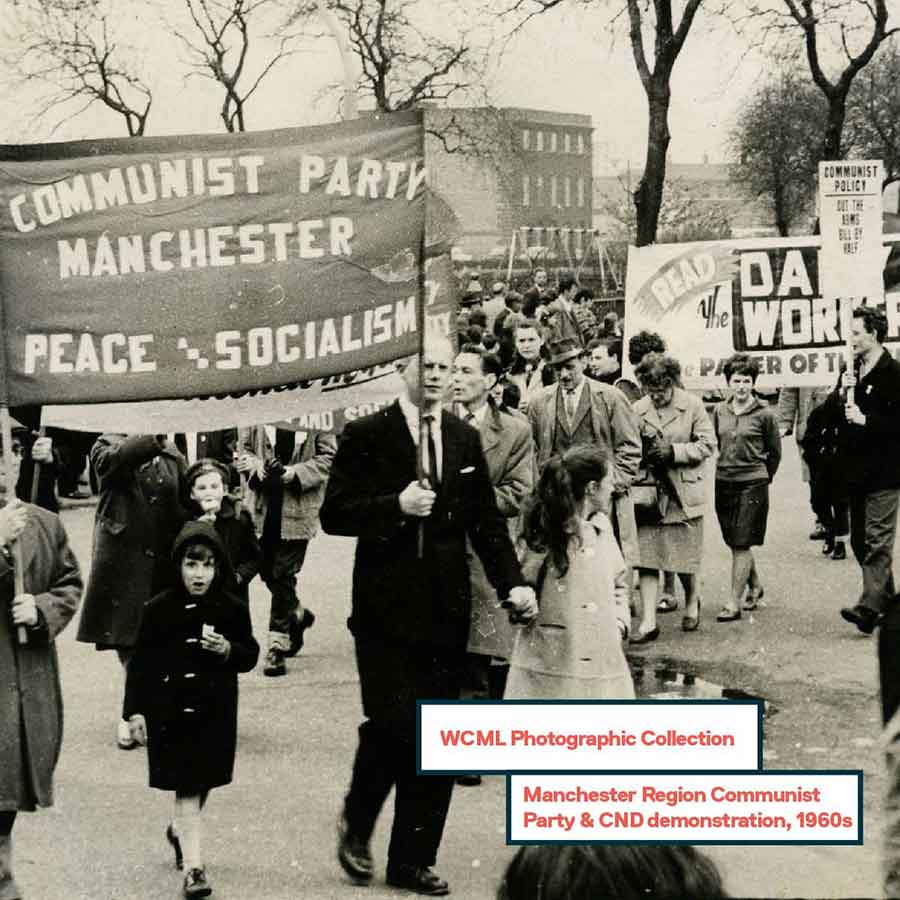
Demonstration
Manchester Region Communist Party and CND demonstration.
1960.
Spanish Civil War - Republican Camp, Chorley, 1936-1939
Spanish Republicans interned at a prisoner of war camp in Chorley.
Women appear in the photographs throughout the collection. There are five images of women workers during the First World War 1914-1918.
These photographs give a sense of the type of work carried out by women during the war effort.
Women also feature in photographs of anti-war demonstrations, indicating their role in these movements.
There are six photographs relating to the Clarion movement. This was based around the socialist newspaper, The Clarion.
It was set up in 1891 by Robert Blatchford following his resignation from the Manchester Evening Chronicle. Various groups and clubs formed around the movement, including the Clarion Cycling Club.
Included photographs depict Clarion vans, and the interior of the Clarion Café on Market Street in Manchester.
Posters
A selection of posters have been digitised. This sub-collection features posters dating from the 1940s to the early 2000s.
There's a focus on working class history and activism on a national level. It also includes posters of local significance, including the Salford May Day Gala of 1978.
The posters document the people’s cries for political amendments throughout the years. Examples related to key movements include:
- the Campaign for Nuclear Disarmament (CND)
- the Anti-Apartheid movement
- the miners’ strikes
- various peace and women’s rights movements.
Several posters represent cultural events where concerts served as platforms for protest. For example, the Glastonbury Festival of 1982, which is in support of the CND.
Together, these posters provide a visualisation of the culture of protest and the role collective action plays in shaping political discourse.
How can it be used?
- For insight into working class cultures in the 20th century and women's participation in politics and work.
- This collection provides a taste of the broad spectrum of the subject matter represented in the collections of the Working Class Movement Library.
Who might be interested?
- Students and researchers of social, political and cultural history and sociology.
Types of material
- Photographic images.
Related materials
Working Class Movement Library