

BEng (Hons) Aircraft Engineering with Pilot Studies
- Course type
- Undergraduate
- Course qualification
- BEng (Hons)
Course summary
What is the fee?
For all course options, see fees and funding
Where will I study?
Peel Park campus
What is the UCAS code?
H490
How long will I study?
Full-time: Three years
With placement: Four years
International students accepted?
Yes, available to international students
Overview
At Salford, this course uniquely combines aircraft engineering with a pilot-informed understanding of flight operations. You will learn not only how aircraft are designed and analysed, but also how engineering decisions influence handling, performance, safety, and pilot decision-making in real flight.
You will progressively build strong foundations in core aircraft engineering disciplines including aerodynamics, structures and materials, propulsion, avionics, and flight control. What sets this course apart is the way these technical foundations are connected with operational and safety-focused subjects such as human factors, crew resource management, meteorology, navigation, and avionics. This systems-and-operations perspective helps bridge the gap between aircraft design, certification, and real-world use.
Throughout your studies, you will work in well-equipped laboratories, computer suites, and specialist simulation environments. You will test design concepts, validate dynamic models, and understand how engineering decisions affect aircraft handling and operational performance. Alongside technical expertise, you will develop communication, project management, and decision-making skills. In your final year, you will complete an individual engineering project, applying analysis, modelling, and simulation techniques to a substantial aircraft-related problem.
This course prepares you for aerospace and aviation-related engineering roles where technical expertise combined with operational awareness is highly valued.
Want to know more about studying this course from a student? Hear it straight from the source. Read Sabah's story on studying BEng (Hons) Aircraft Engineering with Pilot Studies, what she loves about being a Salford student and where she hopes to take her degree.
This degree has been accredited by The Royal Aeronautical Society under license from the UK regulator, the Engineering Council. Accreditation is a mark of assurance that the degree meets the standards set by the Engineering Council in the UK Standard for Professional Engineering Competence and Commitment (UK-SPEC). An accredited degree will provide you with some or all of the underpinning knowledge, understanding and skills for eventual registration as an Incorporated (IEng) or Chartered Engineer (CEng). Some employers recruit preferentially from accredited degrees, and an accredited degree is likely to be recognised by other countries that are signatories to international accords.
Looking to take your studies further? Take a look at our integrated masters MEng pathway.
Start your study journey
Register for our next Open Day to learn more about studying Aircraft Engineering with Pilot Studies, explore our facilities and meet the course team
You will:
- Design and analyse aircraft systems, connecting aerodynamics, structures, materials, propulsion, flight instruments, and operational considerations
- Develop industry-relevant simulation skills in flow analysis/CFD, system dynamics and autopilot design (MATLAB), path planning and navigation
- Test and validate designs using laboratory facilities including subsonic and supersonic wind tunnels, flight simulators, and designated manufacturing spaces
- Complete a flight test course using Cranfield University's National Flying Laboratory Centre
- Assess aircraft systems considering weather, navigation, safety, and human workload during real flight operations
- Have the opportunity to undertake optional pilot training with external providers, subject to eligibility and additional costs
We are delighted that this programme has been accredited by The Royal Aeronautical Society and The Engineering Council.

This is for you if...
You are interested in exploring how advanced technology is revolutionising flight
You are aiming for an engineering career in aerospace or aviation where operational understanding sets you apart
You are a keen problem-solver who enjoys a blend of theory, design, computer work, and laboratory work
Frequently asked questions
What do you do as an aircraft engineer?
An aircraft engineer works on the design and management of next generation aircrafts. They recognise structural risks, create an efficient operating environment, and assess vital aircraft information.
How long does it take to become an aircraft engineer?
Our Aircraft Engineering Bachelor of Engineering programme (BEng) last three years or four if a placement year is chosen. We also offer a MEng (Master of Engineering) programme which takes your studies up to four years and gives you a postgraduate level qualification.
Our programmes provide our students with the skills and knowledge sought after in the industry and prepares them for the first steps in their career.
Is aircraft engineering a good career?
Aircraft Maintenance Engineering is a fantastic career choice for those passionate about aviation. It offers a unique blend of technical expertise, hands-on experience, and the satisfaction of ensuring aircraft safety.
Is there a demand for aircraft engineers?
Employment of aerospace engineers is projected to grow 6 percent from 2023 to 2033, faster than the average for all occupations. About 4,200 openings for aerospace engineers are projected each year, on average, over the decade.
School of Science, Engineering and Environment

Rising to the challenge of a changing world, our degree courses are designed to shape the next generation of urbanists, scientists, engineers and industry leaders.
Driven by industry, and delivered by supportive programme teams, you can develop the knowledge and skills to become unstoppable in your career.
Facilities

As an aeronautical engineering student, you will be based in our aeronautical and engineering laboratories that keep teaching and learning apace with cutting-edge innovation and discovery.
The Aerodynamics Laboratory contains low speed and supersonic wind tunnels that help you to determine the aerodynamic properties of an aerofoil section and influence of wing sweep on the lift and drag characteristics of a tapered wing section.
Our Control and Dynamics Laboratory includes flight simulators and programmable control equipment to studying the effects of damping and short period oscillation analysis, forced vibration, and the design and performance of proportional and integral controllers.
Our Merlin MP520-T Engineering Flight Simulator provides you with practical experience of aircraft design.
Our Elite Flight Training System is a fixed base Piper PA-34 Seneca III aircraft simulator designed in accordance with FNPTII requirements.
How you'll learn
Future careers
Employment
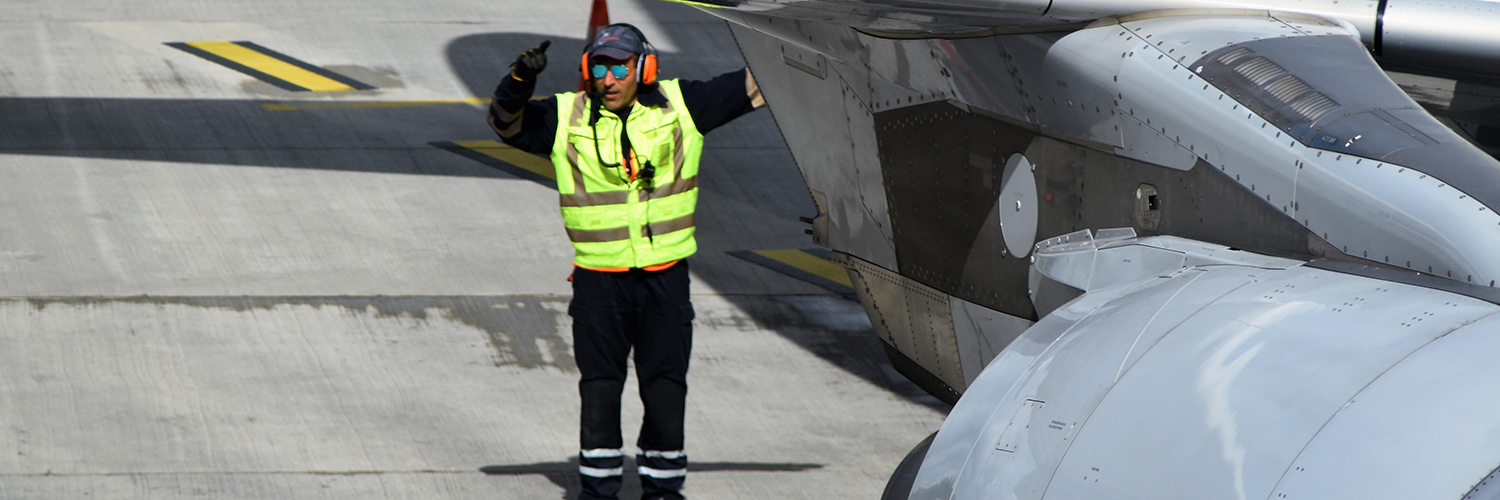
Graduates of Aircraft Engineering with Pilot Studies are well prepared for a wide range of engineering and aviation-related careers where technical expertise is enhanced by an understanding of flight operations. This course develops strong analytical, modelling, and problem-solving skills alongside operational awareness, making you attractive to employers across the aerospace and aviation sectors.
You could progress into roles such as aircraft systems engineer, flight dynamics or performance engineer, avionics engineer, flight test or flight operations support engineer, aviation safety or compliance engineer, or engineering roles within airline operations and maintenance organisations. The course also provides a strong foundation for careers in aviation management, safety analysis, and technical consultancy, where understanding how aircraft are designed and operated is critical.
Salford aircraft engineering graduates work worldwide in organisations involved in aircraft design, manufacture, airline operations, and air traffic services. Alumni can be found at leading companies including Airbus, BAE Systems, British Airways, Ryanair, Leonardo, National Air Traffic Services (NATS), Goodrich, and CTC Aviation.
Further study
You might find you want to learn more after your aircraft engineering degree, such as automation, mechanical engineering, or robotics. Building on our engineering expertise, we offer a range of postgraduate courses that can take your interests and career opportunities further. Salford graduates and alumni will also receive a generous fees discount.
- Aerospace Engineering (MSc)
- Robotics and Automation (MSc)
- Advanced Mechanical Engineering. (MSc)
- Sustainable Air Transport. (MSc)
Modules
Course delivery
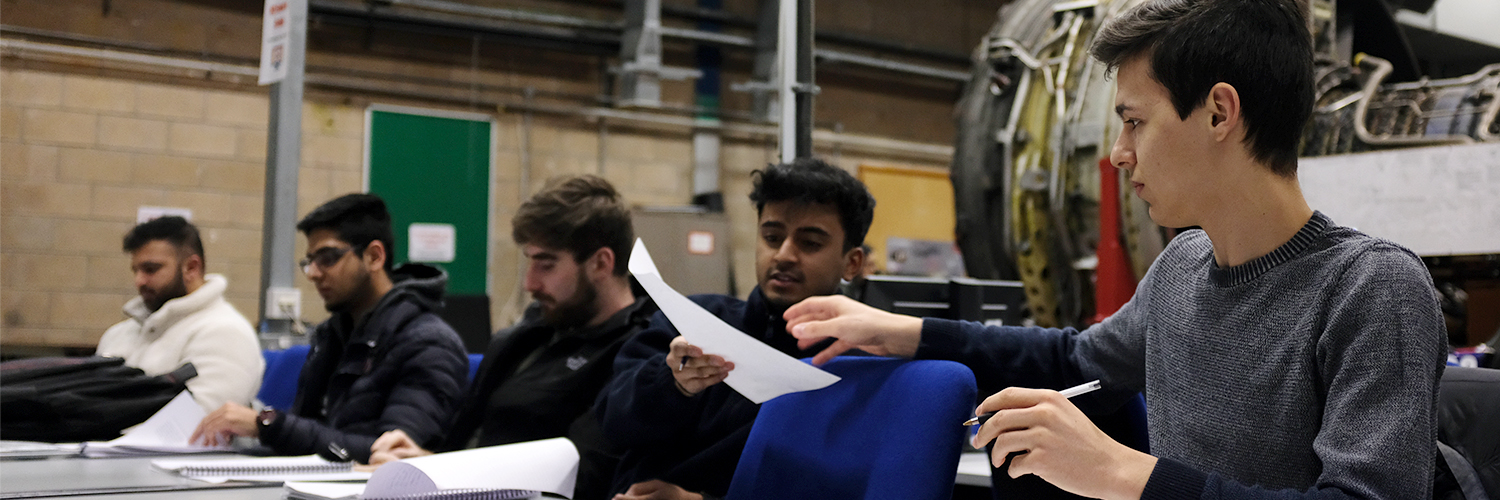
Delivered over three years (or four if you choose to include a placement year), you will study a suite of modules that will embed theoretical knowledge, build career-focused skills, and help you become a world-class engineer.
Each year, you will study six modules, worth 20 credits each, which are equal to 200 hours of learning time per module. You’ll be involved in various learning environments and laboratories to develop your knowledge of aircraft engineering.
Learn more about the current course modules below.
Learning experience
The course team has long-standing connections with the aviation industry, both in the North-West and beyond. You will benefit from a stimulating range of lecturers, projects, placement opportunities, and engagement with professional networks.
Collaboration is core to our values, so we strive to embed this throughout your studies. You will experience group projects that will build your confidence and capabilities in team working, problem-solving and communication - all desirable skills for real-world aeronautical engineering careers.
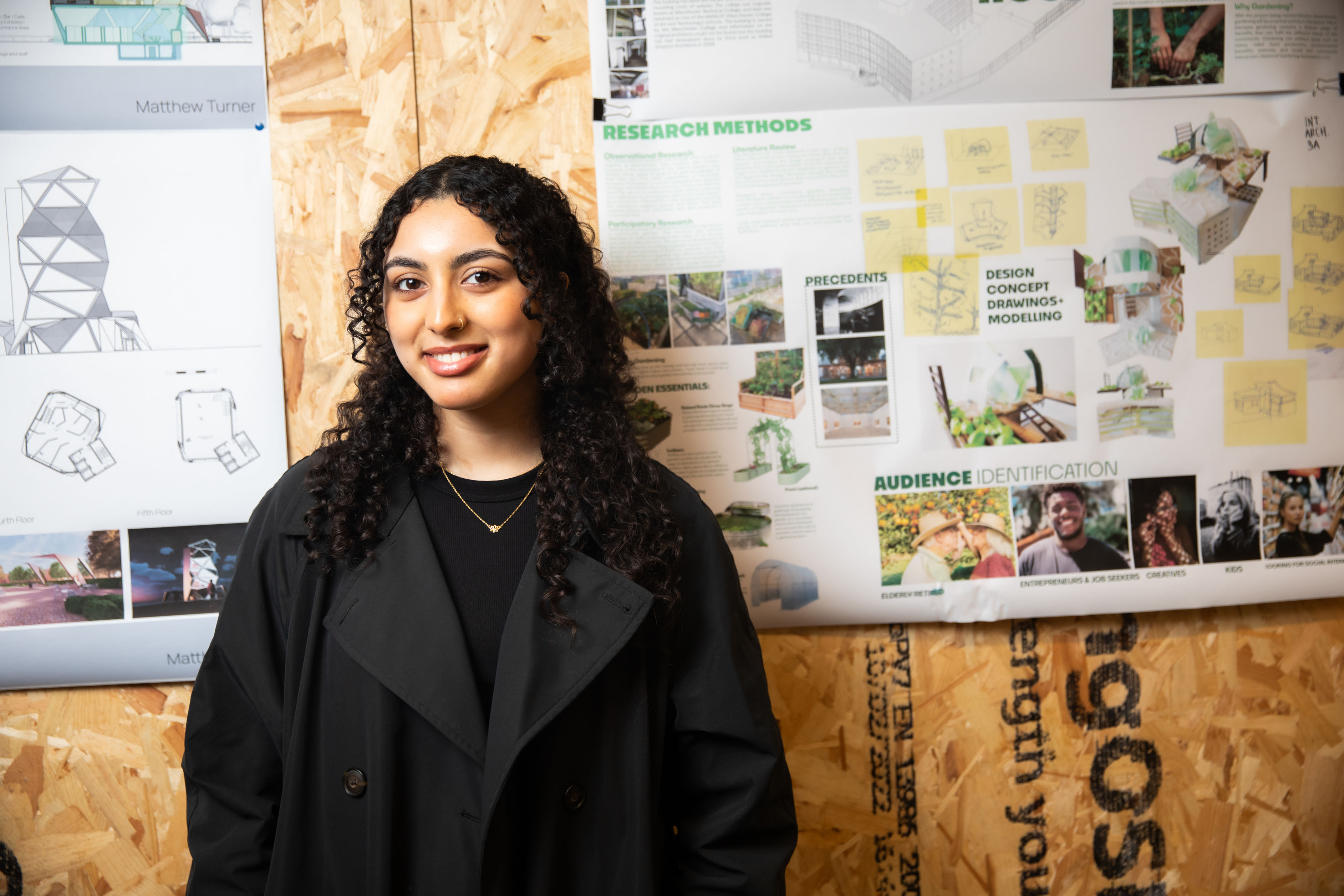
Read about student Nataniel's study experience at the university.
Learn to fly
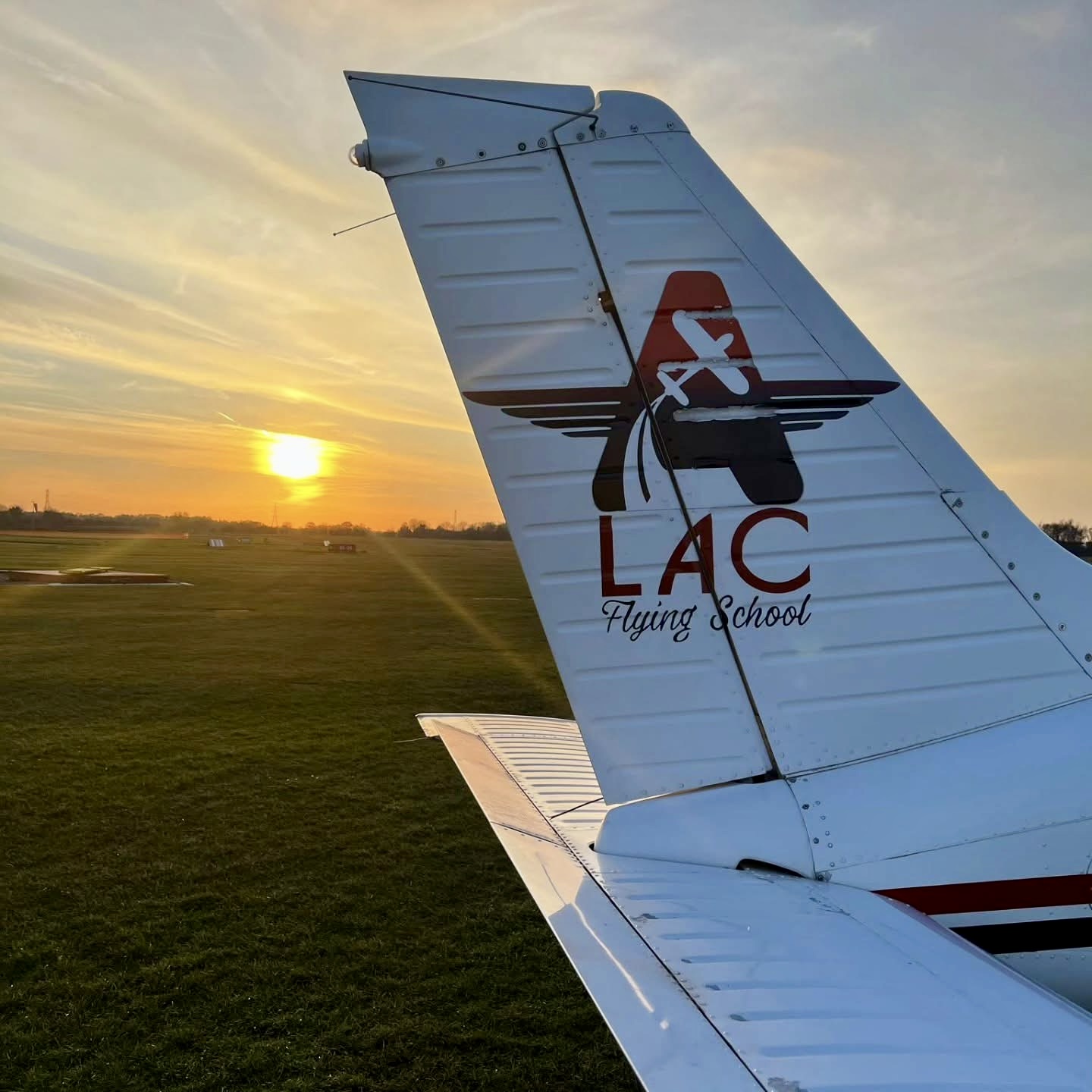
Launch Your Aviation Ambitions with the University of Salford.
Take the first step toward earning your pilot’s license through the University of Salford’s ‘Introduction to Flight Training Course’, delivered in collaboration with a trusted local flight training provider.
This bespoke short course offers students a transformative opportunity to gain hands-on flying experience, with 10 hours of flight time officially logged toward your pilot’s license. Training includes essential manoeuvres such as general handling and stalling, and—based on individual progress—may lead to a first solo flight.
To support practical learning, the course features a comprehensive theoretical component. Students will also take part in a guided visit to the onsite maintenance facility, where aircraft are explored in their component form. A licensed engineer will host an open Q&A session, providing valuable insights into aircraft systems and operational safety.
Importantly, this course is funded independently of your academic tuition, offering the flexibility to ‘fly as you go’.
For further details, please contact the course lead:
Robert Weighman
r.a.weighman@salford.ac.uk
Industry placement
You will have the option to take an industry placement year between years two and three. Although you will be responsible for securing your own placement, our tutors will support you in finding a role and monitor your progress throughout.
Year one
Introduction to Aviation & Air Vehicle Design
In this module, you’ll first be introduced to the history and terminology of the aerospace and aviation industries, along with some basic theory of flight. Then you’ll undertake a group project to do the preliminary design of a light aircraft conforming to EASA CS-23 standards. It is to be powered by a single piston engine (SEP). You’ll choose the performance of the aircraft based on a survey of the potential market for its type. You will then work in groups through the various stages of the design, both internal and external, checking that the aircraft will meet certification requirements and can do the tasks for which it is intended as well as being commercially viable, developing communication, teamwork, and project management skills throughout the process.
Engineering Dynamics & Electrical Systems
This module introduces core principles of Engineering Dynamics and Electrical Engineering, applying mathematics, natural science, and engineering methods to analyse motion and electrical systems. Kinematics, kinetics, Newton’s laws, energy principles, and circuit theory are used to model linear and rotational systems, recognising limitations of techniques. Activities include interpreting technical literature, investigating systems using laboratory skills, and selecting appropriate materials, equipment, and technologies with awareness of constraints. Circuit diagrams and behaviours under DC and AC supplies are analysed. Emphasis is placed on effective communication in technical contexts, and on planning and recording self-directed learning as a foundation for lifelong development.
Fundamentals of Engineering Mathematics
This module develops core mathematical concepts, notation, and techniques essential for solving complex engineering problems. It reinforces prior knowledge and introduces calculus and algebra to support the application of engineering principles. Emphasis is placed on selecting and applying appropriate analytical techniques, using first principles where necessary, and recognising their limitations.
Mathematical knowledge is applied to reach substantiated conclusions across a range of engineering contexts. The module also establishes a foundation for further mathematical study and supports the development of lifelong learning and self-directed development, forming the basis for continued professional development (CPD) in engineering.
Engineering Structures & Engineering Materials
This module introduces key principles of engineering materials and structural analysis. It covers stress, strain, beam theory, torsion, thermal stresses, frameworks, and Mohr’s circles for stress and strain analysis in two- and three-dimensional components. You will explore material testing, properties through bonding mechanisms, strengthening methods, phase diagrams, heat treatment, and corrosion principles and protection. The types and use of polymer materials will be included. Emphasis is placed on the relationship between material structure and performance, and on applying analytical methods to real-world problems. Laboratory sessions support hands-on learning, while assessments include coursework, and coursework to develop skills in selecting materials and analysing simple structures in mechanical engineering contexts.
Thermofluids fundamentals
This module introduces core principles of thermodynamics and fluid mechanics, applying mathematics, natural sciences, and engineering principles to complex problems. Key topics include energy transfer, fluid behaviour, and the use of analytical and computational techniques for thermofluid modelling, with attention to methodological assumptions and limitations.
Emphasis is placed on evaluating technical literature and data sources to support engineering analysis, and on developing practical investigation skills through laboratory work. Broader considerations such as sustainability, safety, and system performance are addressed. The module also supports effective communication and encourages reflective practice and professional development.
Principles of Air Navigation & Meteorology for Aviation
In this module you will gain proficiency and knowledge in the planning of multiple leg flight plans and build awareness and experience of aviation meteorology. On completion you should have developed skills including practical knowledge of operational procedures; requirements for safe and adequate flight planning; understanding requirements for time planning; the principles of aviation meteorology; and be able to make rational assessments for flight safety by interpreting synoptic weather forecasts.
Year two
Aerodynamics Fundamentals
In this module you will learn about the fundamentals of lift and drag generation by aerofoils and wings, the theory of low-speed (incompressible) flow, aerofoil aerodynamics and the thin aerofoil theory, wing aerodynamics and the lifting line theory, the fundamentals of boundary layer theory, an introduction to the theory of high speed (compressible) flow, convergent-divergent nozzles, the equipment and techniques employed in wind tunnel testing as well as take the first steps in conducting an aerodynamic simulation using computational fluid dynamics.
Aircraft Systems Design
This year-long, two-trimester module introduces you to the fundamentals of aircraft systems design. Running alongside the Aeronautical Engineering Aircraft Design module, this module focuses on the integration and development of key aircraft systems, including pilot and passenger cabin systems, environmental control, fuel, hydraulics, electrical, avionics, undercarriage, and high-lift device deployment systems. You will collaborate with aeronautical engineering peers on a conceptual aircraft design project, contributing to the systems aspects while developing project, risk, and quality management skills. The module builds interdisciplinary understanding, preparing you for system-level thinking in aircraft design and operation.
Aircraft Structures Fundamentals
Your understanding of structural integrity, fitness for service, and mechanical properties will be developed through this module. You will become familiar with the analysis of structures under different loading conditions, yield criteria, and direct stiffness methods. Additionally, you will be introduced to the analysis of composite systems.
Engineering Mathematics
This module extends core mathematical knowledge by introducing a broader range of techniques relevant to the analysis and solution of complex engineering problems. Key topics include differential equations, numerical methods, partial differentiation, determinants, matrices, Laplace transforms, and functions of a complex variable. Emphasis is placed on the accurate selection and application of analytical and computational methods, recognising their limitations within engineering contexts. Mathematical principles are developed through lectures, with discipline-specific sessions offering applied examples. Problem-solving seminars support the use of first principles and the development of confidence in modelling and interpreting engineering systems.
Aircraft Stability & Automatic Control
This module introduces you to the fundamental principles of aircraft stability and control systems. You will develop an understanding of static and manoeuvre stability in both longitudinal and lateral-directional motion, and begin to explore key control concepts such as system modelling, first- and second-order responses, PID control, and root locus techniques. Through hands-on laboratory activities and simulation tools, you will apply these ideas in practical settings. By the end of this module, you will be able to interpret simplified flight system behaviours and present your findings using structured engineering communication.
Navigation Systems & Route Planning
This module explores the navigation technologies and planning strategies that underpin modern flight operations. In the first trimester, you will study the principles and applications of key aircraft navigation systems, including VOR, ILS, GNSS, and inertial navigation. The second trimester focuses on route planning, where you will apply aviation regulations and performance data to design efficient flight routes. Through a mix of theoretical learning and practical group work, you will develop the skills to interpret navigation data, plan commercial flights, and respond to real-world operational scenarios.
Year three
Individual Project
The individual project involves working independently on a substantial research or industrially relevant task, requiring critical evaluation of technical literature and other reliable sources of information. It promotes the application of an integrated or systems-based approach to solve complex engineering challenges. The work considers environmental and societal impacts, encouraging the development of solutions that minimise adverse effects. Ethical issues are identified and addressed through reasoned decision-making guided by professional codes of conduct. Risk is assessed and managed using structured processes. The project also develops skills in engineering management, commercial awareness, legal frameworks, effective communication, and continuous professional development.
Compressible Aerodynamics & Aircraft Propulsion
This third-year module in Aerodynamics and Propulsion builds on prior knowledge from second-year Aerodynamics and first-year Thermodynamics to explore compressible flows and aircraft propulsion. You will study subsonic, transonic, and supersonic flow regimes, along with propulsion principles and engine inlet/outlet design considerations. Delivered to both Aeronautical Engineering and Aircraft Engineering with Pilot Studies programmes, this module blends theory with application through two dedicated laboratories—one on compressible flow and one on propulsion. Assessment includes a group project involving wing design, manufacturing, and testing; a technical lab report analysing experimental results; and a final in-person exam. The module fosters critical thinking and practical engineering skills.
Aviation Safety, Human Factors & CRM
This module aims to enhance your expertise in aviation safety by developing your ability to critically assess and manage risk. Alongside anticipating safety issues and implementing effective mitigation strategies, you will explore sustainability challenges and emerging security risks that increasingly shape modern aviation. The curriculum covers Human Factors, Crew Resource Management (CRM), Fatigue Risk Management, and Mental Health considerations, providing a holistic understanding of safe operations. By integrating safety, environmental responsibility, and security awareness, the module strengthens your professional competence and significantly enhances your employability within a rapidly evolving and highly regulated global industry.
Avionics
This module will give you an understanding of the electronic and digital systems that support modern aircraft, from core components to integrated avionics architectures. You will study key technologies such as sensors, communication, display systems and automation, and examine how these systems interact to support safe and efficient flight. You will also be able to analyse and design avionics configurations suited to different aircraft and operational needs.
Flight Dynamics & Control
In this module, you will learn about the fundamental principles of modelling aircraft dynamics using state-space and transfer function methods. You will explore longitudinal and lateral-directional reduced-order models, gain insight into desired flight characteristics, and evaluate handling quality metrics. The module also covers classical control methods, including Bode and Nyquist analysis, PID tuning, and digital control implementation. Through simulations and laboratory work, you will develop and test stability augmentation and autopilot systems in line with flight control requirements.
We take a flexible approach to our course delivery that promotes diversity and inclusivity and provides a blended learning experience, which will vary to meet specific programme requirements. This learning time includes formal lectures and interactive activities such as seminars, tutorials, practical sessions, laboratory and studio learning. Smaller classes may be used to support collaborative activities such as project and group work and presentations. A range of different assessments and feedback is offered to meet the needs of both our diverse student body and specific subject needs.
Our undergraduate courses are normally made up of 20 credit modules which are equal to 200 hours of learning time. A three-year degree qualification typically comprises a total of 360 credits (120 credits per year).
Please note that exact modules and content offered may vary in order to keep content current and, for courses that offer optional modules, may depend on the number of students selecting particular options. When accepting your offer of a place to study on a programme with optional modules, you should be aware that optional modules may not all run each year. Your tutor will be able to advise you as to the available options on or before the start of the programme. Whilst the University tries to ensure that you can undertake your preferred options, it cannot guarantee this.
Entry requirements
Applicant profile
We're looking for applicants who have studied mathematics or physics-based subjects at college. You will ideally already have an interest in aerospace-related matters and desire a future career in this field. You are a keen problem-solver who enjoys a blend of mathematics, theoretical principles, design, computer work, and laboratory work.
English language requirements
All of our courses are taught and assessed in English. If you are an international student and not from a majority English speaking country, you will need IELTS 6.0 with no element below 5.5. We also accept a range of other English language qualifications.
If you do not have the English language requirements, you could take the Pre-Sessional English course, or the International Foundation Year to gain entry onto this degree.
Standard entry requirements
GCSE
In addition to the following Level 3 requirements, you must have evidence of Level 2 GCSE English and Maths at Grade C/4 or above.
UCAS Tariff points
104 UCAS Tariff points.
A-level
Two full A-levels as a minimum. To include grade C or above in Mathematics and grade E or above in another numerate science-based subject (Physics, Chemistry, Electronics, Design Technology or Computer Science).
BTEC National Extended Diploma
Grade DMM from Engineering or Applied Science.
Not accepted: Electrical Engineering, Aviation Operations.
T Level
Grade M in one of the following subjects:
- Design and Development for Engineering and Manufacturing Maintenance
- Installation and Repair for Engineering
- Manufacturing Engineering, Manufacturing, Processing and Control
International students
We accept qualifications from all around the world. Find your country to see a full list of entry requirements.
Alternative entry requirements
Salford Alternative Entry Scheme (SAES)
We positively welcome applications from students who may not meet the stated entry criteria but who can demonstrate their ability to pursue the course successfully. Once we receive your application, we'll assess it and recommend it for SAES if you are an eligible candidate.
There are two different routes through the Salford Alternative Entry Scheme and applicants will be directed to the one appropriate for their course. Assessment will either be through a review of prior learning or through a formal test.
Not sure how many UCAS points you have? Use our UCAS Tariff Calculator to find out.
Fees and funding
See fees below
2027/28
| Type of study | Fees |
|---|---|
| Full-time | £10,050 per year |
| Part-time | Part time fee will be calculated on a pro rata basis |
2027/28
| Type of study | Fees |
|---|---|
| Full-time | £18,600 per year |
The tuition fees shown are for the first year only. If your course lasts longer than one year, fees may increase each year in line with inflation, up to the maximum limits set by the UK Government.
Additional costs
You should consider further costs which may include books, stationery, printing, binding and general subsistence on trips and visits.
International student scholarships
If you are a high-achieving international student, you may be eligible for one of our scholarships.
Learn more about our latest international scholarships.
How to apply
Enrolment dates
Student information
Terms and conditionsUCAS information
Course ID H490
Institution S03